
At The Turning Point - My Political Life with David Lange
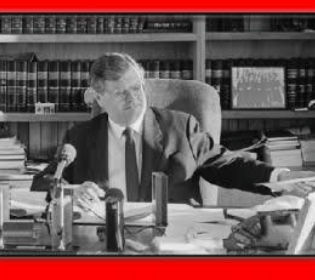
在转折点 —— 我与大卫兰格的政治生活.

More than three decades on, the story of New Zealand’s fourth Labor Government’s rise and fall still makes for unusually compelling reading. This book “At the Turning Point” written by Margaret Pope, is a ‘must read’ companion of the book “My Life” the autobiography of New Zealand’s former Prime Minister, David Lange. Margaret Pope was Prime Minister David’s speechwriter before she became his lover and later his wife, when he divorced his former wife, Naomi, to marry her.
三十多年过去了,新西兰第四届工党政府的兴衰故事仍然引人入胜。玛格丽特·波普 (Margaret Pope) 所著的《转折点》是新西兰前总理大卫·兰格 (David Lange) 自传《我的人生》的必读伴侣。玛格丽特波普是大卫总理的演讲稿撰写人,后来她成为他的情人,后来成为他的妻子,当时他与前妻娜奥米离婚,娶了她。
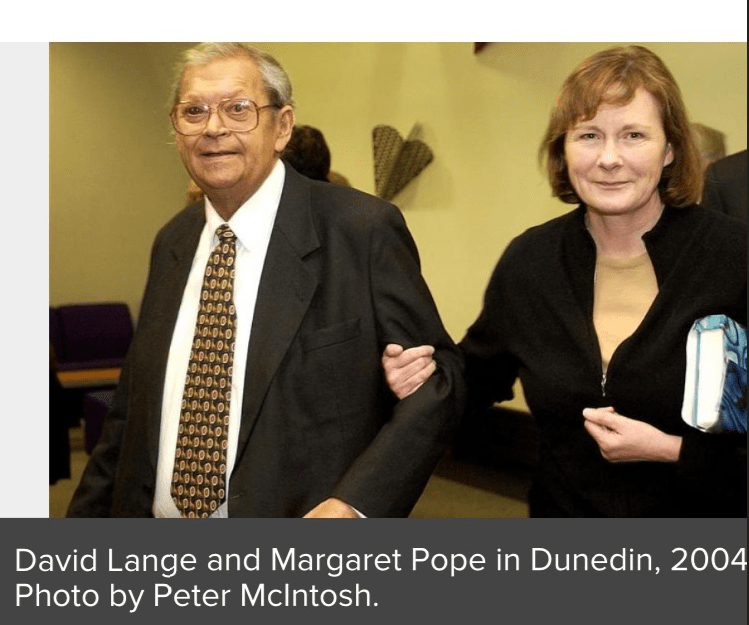
This book is a biography of David Lange, one of New Zealand’s most influential and controversial politicians. It provides readers with an in-depth look at the life and career of Lange, who served as the country’s Prime Minister from 1984 to 1989. The book takes us on a journey through Lange’s life, beginning with his childhood in Otahuhu, Auckland, where he was raised by his grandparents. It explores his early education and his involvement in politics as a student at the University of Auckland. It then follows Lange through his time in legal practice before he entered Parliament in 1977.
这本书是大卫兰格的传记,他是新西兰最有影响力和最具争议的政治家之一。它让读者深入了解 1984 年至 1989 年担任该国总理的朗格的生活和职业生涯。这本书带我们踏上朗格的人生之旅,从他在奥克兰奥塔胡胡的童年开始,他由祖父母抚养长大。它探讨了他的早期教育以及他作为奥克兰大学学生参与政治的经历。然后它跟随兰格在 1977 年进入议会之前的法律实践。
One of the key moments in Lange’s political career was his election as leader of Labor Party in 1983, which paved the way for his eventual appointment as Prime Minister. Pope does an excellent job of capturing the excitement and optimism that surrounded Lange’s rise to power, and the book provides valuable insights into his leadership style and political philosophy.
兰格政治生涯的关键时刻之一是他的选举为新西兰的总理。 Pope 出色地捕捉了兰格上台后的兴奋和乐观情绪,这本书对他的领导风格和政治哲学提供了宝贵的见解。
Another significant aspects of Lange’s legacy was his stance on nuclear disarmament. During his tenure as Prime Minister, he implemented policies that made New Zealand a nuclear-free zone, earning him international recognition and praise. The book provides an insightful analysis of this period in New Zealand’s history, detailing the political and social context surrounding these events.
Pope also delves into Lange’s personal life, exploring his relationships with family members, colleagues, and friends. Throughout this book, we learn about Lange’s struggles with obesity, depression, and alcoholism and how these issues impacted his work as a politician.
Overall, “At The Turning Point” is an engaging and informative read that sheds light on the life and career of one of New Zealand’s most significant leaders. It offers valuable insights into Lange’s ideology, leadership style, and personal struggles, making it an essential resource for anyone interested in New Zealand politics or modern history.
Pope 还深入研究了兰格的个人生活,探讨了他与家人、同事和朋友的关系。在这本书中,我们了解到兰格与肥胖、抑郁和酗酒的斗争,以及这些问题如何影响他作为政治家的工作。

兰格遗产的另一个重要方面是他在核裁军问题上的立场。在担任总理期间,他实施了使新西兰成为无核区的政策,赢得了国际社会的认可和赞誉。该书对新西兰历史上的这一时期进行了深刻分析,详细介绍了围绕这些事件的政治和社会背景。
Let us also read those relevant reviews and comments on the book as posted on the internet and reprinted below:
Quote # 1:
Andrew Stone takes a look at a new book by Margaret Pope - the speechwriter who became David Lange’s second wife
The phrase that turned Margaret Pope towards David Lange - and started a five-year affair - was a throwaway line from the Prime Minister just a few days before Christmas in 1984.
Lange had been premier since July, when Labour defeated a tired Muldoon administration. Pope, a public servant-turned-party researcher, worked as Lange’s speechwriter.
One of the women in Lange’s Beehive office had already indicated that Pope was a favourite on the ninth floor.
“You’re obviously number one,” Pope was told.
Her status was confirmed a short time later. Lange appeared at her office door, just before heading back to Auckland and his wife Naomi and family for the weekend.
Pope: “He said nothing of moment until I said I hoped he would enjoy his weekend.”
Lange: “I won’t. You won’t be there.”
Pope, whose own marriage to architect Campbell Pope had run its course, was thrown off-balance: “I was dazzled. I was moved, because I knew reserve was an essential element of his character.”
Here was a man, she thought, unwilling to seek out support from political colleagues, yet who had sought from her a commitment “when he could not be sure of the reply”.
Pope, who is 60, has not talked publicly or written previously of these matters of the heart. She does so, sparingly, in a book published today: At The Turning Point.
Subtitled “My Political Life With David Lange”, much of its core rests on the souring relationship between Lange and his Finance Minister Sir Roger Douglas, and the conflict that ripped Labour apart.
The author wrestles with the great betrayal at the centre of the fourth Labour Government: how a cabinet that sprang from a social democratic party embraced so fervidly the free-market currents of the times, alienating its supporters and signing its death warrant in the process.
She writes of the poisonous climate which eventually suffocated the administration as its principals exhausted their energies fighting each other rather than their political rivals and details the internecine conflict which erupted after Labour ditched its historic economic policy for a Treasury-driven revolution.
Pope reveals she, too, took part in the hostilities. On one occasion, with Lange and Douglas locked in a power struggle over the now largely forgotten flat tax row, she leaked correspondence to Richard Long, a senior Press Gallery journalist. Long was a neighbour of Pope’s, and had once almost rumbled the secret lovers when Pope borrowed Lange’s car and left it outside her Wadestown home.
But she admits she could barely foot it with Bevan Burgess, Douglas’ adroit chain-smoking press officer, who would die in a ditch for his boss.
When Long’s disclosures made the front pages, citing “Labour Party sources” and challenging Douglas’ assertion there were no policy differences between him and the Prime Minister, Burgess drafted a note, which the Finance Minister took to Cabinet.
“Let’s talk about it as adults,” Burgess wrote. “But try to discredit me - take over my portfolio - manage announcements without consultation - make my position impossible - and you have big, big, trouble!”
The snapshots include the full context of the famous “cup of tea” phrase which the Douglas camp used as evidence that Lange had lost his nerve for reform. Speaking in Canberra in August 1988, Lange told his Australian audience: “But what say we sort of have a little breather here and then set off on the road again after we have picked up the casualties and had a cuppa.”
Scattered through this political freight are glimpses of the affair which Lange and Pope conducted beyond the glare of public life until Naomi Lange famously let rip one Sunday in November 1989, blaming Pope - the “other woman” - for the break-up of her 21-year marriage. Even Lange’s mother, Phoebe, waded in, saying hurtful things about her son.
The outburst smashed the walls the couple had built round their liaison, which had surfaced in the British satirical weekly Private Eye, but only been hinted at in the New Zealand media.
Writes Pope: “The announcement of the separation breached the dam that held back the flow of parliamentary gossip, and a torrent of sensation followed in which issues of marital infidelity tossed around with the most lurid allegations made during the battle with Douglas. David made light of the turmoil in public, although he paid a high cost in his personal life until the damage healed.”
At home in Onehunga, Pope does not wish to dwell on her personal history. She has always fiercely protected her privacy and that of Edith, their 15-year-old daughter.
“It was a difficult balance,” explains Pope.
“It has [the affair] become part of the story of that Government and it’s certainly part of David’s story obviously. Given there’s bound to be interest in that side of it and I want people to read the book, I had to write something about it.”
Though Turning Point might seem like a settling of scores, Pope insists her motivation was partly “self defence” and an endeavour to “set the record straight”.
She remarked: “I found myself appearing in books written about the period and quite often I don’t recognise myself.”
One work she found intolerable was Cabinet Minister Michael Bassett’s 2008 account, which the one-time Lange ally titled Working with David.
“What it said,” asserts Pope, “was so inaccurate, so unfair, that it was really hard to let it rest. In fact, I probably wouldn’t have written this book if it wasn’t for that.”
Six years after Lange’s death, his widow considers that the country’s judgment of her late husband is the sense of a “good man”.
“I’m glad that’s how people remember him rather than all those dreadful politics of the 80s, because he paid a really high personal price for what happened.”
She says that being surrounded on his own side by “hatred and ill feeling” made Lange deeply miserable. She believes he was depressed because he wanted to be liked but lacked the political armoury or inclination to crush his opponents.
“For someone who liked to be liked and didn’t want that kind of aggressive personal conflict, he did an amazing job.”
=====
Quote # 2:
Working with David, Michael Bassett’s account of his part in the life of David Lange, comes heavily weighted with the trappings of scholarship, and its author hasn’t stopped short of proclaiming his lingering affection for David in support of his claim to objectivity. Let’s have none of that here. No, the first time I ever met Dr Michael Bassett I felt my flesh creep. It’s plain from the book that I did a poor job of hiding it.
I got to know only one or two of the faction in the caucus which helped propel David to the leadership of the Labour party in 1983, but David knew them well enough. When, as prime minister, he broke with his finance minister Roger Douglas, it was my instinct to blame Douglas, or at least his office, for the bile which flowed around the place, but David was always more likely to make allowances. “You’ve got to remember,” he said to me once about Douglas, “he’s got Bassett riding him”.
Working with David does much to suggest that David hit the mark. The writing is purple, overheated, even foam-flecked. The method is unusual for a scholarly work. It starts with an idea or, more often, with a slur, and looks for facts which back it up. If the author can’t find any facts, he makes something up.
This is the book’s idea of me: I was a rigid and old-fashioned Labour supporter, an old-style socialist, ideologically opposed to the economic changes of the 1980s. Taking advantage of the prime minister’s infatuation, I seized my chance to bend him to my will, leading him to fall out with his finance minister while I took control of his office and brought about the destruction of the fourth Labour Government. It’s not surprising that reviewers have resorted to asking if the author could possibly be serious.
Sadly, it seems he is, so let me record that almost everything he writes about me is either untrue or inaccurate. Take the socialism, for a start. It’s makes no difference to me to be called a socialist, even of the rigid sort, but it does considerable damage to the Bassett argument if it turns out that I never was.
I first voted in a general election in 1972, when I lived in the Karori electorate, and I voted for Jack Marshall, leader of the National Party. I didn’t vote Labour until 1981. Like many others, I moved away from the National Party in the second half of the 70s, but, again like many others, I was prompted by social rather than economic issues. When I applied for a job in the Labour Party’s parliamentary research unit in 1982, I couldn’t make any claim to Labour activism.
My late arrival to Labour politics was never any secret, and the first complaints I heard about myself when I went to work in David’s office when he became Leader of the Opposition in 1983 were not that I was a closet socialist. “They think I’ve got a Tory working for me,” David said to me.
I had no difficulty with the economic reforms carried out in the first term of the fourth Labour Government after 1984. I thought they were breathtaking in their radicalism, but almost everyone thought that, whether in agreement with them or not. You won’t find any speech I wrote in that first term of government which wasn’t supportive of the broad aims of economic policy, or which was less than admiring of the efforts of the Government’s troika of finance ministers, or which didn’t celebrate the unity of purpose embodied in the partnership between Lange and Douglas. It seems that Bassett found some of my writing rather damp around the edges, but it was after all David’s job to present the Government’s economic policy as something more than merely ruthless.
The happy collaboration between Lange and Douglas came to an end when David began to lose faith in his finance minister, and there is no doubt when that happened. In March 1987 Douglas sent him a set of proposals for his next budget. The last of them, which Douglas described as his preferred option, would be recognised by anyone with an interest in politics as a draft manifesto of the Act Party, which Douglas later founded. It was a blow to David. He could not support it, and he knew very well that no major party, let alone the Labour Party, could sustain that agenda and remain a force in politics.
The Douglas camp could never afford to concede that David’s objection to the scheme was one of principle. All three of the alternative arguments his opponents devised to explain his growing unease with Douglas are rehearsed at great length in Working with David.
The first argument has it that David’s rejection of the original plan was simply the result of a misunderstanding. He took it far too seriously. The last proposal was only a bargaining strategy. It was Roger being Roger, and he didn’t really mean it. This is absurd, as everything that happened afterwards showed that Roger meant every word of it.
The second argument is used by Bassett in partial explanation of David’s public repudiation of the flat rate of income tax, which Cabinet adopted on Douglas’s recommendation at the end of 1987. It suggests that David resented Douglas’s reputation as the architect of the economic reforms and his status as the driving force behind the Government.
If David did begrudge Douglas his achievements, I never heard him mention it, and it’s odd that it came on him so suddenly after close to three years of rejoicing in his ministerial partnership with Douglas.
Bassett’s third explanation for David’s unreasonable and otherwise inexplicable dismissal of the ACT manifesto is me, of course. I made him do it.
Setting aside all question of my socialist motive (and I’m sure Bassett will, once he thinks of another one), this scenario has a major problem to overcome. In Bassett’s thesis, David was infatuated with me almost from the moment we met, in 1982. This leaves Bassett with the task of explaining why it took me the better part of five years to take control.
The answer, it seems, lies in David’s state of health. Around the time of the 1987 general election, he became unwell. Illness clouded his judgment and made him vulnerable. He abdicated his responsibilities, abandoned his faithful colleagues and left his Government to the rule of his lover _ goodness, it’s not easy to write like this. I do wonder how Bassett maintained the rage for close to 600 pages.
But it brings us close to the most detestable slur in this detestable book. Its author piles these burdens on David: the demoralisation he felt around the time of the 1987 election and onwards, the depression from which I think he sometimes suffered, and the drinking which came close to destroying him (although not, as Bassett alleges, while he was prime minister, but afterwards) _ and asks the reader to believe that it was these which caused him to repudiate Roger Douglas.
In truth it was the other way around. From the time he reshuffled his Cabinet after the 1987 election, and sacked Bassett from the health portfolio, he was the target of a campaign of smear and innuendo which is resurrected in the pages of Working with David. Here it is in text, just as it used to be in life. It increased in its viciousness and intensity after David went over the head of his Cabinet colleagues and put an end to the flat rate of tax at the start of 1988.
David knew exactly what would happen to him when he dumped the flat tax. He knew the right of his party would turn on him. He had no links to the old left, and absolutely no interest in establishing them. Many of the key figures of the modern centre left were active in politics then, but there were many bridges to burn, or cross, before they ever became a coherent force.
David bore the terrible times which followed his decision with his usual stoicism and good humour.
I’m glad he never had to see this book, and glad too that the source of the poison has so comprehensively revealed itself.
 English