
Love - Novel by Roddy Doyle
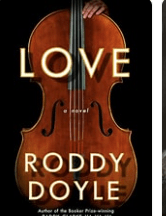
爱 - 罗迪·道尔的小说
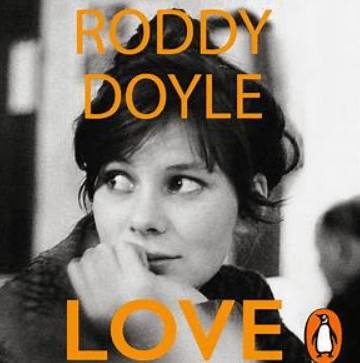
I have to be honest in saying that I am totally opposed to the rough language used here, the words bordering on the obscenity. If I could do it, I would mark the cover title with the censure “R 18” over the word LOVE. Let us just look at four sample pages below to proof my point, quoting verbatim here with those ‘f XXX’ words cut out:
我必须诚实地说,我完全反对这里使用的粗暴语言,接近淫秽的词语。 如果我能做到,我会在封面标题上加上谴责“R 18”,而不是“爱”这个词。 让我们看看下面的四个示例页面来证明我的观点,在这里逐字引用那些 “f XXX” 字:
Pages 45 - 46.
Davy, he said. This isn’t about sex.
But you had sex with Trish.
Yes.
You’d just spoken on the phone with Jessica.
Yes.
You brought that upstairs with you. You must have surely.
Okay, he said. – Yes.
And this isn’t about sex – you said.
Now, he said. Now, it isn’t. It’s misleading.
Well, I’m feeling misled.
We’re jumping the gun, he said. That’s the problem. It’s my fault, I think. So – being blunt. I had sex with Trish that night.
But you were thinking about Jessica.
No, he said. No, honestly, though – a bit. But Trish is Trish that night. I’m not going into detail – it’d be wrong.
Ye.s.
I’ll just say. Actually – two things. I’ll say two things. One is that, with Trish. There was only the two of us in the bed – really. Okay? And the other thing is, and I only thought of this later. I think she knew.
Trish knew?
I think so, he said. – I think she did.
Still at page 46 on to page 47

Sorry, said Joe. - that sounds terrible. But it came into my head. Remember when you were doing your test and you were told – well, I was, anyway. By my da. Not just to remember to look in the rear mirror and the side mirrors but to make sure the inspector saw you doing it. The inspector or the instructor or whatever his job description is. Make sure he saw you doing all the correct things.
Well, Trish was doing her driving test that night, he said. – If she heard me, Davy. I can hear her. I think she knew. At some level she knew. And now that I think of it, I was probably the one who was doing the test. And Trish was the inspector.
Did you pass?
Probably not. No.
=====
Pages 129 to 130

He was running out of steam. He’d finished telling the story he hadn’t wanted to tell, the event that was – he thought – beside the point. Jessica definitely existed; I knew that now. Trish had made her more real than Joe had been able to manage.
What happened then? I asked.
Nothin’.
Nothin’?
Nothin’ much, he said – Me an’ Trish.
But not that night.
Says who?
Really?
No, he said. Not that night. But listen Davy, I was saying earlier/ Like, this isn’t about two women fightin’ over me or anythin’ like tha’. Or me havin’ the midlife crisis or somethin’.
Midlife?
Late midlife, he said. It isn’t. When I saw Jessica, when I met her again. I thought – I felt. It felt like I’d been livin’ two lives – the family, Trish, the job an’ tha’. The – I suppose – the official live. An’ there was a shadow life. I’ve been livin’ as well – that I’ve only become aware of. Since, like. Since I met her. Because I didn’t really meet her, Davy. I’d been with her all that time. Thirty odd years, since schooldays. I’d felt that I’d been with her all the time. Tha’ was how I felt. What I’ve been tryin’ to say. Honest to God. I wasn’t cheatin’.
What did she think about Trish calling her?
She didn’t mention it.
Did you?
No.
Come here, I said. Did you ever tell Trish?
Wha’?
About Jessica, I said. Did you ever manage to tell her what happened?

Not in one sittin’, he said. No. Not really.
=====
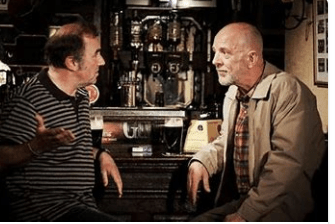
I know this is a story of two men in their fifties talking in various pubs where few women are often absent. But that should not be the excuse for a book written for the public’s consumption.
On the positive side, this novel emphasizes the importance of family, strong relationships and understanding between people. It explores the depths of love and tells a story of how two people can connect through various types of love. This book does have important lessons about communication, finding connection in one another, and the power of unconditional love. These ideas are demonstrated through the main characters, Joe and Davy, s they discover what true love is and how to maintain it through all of life’s challenges.
我知道这是一个故事,两个五十多岁的男人在各种酒吧里聊天,很少有女人缺席。 但这不应该成为为公众消费而写的书的借口。从积极的一面来看,这部小说强调了家庭、牢固关系和人与人之间理解的重要性。 它探索了爱情的深度,并讲述了一个两个人如何通过各种类型的爱情建立联系的故事。 这本书确实有关于沟通、在彼此身上找到联系以及无条件爱的力量的重要课程。这些想法通过主角乔和戴维得到了体现,他们发现了什么是真爱以及如何在生活中的所有挑战中保持它。
The book serves as a reminder that relationships must be worked on and invested in for them to remain healthy and strong. Communication is key in order to develop and sustain meaningful relationships. People must also be willing to be vulnerable and compassionate with each other, as well as learn to forgive in order to move past disagreements. Furthermore, this book offers readers an insight into the transformative power of love and its ability to heal hurtful experiences. It highlights the fact that even when tensions rise, love is capable of transcending all difficulties.
这本书提醒我们,必须努力建立和投资人际关系,才能保持健康和强大。 沟通是发展和维持有意义的关系的关键。 人们还必须愿意彼此脆弱和富有同情心,并学会原谅以克服分歧。此外,这本书让读者深入了解爱的变革力量及其治愈伤害经历的能力。 它强调了这样一个事实,即即使紧张局势加剧,爱也能够超越所有困难。

By reading Love, readers are reminded of the importance of investing in family and loved ones. This is especially true in times of crisis, as further emphasized by one of the main themes of the book: “Love is a choice”. We can choose to love, no matter what happens or how we feel at any given moment. As such, Love leaves as an important reminder that relationships need to be nurtured, cared for, and cultivated in order for them to blossom.
通过阅读《爱》,提醒读者投资于家庭和亲人的重要性。 在危机时期尤其如此,正如本书的主题之一“爱是一种选择”所进一步强调的那样。 我们可以选择爱,无论发生什么或我们在任何特定时刻的感受如何。 因此,爱作为一个重要的提醒,需要培养、照顾和培养关系才能开花结果。
tōng guò yuè dú 《 ài 》 , tí xǐng dú zhě tóu zī yú jiā tíng hé qīn rén de zhòng yào xìng。 zài wēi jī shí qī yóu qí rú cǐ , zhèng rú běn shū de zhǔ tí zhī yī “ ài shì yì zhǒng xuǎn zé ” suǒ jìn yí bù qiáng diào de nà yàng。 wǒ men kě yǐ xuǎn zé ài , wú lùn fā shēng shén me huò wǒ men zài rèn hé tè dìng shí kè de gǎn shòu rú hé。 yīn cǐ , ài zuò wéi yí gè zhòng yào de tí xǐng , xū yào péi yǎng 、 zhào gù hé péi yǎng guān xì cái néng kāi huā jié guǒ。
Review by Richard Dawkins from The Spectator:
Joe and Davy, fifty-plus drinking buddies, meet again after a long gap. Davy, now living in England, is in Dublin on a visit. Going from pub to pub as they did in their youth, they spend the night recalling past memories that don’t always tally.

The narrative drive of the novel lies with Joe who has met up with Jessica, the dream woman of their youth and has left home to live with her. Trying to define this love — mystical, magical, meant-to-be — takes an exhausting number of effing pints and pages without ever being answered. Maybe it can’t be. Language has its limits. Maybe it’s in the silences. And maybe it’s a red herring and what readers would do well to focus on is what keeps Davy checking his phone most of the night.
Ultimately the ridiculous if irresistible Joe/Jessica romance feels like a literary device designed to distract the reader from the true heart of the novel, which is the fact that Davy has come back to Dublin to look after his father who, we discover in the last, very moving 40 pages of the novel, is in a hospice close to death.
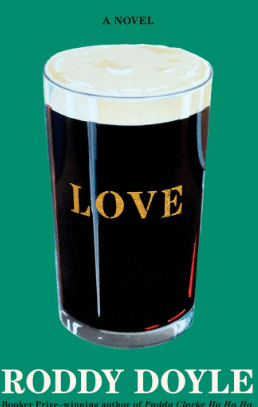
Red herring or literary device, the over-long dialogue on the Joe/Jessica romance allows Doyle to write about marriage, children, fathers and sons, indeed love in all its various form, and most importantly, the complexities of friendship. But the father/son heart of the story is weakened, and the reader exhausted by what becomes a tedious fairy tale kind of love. Ultimately, it’s Joe accompanying Davy to the hospice that cements this old friendship.
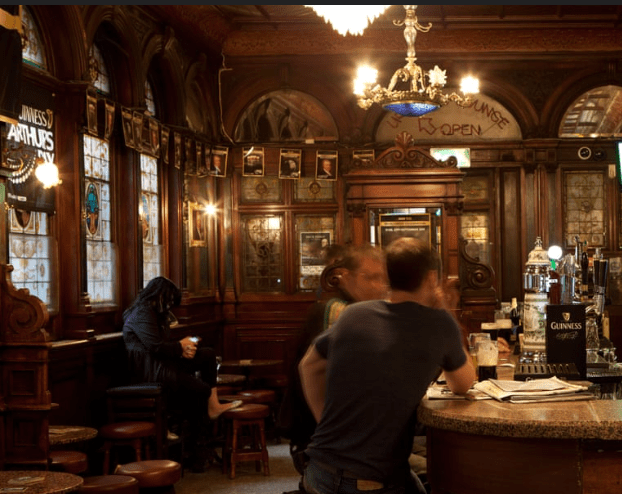
The novel’s worth reading if only for Davy’s two-page paean to the Dublin pub — where ‘women were guests’ and ‘the men were at home’; the pub that was ‘the shy man’s haven’; the place where ‘men stepped out of a world into their real world. The secret one. The sacred one.’
 English