
Who will be the next Prime Minister?


谁将成为下一任新西兰总理?
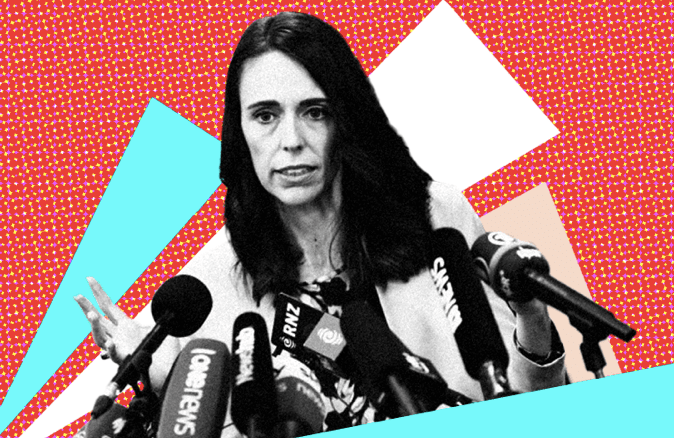
Who will replace Jacinda Arden to be the next Prime Minister of New Zealand, possibly only until the next general election in October this year? We will know by tomorrow morning but here below is just one man’s view on this topic. Can he be right in his prediction!
谁将取代 Jacinda Arden 成为下一任新西兰总理,可能只做到今年 10 月,下一次大选为止?我们明天早上就会知道,但下面只是一个人对这个话题的看法。难道说他的预言是对的?
“At least one media report has accidentally got it right,” he has said. At the top of this page we see the photograph of the five horses this media placed in the racetrack. However, two of the five - Grant Robertson (the current Deputy Prime Minister) and Andrew Little (the former Labour Party Leader) - had openly said that they are not contesting for the job. That left us with three from this photograph to consider - Chris Hipkins, Michael Wood, and Kiri Allan.
“至少有一份媒体报道不小心说对了,”他说。在本页的顶部,我们看到了该媒体放置在跑道上的五匹马的照片。然而,五人中的两人——格兰特·罗伯逊(现任副总理)和安德鲁·利特尔(前工党领袖)——曾公开表示他们不会竞争这个职位。这让我们可以考虑这张照片中的三个人——克里斯·希普金斯、迈克尔·伍德和基里·艾伦。
Read the odds placed on these three by this social media.
阅读此社交媒体对这三个人的赔率。
Chris Hipkins
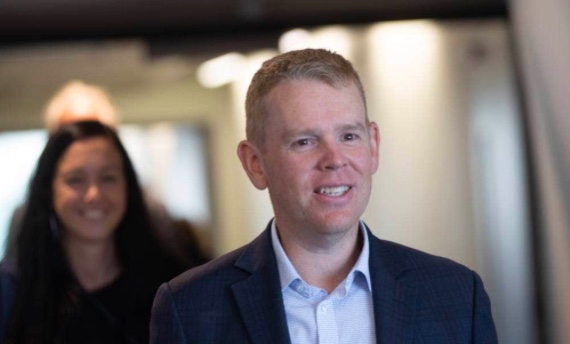
“Many punters have placed Chris Hipkins as the most likely candidate as the next Prime Minister. He has been one of the highest profile ministers throughout the Ardern government. He is the key person throughout the Government’s vaccination against COVID19 program and he did fix a lot of the mess left by other ministers.” But that odd solo voice says that “his policies will be too much of the sameness of Jacinda’s that the opposition can easily figure out how to tackle him as the Prime Minister. The Labour Party will be just too clever to fall into the opposition’s trap to select Chris as the new leader.”
“许多投注者将克里斯·希普金斯 (Chris Hipkins) 视为最有可能成为下一任总理的人选。他一直是阿德恩政府中知名度最高的部长之一。他是整个政府针对 COVID19 疫苗接种计划的关键人物,他确实解决了很多问题其他部长留下的烂摊子。”但那个奇怪的声音说,“他的政策与 Jacinda 的政策有太多相同之处,以至于反对党很容易想出如何对付他作为总理。工党太聪明了,不会落入反对派的陷阱,选择克里斯作为新的领导者。”
Michael Wood
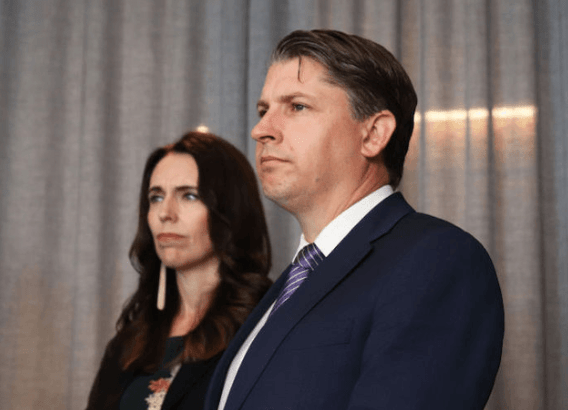
Michael Wood is the current transport minister who makes sensible decisions that may well be what the country wants and needs. Wood has been promoted by many punters as a likely future leader and this time round, he can be so selected by the caucus if this is the job he desires for now. But, “my own sense of analysing the wishes of Labour Party caucus is this - the need for consensus - just like the time when Jacinda herself was unanimously voted in as the new leader when Andrew Little gave that job up two elections ago. I believe that this time round, the Labour Party caucus will again decide to have an unknown face at the top job. Michael will consciously not be putting his hand up for the job, this time round.”
Michael Wood 是现任交通部长,他做出的明智决定很可能正是该国想要和需要的。伍德被许多投注者推崇为可能的未来领导者,而这一次,如果这是他现在想要的工作,他可以被党团选中。但是,“我自己对工党核心小组意愿的分析是——需要达成共识——就像两次选举前安德鲁·利特尔 (Andrew Little) 放弃这份工作后,杰辛达 (Jacinda) 本人被一致选为新领导人的时候一样。我相信这一次,工党核心小组将再次决定在最高职位上有一个不为人知的面孔。这一次,迈克尔将有意识地不为这份工作举手。”
Kiri Allan
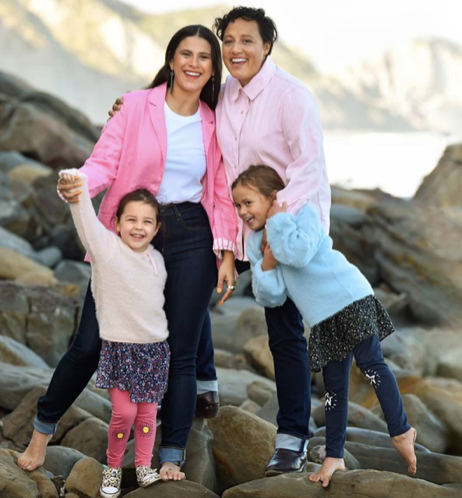
All the above said, we know that Kiri Allan will present a totally outsider and unknown character to the top job. She has performed well in every job given to her by Jacinda and one even wonders whether she has all along be trained for the top job. She has a lot of pluses. She is Maori, she is well educated and very comfortable with the western style of life, she is young, active and full of energy. She is a cancer-survivor and she is definitely the most relatable Member of Parliament to middle income voters. “She has my vote,” says that Mr. Solo. And, to proof his point he asks us to read carefully the speech given by Jacinda during the Labour Party Conference in South Auckland, just two months ago.
综上所述,我们知道 Kiri Allan 将以一个完全局外人和未知的角色来担任最高职位。她在 Jacinda 交给她的每一份工作中都表现出色,人们甚至怀疑她是否一直接受过最高职位的培训。她有很多优点。她是毛利人,受过良好的教育,非常适应西方的生活方式,年轻、积极、充满活力。她是一名癌症幸存者,她绝对是最受中等收入选民欢迎的国会议员。 “她有我的投票权,”索罗先生说。而且,为了证明他的观点,他要求我们仔细阅读两个月前 Jacinda 在南奥克兰工党大会上发表的演讲。
We quote here that speech, almost verbatim. But just before that watch the two videos quoted here and note that the entire stage was set with one main theme - that of Maori and Pacifica - as a centre plot, meaning that the Maori caucus of the Government has now weirded a large amount of power. https://youtu.be/wLFE95ebLNU https://youtu.be/wc5WpSfSLJg
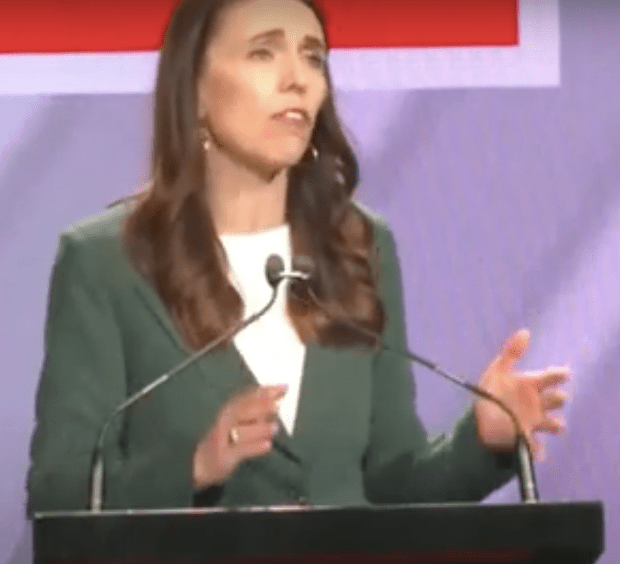
我们在这里几乎逐字逐句地引用那次演讲。但就在这之前观看这里引用的两个视频,请注意整个舞台都以一个主题——毛利人和帕西菲卡——作为中心情节,这意味着政府的毛利人核心小组现在已经掌握了大量权力. https://youtu.be/wLFE95ebLNU https://youtu.be/wc5WpSfSLJg
I think it’s fair to say, it’s been a time.
And while no one expects being in Government to be simple, the last few years have not been an easy run.
A global pandemic of a scale not seen since the 1918 global influenza outbreak, followed immediately by an economic downturn the largest in scale since the Great Depression of the 1920s and 30s – twin health and economic crises that no government in New Zealand history has ever had to contend with.
There was no rulebook written.
But what we did have, was a set of values, and the history of past Labour governments.
It wasn’t a rulebook, but it was a guide.
On the 9th floor of the Beehive building in Wellington, sitting directly behind my desk, is a picture of Michael Joseph Savage. You could say he’s on my shoulder but also ever so slightly in my ear.
Of course it was Savage and the first Labour Government that lifted New Zealand out of the depths of the Great Depression. Not by cutting taxes and services, but by investing in jobs, and building a social welfare safety net. They built the country’s first state home. And not long after these social reforms – New Zealand’s living standards were among some of the highest in the world. Not for the few, but for the many.
The Finance Minister who supported Savage, Walter Nash, then led Labour’s second government as it continued to build our nation’s social welfare system, while advocating on the world stage for peace over war after World War 2.
It was Norman Kirk and a Labour government who tilted the country towards a modern future with reforms of trade, health, the arts, and education. They worked hard to foster a renewed national identity and partnership with Maōri – all the while challenging global evil such as apartheid and nuclear testing.
It was a fight David Lange continued, making New Zealand nuclear free, while also righting the wrongs of the past by legalising homosexuality, and fully abolishing the death penalty.
And of course with Helen Clark, the first woman elected our Prime Minister, New Zealand maintained a principled position on the war in Iraq, while leading a fifth Labour government that improved the economic wellbeing of Kiwi families, by setting up KiwiSaver, the Cullen superannuation fund, and Working for Families.
These were all Labour governments that despite what came their way, never lost sight of the things that matter. I believe the same can be said about us.
We are a government that cares for our people.
Their jobs.
Their families.
Their kids and grandkids and the earth that they will inherit.
Yes, managing crisis is an integral part of government – and every Labour government has had their fair share to manage.
Did we always get everything right – no.
Could we have done more, or done things differently – yes.
But not every country can claim that over three years they saved more lives and livelihoods and lived with fewer restrictions than nearly anywhere else in the world. And that’s something every single New Zealander can be proud of.
But we’ve done more than manage crises – we’ve made progress in spite them.
Before Covid we said we wanted New Zealand to be the best place in the world to be a child.
And so we increased paid parental leave from 18 to 26 weeks.
We created the Best Start payment which restored for the first time in 40 years a universal child payment for families with a newborn.
We increased the Family Tax Credit.
And introduced free lunches, and free period products in schools.
for the first time, we have an early intervention in our mental health system that has provided half a million mental health sessions to Kiwis in need, and over 30,000 counselling hours for kids in schools.
we introduced the healthy homes requirements.
Stopped overseas speculators buying residential homes.
Evened up the playing field for first home buyers by closing tax loop holes and extending the bright line test.
Launched the biggest state housing build and Papakāinga investment we’ve seen in decades.
And now, we have helped 65,000 first home buyers with grants to buy their own homes, lifted the share of first home buyers in the market from 20 to 24 percent – the highest since 2016 – and created more than 10,000 public housing places.
We said we would tackle climate change.
So we passed the Zero Carbon Act, established the Climate Commission and created an Emissions Reduction Plan.
We banned future oil and gas exploration, and the installation of new coal boilers.
We built incentives and standards which means we have now tripled electric vehicle imports.
And we’re creating a world first regime to make sure we reduce agricultural greenhouse gas emissions, which make up just under half of our emissions profile.
And have now some of the lowest unemployment on record, including for Maori, in the midst of one of the largest social and economic crisis of a generation.
This isn’t a check list. This isn’t a political score card.
Behind every one of those numbers is someone’s life that has been impacted by a Labour government.
The gentleman I met in Hawke’s Bay who told me about his brand new Kāinga Ora home where his moko were finally warm.
We have been through tough times, but global volatility still lies in front of us and 2023 will likely, in many ways, be more difficult than this year. That brings uncertainty and anxiety. I understand that.
So the question next year will be: who is best to help New Zealand navigate these tough times.
Who can provide the security and certainty New Zealanders need to get through, with a plan, with confidence and with optimism.
The answer is Labour.
Because we have been here before.
Because we are not done yet.
And in 2023 we’re not asking for people to take a leap of faith. We’re asking them to look at our record.
That doesn’t mean considering Labour vs perfection. But Labour vs the opposition, which I would argue is quite some way off perfection.
And our underlying economic position is strong.
That is not by accident, but through thoughtful decision making and an eye on putting people and families at the centre of our recovery.
If there was one thing Covid taught us, and it schooled us in many ways, it was the need to be nimble. To keep an eye on the horizon and be willing to act when we need to.
I want families to have choices. I want them to stay home and be a primary care giver if they choose to. Or work, if they choose to. But increasingly those choices have been removed. And if you are a sole parent, you have even fewer.
we also took the first step of matching income thresholds for the childcare subsidy back to wage growth – ensuring more families didn’t lose out
But more is needed.
From April we will lift the household income thresholds on our Childcare Assistance subsidies for those with children under 5 in early childhood education, and aged 5 to 13 at an approved before or after school and holiday programme.
Our changes will mean 54 per cent of all New Zealand families with children will now be eligible for subsidised childcare assistance.
Sometimes people ask me at a more personal level, how I keep going.
Two reasons. Because of a powerful intervention otherwise known as endless cups of tea.
And because I am an optimist.
We have an amazing country. With incredible people.
And we owe it to those people to keep up our unrelenting focus on what matters most to them.
The dignity of decent work.
The best possible start for kids.
Affordable housing.
Health and education that people can rely on.
And a well-cared for environment.
And while I cannot tell you what might come our way next, because those are predictions I have learnt to stay well away from, I can tell you that Labour is the party who can tackle it head on, and make the progress we need and deserve as a nation.
I’m here for that. You’re here for that. So bring it on.
 English