
Revolution of our times 时代革命
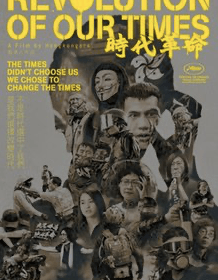
Take a look at the official trailer of this documentary before we discuss this topic.
在我们讨论这个话题之前,先看看这部纪录片的官方预告片。
Revolution of Our Times - Official Trailer 《時代革命》預告片. https://youtu.be/WbBU1AZS8HA
Revolution of Our Times is a 2021 documentary about the 2019 - 2021 anti-government protests in Hong Kong, directed by a novice named Kiwi Chow. It features interviews and footage of the frontline protest scenes and this film is banned in China and in Hong Kong. The tickets for the only session in Auckland was sold out early and thus we were unable to watch this film in the designated private cinema house. We did watch the various pieces of the documentary featured at imdb.com https://www.imdb.com/title/tt15049118/?ref_=vp_close and https://www.imdb.com/video/vi517325593?playlistId=tt15049118&ref_=tt_pr_ov_vi The excerpts contain interviews and actual scenes of the protests and are well planned to echo the views of the protestors.
《我们时代的革命》是一部 2021 年的纪录片,讲述了 2019 年至 2021 年香港的反政府抗议活动,由名叫 Kiwi Chow 的新手执导。它以采访和前线抗议场景的镜头为特色,这部电影在中国和香港被禁止。奥克兰唯一一期的票早早售罄,因此我们无法在指定的私人电影院观看这部电影。我们确实观看了 imdb.com 上的电影节选纪录片https://www.imdb.com/title/tt15049118/?ref_=vp_close. 节选包含采访和抗议的实际场景,并经过精心策划,以呼应抗议者的观点。
Those living in Hong Kong before the handover date (1997) of Hong Kong from British rule back to mainland China after ninety-nine years have the British political right of peaceful protests against the government of the day. Hong Kong people thus have fought for freedom and democracy since day one of the handover. In the year 2019, a proposed extradition legislation (which was later dropped from the legislative chamber) ignited heated debates between various parties in Hong Kong. The result of this proposed legislation is the many public waves of protests by those in Hong Kong who feel that their British style of freedom has been compromised. This documentary therefore features seven groups of protestors and pieces their tales together into one big story to chronicle the protest movement.
那些在香港从英国统治99年后回归中国大陆的回归日期(1997年)之前居住在香港的人,拥有和平抗议当时政府的英国政治权利。因此,香港人自回归的第一天起就为自由和民主而奋斗。 2019年,一项拟议的引渡立法(后来被立法会否决)引发了香港各方的激烈辩论。这项立法提案的结果是,香港人多次公开抗议,他们认为他们的英式自由风格受到了损害。因此,这部纪录片以七组抗议者为特色,并将他们的故事拼凑成一个大故事,以记录抗议运动。
In July 2021, three specially designed national security law judges of the Hong Kong High Court unanimously convicted a Hong Kong protestor, named Tong Ying Kit, for endangering national security because Tong had carried a flag emblazoned with a slogan “Liberate Hong Kong, Revolution off Our Times”. (see next photograph of the slogan below.) The judges ruled that the display of the phrase was “capable of inciting others to commit secession” and thus violated the National Security Law implemented in Hong Kong by China. This ruling by the judges also means that and the documentary film of the same description can be considered illegal.
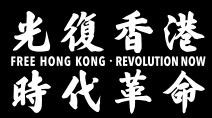
2021 年 7 月,香港高等法院三名特别设计的国安法法官一致判定一名名叫唐英杰的香港抗议者危害国家安全,因为唐英杰手持一面印有“光复香港,革命离开”口号的旗帜。我们的时代”。 (见下面标语的下一张照片。)法官裁定,该词的展示“能够煽动他人分裂”,因此违反了中国在香港实施的《国家安全法》。法官的这一裁决也意味着,与描述相同的纪录片可以被认为是非法的。
In addition, the national security law contains provisions for extraterritorial jurisdiction and therefore it covers every person everywhere including foreigners and film festival organisers, even outside of Hong Kong. Legal scholars have warned that anyone who has done anything that might offend the Hong Kong government should stay out of Hong Kong. Quite a few countries, including the United States, United Kingdom, Australia, Canada, Ireland and New Zealand, have now issued warnings to their citizens about this.
此外,国家安全法包含域外管辖权的规定,因此它涵盖了世界各地的每个人,包括外国人和电影节组织者,甚至在香港以外的地方。法律学者警告说,任何可能冒犯香港政府的人都应该远离香港。包括美国、英国、澳大利亚、加拿大、爱尔兰和新西兰在内的不少国家现已就此向其公民发出警告。
The documentary is said to be produced “by Hong Kong citizens” and the only individual revealed as the producer / director is Kiwi Chow. The rest of the filming crew prefer to remain anonymous. No one claims to be funding the making of film, although Kiwi Chow has mentioned that a businessman invited him to make the film. Chow has also been deeply grateful to other filmmakers and photographers who had given him a lot of footage and materials to use, especially when one of them had decided to stop creating their own film projects out of fear that they could run into trouble with the controversial law of Hong Kong.
据说这部纪录片是“由香港市民”制作的,唯一被披露为制片人/导演的人是Kiwi Chow。其余的摄制组宁愿保持匿名。没有人声称为电影制作提供资金,尽管 Kiwi Chow 曾提到一位商人邀请他制作这部电影。 Chow 也非常感谢其他电影制作人和摄影师,他们给了他很多素材供他使用,尤其是当他们中的一个人因为担心他们可能会在争议中遇到麻烦而决定停止创作自己的电影项目时香港法律。
At this point, we would like to point out the following meaningful facts that perhaps Kiwi Chow and the rest of his filming team should know.
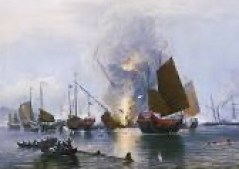
Fact # 1: Hong Kong has always been recognised as part and parcel of China. The 99-year lease to Britain was forced upon China during the Opium Wars (the first 1839 - 1842, between Britain and China and the second 1856 - 1860 between China and the joint forces of Britain and France). In each of these wars, China was weak and the foreign powers gained commercial advantages and territorial concessions in China. The treaties signed were equal ones with Britain inflicting sold opium to the Chinese public at exorbitant prices.
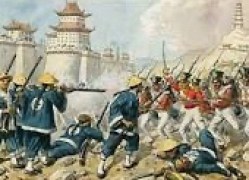
事实#1:香港一直被认为是中国的一部分。在鸦片战争期间(第一次是 1839 年至 1842 年,在英国和中国之间,第二次是在 1856 年至 1860 年,在中国和英国和法国的联合部队之间),向英国租用了 99 年的租期。在每一次战争中,中国都很弱,外国列强在中国获得了商业优势和领土让步。签署的条约与英国以高价向中国公众出售鸦片是同等的。
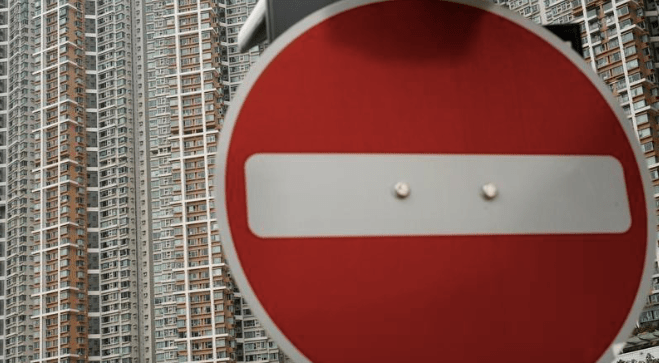
Fact # 2: The British, knowing that the occupation of Hong Kong was only for a period of 99 years, had no interest in building low-cost housing for the Hong Kong public. Instead, valuable land for the construction of apartments were auctioned off to Hong Kong rich developers for the construction of private apartments, that over the years, became smaller and smaller in size as successive colonial administrations aimed to make huge profits to be expropriated back to the United Kingdom.
事实2:英国人知道占领香港只有99年,对为香港市民建造廉租房毫无兴趣。相反,宝贵的公寓建设用地被拍卖给香港富有的开发商建造私人公寓,这些年来,随着历届殖民政府的目的是赚取巨额利润,这些私人公寓的规模越来越小。卖地所得的钱被送回英国.
Fact # 3: Unlike in Singapore and in Malaysia, Hong Kong citizens were not offered internal self government that could lead to independence. There were a legislative assembly that mainly looked after the domestic issues of Hong Kong. Hong Kong children were given a broad based western education with total disregard to the Chinese culture and most Hong Kong citizens were taught to be suspicious of the actions of the Communist Government of Mainland China.
事实3:与新加坡和马来西亚不同,香港公民没有获得可能导致独立的内部自治政府。有一个立法会,主要处理香港的国内问题。香港儿童接受了广泛的西方教育,完全无视中国文化,大多数香港市民被教导要怀疑中国大陆共产党政府的行为。
Fact # 4: In Hong Kong, unlike Singapore and Malaysia, the British has not left behind the Prevention of Public Safety Ordinance (commonly known as PPSO) legislation as the British did not foresee any rebellion ever occurring in the Hong Kong colony. Without such PPSO law, the westernised educated Chinese administrations after Hong Kong was returned to China, were unable to curb the violence that occurred during the anti-government protests. China could not interfere as she had signed an agreement with the British to give Hong Kong citizen the freedom of speech and freedom to participate in peaceful protests.
事实#4:在香港,与新加坡和马来西亚不同,英国人并没有留下《防止公共安全条例》(俗称PPSO)立法,因为英国人没有预见到香港殖民地会发生任何叛乱。没有这样的PPSO法,香港回归后的西化教育中国政府无法遏制反政府抗议活动中发生的暴力事件。中国无法干预,因为她已与英国签署协议,给予香港公民言论自由和参与和平抗议的自由。
With the above four facts in mind let us spend some time watching the following documentary video of that time entitled “China’s Rebel City - the Hong Kong Protest”. This video is totally unbiased and there are ten questions to be asked while we watch this presentation.
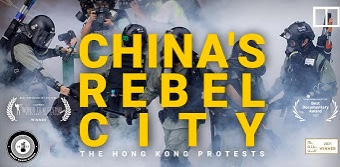
考虑到以上四个事实,让我们花点时间看一下当时的纪录片《中国造反之城——香港抗议》。该视频完全没有偏见,我们在观看此演示文稿时要问十个问题。
China’s Rebel City Part 1: The Hong Kong Protests.  https://youtu.be/YgYuRGre6AA.
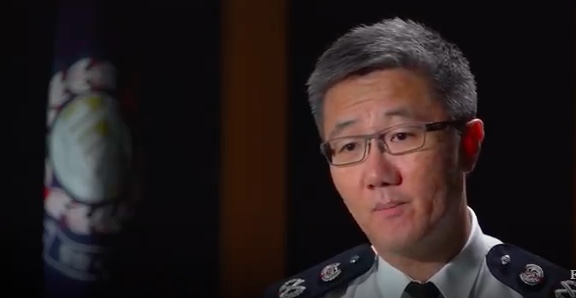
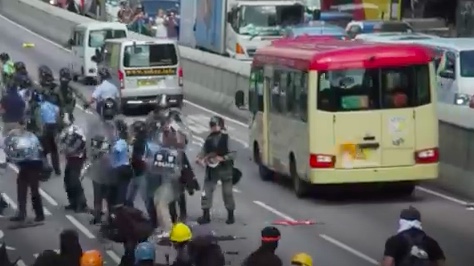
Question # 1: What could be the cause of the protest?
问题#1:抗议的原因可能是什么?
A young man went to Taiwan with his girl friend he had murdered. He then went back to Hong Kong. Because there was no extradition law between Hong Kong and Taiwan, that young man could not be sent back or extradited to Taiwan to be tried under Taiwan’s law. Hong Kong’s Chief Executive, Carrie Lam, and her administration took steps to have an extradition law put in place but the proposed legislation had implications that other criminals from mainland China could also be extradited back to China. Such extradition law was not in place in Hong Kong for the entire 99 years of Hong Kong under British rule. Many mainland Chinese citizens, especially corrupt officials had fled China and escaped to the western world through Hong Kong. Carrie Lam’s proposed extradition legislation aimed at stopping that loophole too. That was the main cause of the protest in June 6th 2019.
Question # 2: Did the protestors consider the history of why and how Hong Kong was ceded to the British in the year 1842?
问题二:抗议者有没有考虑到香港在 1842 年为何以及如何割让给英国的历史?
It has been recognised by parties (the western world included) all that Hong Kong belongs to China. Hong Kong was ceded to British rule in 1842 by bullying tactics because of the opium wars.
When Hong Kong returned to China in July 1997, the British and the Chinese governments came to an agreement that Hong Kong would have its Basic Law for the Hong Kong Special Administrative Region (SAR) for fifty years, under the “one country, two systems” regime. A provisional Legislative Council was established in Hong Kong to replace the elected Legislative Council on the transfer of power back to China.
As far as Hong Kong goes, Britain had neglected electoral reform until the last moment, and it did not extend its generally good record on respect for civil liberties in the territory to include Hong Kong in the international regime for the protection of human rights. China had foreshadowed various restrictions on political activity, and agreed to the appointment of an independent-minded judge to become Hong Kong’s new Chief Justice.
China will probably send contradictory signals about its intentions on political and legal issues in Hong Kong, because of uncertainty about how to deal with a unique arrangement and because of divisions between reformers and conservatives within the Party and the Army.
China’s Rebel City Part 2. https://youtu.be/ttkULjRizAc
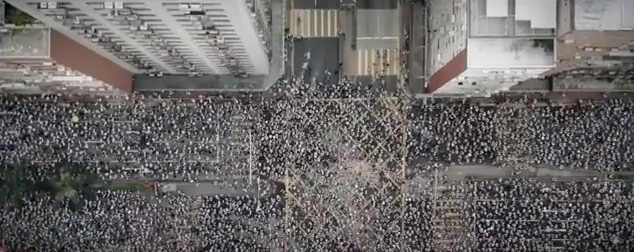
Other questions below can perhaps be answered after we have viewed the videos where the links are posted here.
Question # 3: When more than a million of the Hong Kong total population of seven million took part in a peaceful protest march, would you, as a Government of the day, arrange to meet up with the protest leaders to discuss a possible WIN-WIN solution?
问题#3:当香港总人口七百万中超过一百万人参加和平抗议游行时,作为当时的政府,您是否会安排与抗议领导人会面,讨论可能的胜利- WIN解决方案?
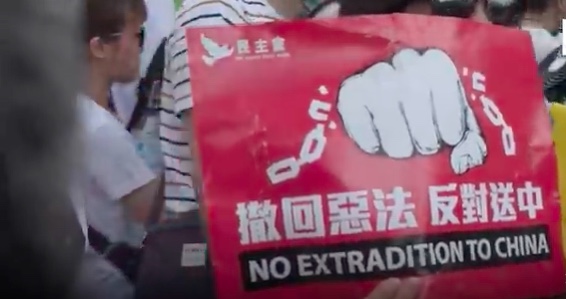
Question # 4: Protestors were also in the Hong Kong International Airport and were seen to be attacking returning Hong Kong citizens there. How was it that the Airport was not protected?
问题#4:抗议者也在香港国际机场,并被视为在那里袭击返回的香港公民。机场怎么没有受到保护?
China’s Rebel City Part 3. https://youtu.be/5saJ3JfZQ1g
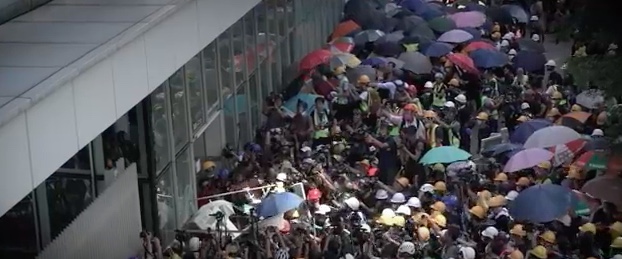
Question # 5: Why was the protestors destroying the public trains?
问题#5:为什么抗议者要摧毁公共火车?
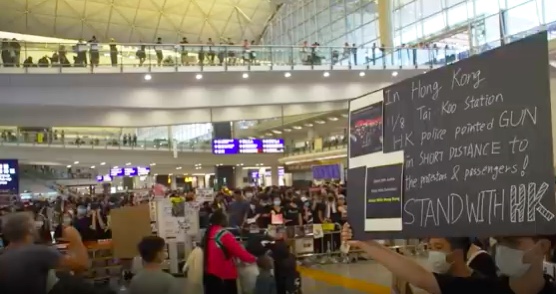
Question # 6: The protestors were also destroying properties at train stations and attacking civilians at various stations. Why was this situation not curbed by the Hong Kong authority?
问题#6:抗议者还在火车站破坏财产并在各个车站袭击平民。为什么香港当局没有制止这种情况?
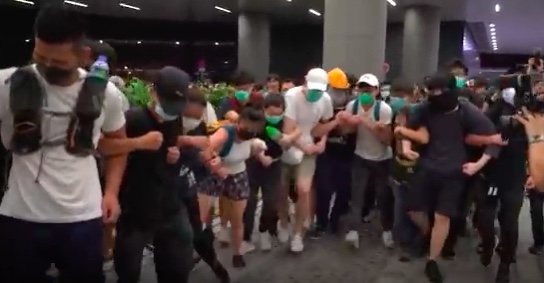
Question # 7: Why were the protestors allowed to enter the Legislative Assembly and could destroy the public chattels there?
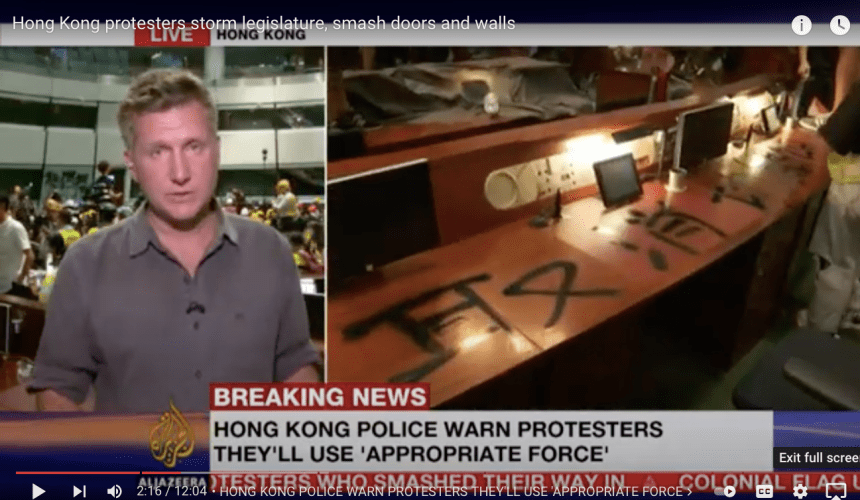
问题#7:为什么抗议者被允许进入立法会并可以摧毁那里的公共动产?
China’s Rebel City Part 4: https://youtu.be/B6WheN3bVBs
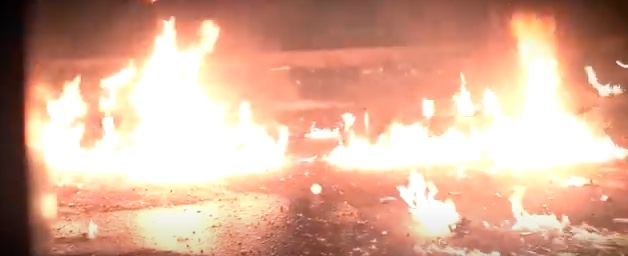
Question # 8: What was the justification of setting fire to the streets of Hong Kong City centre?
问题#8:在香港市中心的街道上放火的理由是什么?
Question # 9: How could the Hong Kong Polytechnic University grounds be captured by the protestors and be used as the protestors’ headquarters?
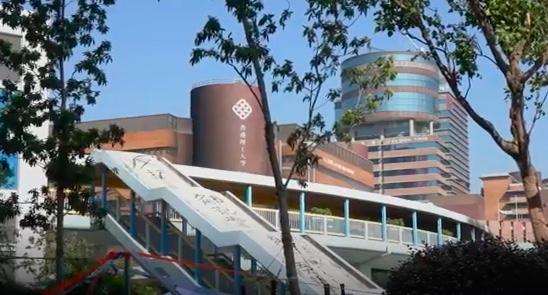
问题九:香港理工大学的场地怎么会被抗议者占领并用作抗议者的总部?
And, finally, the most important question of all is: Question # 10: Who or whom or which group of people were financing such protests and such violence in Hong Kong? And, what were their motives?
最后,最重要的问题是: 问题 #10:谁或哪群人资助了香港的此类抗议和暴力活动?而且,他们的动机是什么?
 English