
China and Hong Kong 1980 - 1980 年 的 中国 和 香港
In the year 1980, I was working for Fletcher Construction NZ and my role in Business Development was to secure construction contracts for the company in Singapore, Hong Kong and China.
With a Quantity Surveying background coupled with a qualification in Property Valuation, the work was easy and we did secure several overseas contracts to the delight of my bosses who, additionally earned export tax incentives from the Muldoon Government.
Balancing family life (with a solo mother, wife and four children) with so many overseas trips and flying in and out of Auckland so frequently did stress me out quite a bit.
For relaxation then, I turned to poetry.
Below are two poems written during that period, between flights.
Poem No. 1: China - 1980
Shanghai, Beijing or Tianjin
They’re all the same.
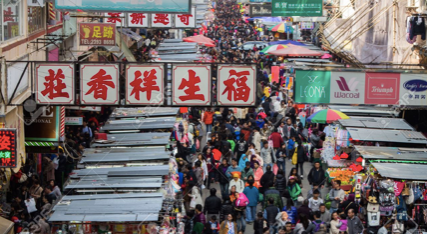
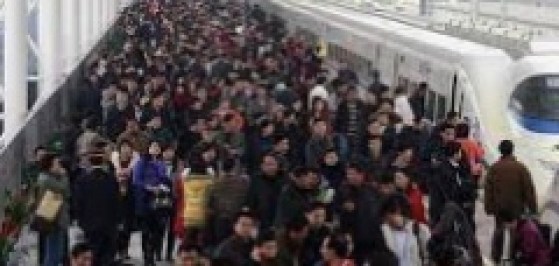
Throngs of people, crowding in
Every taxi, every bus, every train
Even every aeroplane.
Everyone carries bags - two or more
Bulky ones - big and small.
Shove you by, rush to the door
Heave those bags up to the store
Regardless that they’ve you floored.
Who cares for the rows that were called?
They simply want to be first of us all.
Step out of the plane and what do you see?
Heaps of hands forcing cards on me
Selling tours to herbal tea
Have I the time to rest, maybe?
Then at the five starred hotel, what do you see?
Again, tour guides shouting at me, Yes, me
Not by name but so very busy
Tourism is growing in every city.
To have the attention, you need to be
Aggressively,
forgetting dignity,
Stepping up to demand your room key.
At the restaurants, what do you see?
Everyone seems to be
So very hungry
Munching away at every opportunity.
At the University, what do you see?
Tradition is upheld, as sure as can be.
Lesser noise, older buildings, but still so very busy
Every students on their toes, moving along avenues so pretty
spaced both sides with tall decorative trees.
There is no need for apology
No calls for sympathy
No necessity for empathy
That’s the very story.
Poem No. 2: Hong Kong 1980
To many, Hong Kong is exciting
To me, very tiring!
The heat is there - People everywhere;
The traffic too adds to the tune
Of businesses here … … and there.
The talks, the walks
Are totally too swift
For me to have some air to breathe!
Never is there a place so difficult to trace
Just that one address of Parco Polo Princess.
For there are three Marco Polos
Along the same stretch of Canton Road …
What a stress!
All hotels too, by the way
Marco Polo Hong Kong, Marco Polo Gateway
or Marco Polo Prince, not Princess.
Confused, stressed?
To many, Hong Kong is challenging
To me, just confusing.
To many, Hong Kong is interesting
But to me, just boring!
1980 年,我在 Fletcher Construction NZ 工作,我在业务发展部的职责是为该公司在新加坡、香港和中国取得建筑合同。
拥有工料测量背景和房地产估价资格,工作很轻松,我们确实获得了几份海外合同,令我的老板高兴,他们还获得了马尔登政府的出口税收优惠。
平衡家庭生活(有一个单身母亲、妻子和四个孩子)与如此多的海外旅行和频繁进出奥克兰的航班确实让我压力很大。
为了放松,我转向诗歌。
以下是那段时期写的两首诗,在飞行之间。
第 1 首诗:中国 - 1980
上海、北京或天津都一样。
人山人海,拥挤每辆出租车、每辆公共汽车、每辆火车甚至每架飞机。
每个人都带着袋子 - 两个或更多 - 大件和小件。
推开你,冲到门口把这些袋子放到商店里
不管他们有你地板。
谁在乎被调用的行?
他们只是想成为我们所有人中的第一个。
走出飞机,你看到了什么?
一大堆手强迫我打牌
卖凉茶之旅
我有时间休息吗?
然后在五星级酒店,您看到了什么?
再次,导游对我大喊,是的,我
没有名字,但非常繁忙
每个城市的旅游业都在增长。
要引起注意,您需要
积极进取,
忘记尊严,
挺身而出索要房间钥匙。
在餐厅,你看到了什么?
每个人似乎都
非常饿
抓住每一个机会。
在大学,您看到了什么?
尽可能地坚持传统。
噪音较小,建筑物较旧,但仍然非常忙碌
每个学生都在警觉中前进大道非常漂亮
两边长满了高大的装饰树。
不需要道歉
不需要同情
不需要同情
故事就是这样。
第2首诗:香港1980
对许多人来说,香港令人兴奋
对我来说,很累!
热就在那里——到处都是人;
交通也增加了曲调
这里的企业……和那里。
谈话,散步
太快了
让我喘不过气来!
从来没有一个地方如此难以追踪
只有 Parco Polo Princess 的一个地址。
因为有三个马可波罗
沿着广东道的同一段......
什么压力!
顺便说一句,所有酒店也是如此
香港马哥孛罗,马可孛罗港门
或马可孛罗王子,而不是公主。
困惑、紧张?
对许多人来说,香港充满挑战
对我来说,只是困惑。
对许多人来说,香港很有趣
但对我来说,只是无聊!
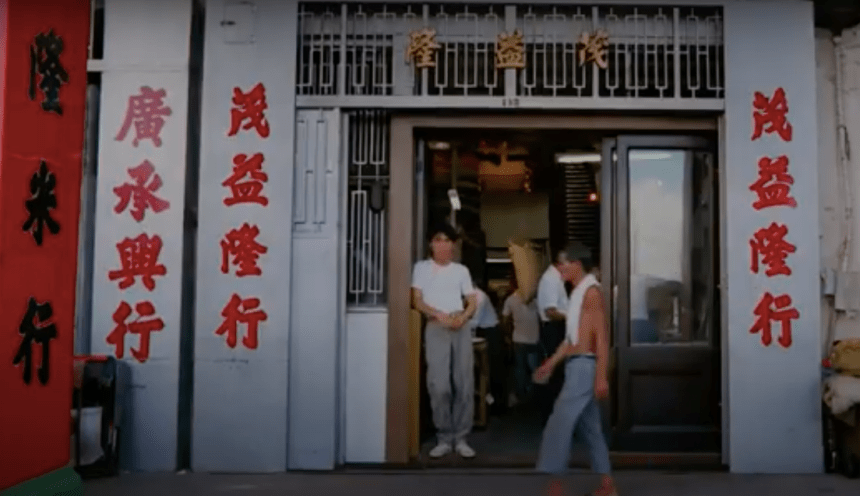
Hong Kong scenes of daily life in the 80s. Some of these clips are from real daily life, some are from documentaries and others are from movies, but they show the reality of the country at that time. https://youtu.be/JZh5BmcyXHo
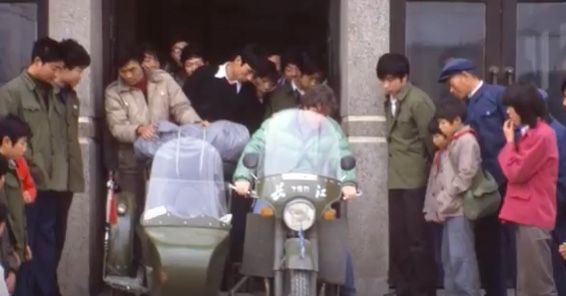
The mid-1980s saw a dramatic relaxation of Communist Party control over China’s economic, political, and intellectual life. It was arguably the most liberal period in the history of the People’s Republic, as a new generation of reformers sought to push the country towards a more open and tolerant system. These same trends, however, alarmed Party hardliners, who made repeated attempts to roll back the tide of liberalization. For members of the American press corps in Beijing, it was a period of testing the boundaries, challenging the restrictions on news coverage at the heart of the system, and exploring parts of Chinese society that had long been off-limits. Assignment China: the 1980s tells their story. The episode features interviews with some of the leading journalists who covered China during those years, They include John Burns, Edward Gargan and Ncholas Kristof of the New York Times, Michael Weisskopf and Dan Southerland of the Washington Post, Richard Hornik and Jaime FlorCruz of Time, Michael Parks and Jim Mann of the Los Angeles Times, John Sheahan of CBS News, John Pomfret of the AP, Adi Ignatius of the Wall St. Journal, and Dorinda Elliot of Newsweek. The film breaks important new ground, with John Burns revealing new details about his detention and expulsion from China in 1986, Mike Wallace’s producer sharing the behind-the-story story of the disastrous CBS “60 Minutes” 1986 interview with Deng Xiaoping, which almost got CBS News kicked out of China, the equally interesting story of how Communist Party chief Zhao Ziyang appeared on NBC’s “Meet the Press” in 1987, the saga of the reporters who covered the 1987 unrest in Tibet and were booted out of the region for their efforts, and the way journalists reported the remarkable intellectual and political opening in 1988 which paved the way for the pro-democracy demonstrations in 1989. With rare archival footage and still photos, Assignment China: the 1980s paints a revealing picture of how the media covered the China story in the years leading up to the crisis in Tiananmen Square. https://www.youtube.com/watch?v=LcZ2lpFfdzM
 English