John F Kennedy - Inaugural Address 约翰,肯尼迪 - 就职演说
约翰·肯尼迪 - 就职演说Yuēhàn·kěnnídí - jiùzhí yǎnshuō Perehitini John Kennedy - Korero tuatahi.
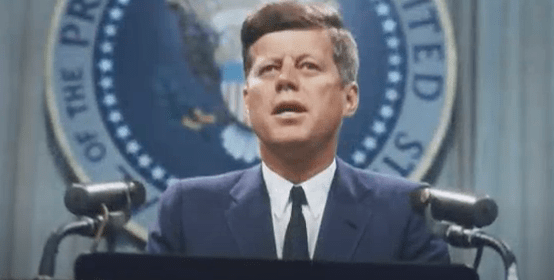
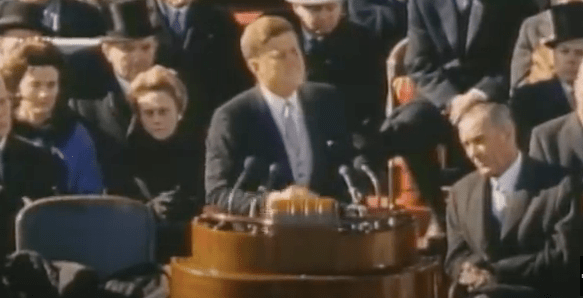
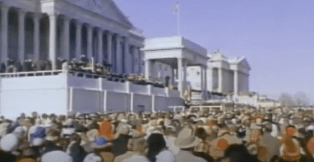
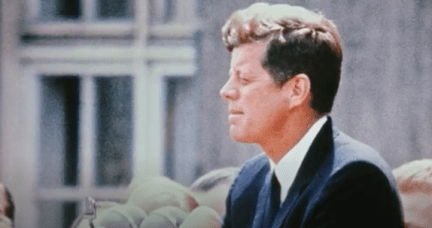
| John F. Kennedy’s inaugural address was delivered on a freezing cold January morning in 1961. |
约翰·肯尼迪 (John F. Kennedy) 的就职演说是在 1961 年 1 月一个寒冷寒冷的早晨发表的。
Yuēhàn·kěnnídí (John F. Kennedy) de jiùzhí yǎnshuō shì zài 1961 nián 1 yuè yīgè hánlěng hánlěng de zǎochén fābiǎo de.
I puta te whaikorero tuatahi a John F. Kennedy i te ata makariri o Hanuere i te 1961.
Despite his ailing back problems, he had never looked stronger than in that moment, delivering his speech to a welcomed crowd. All eager to tackle the “New Frontier.” Standing at the podium in just his overcoat, he began his first official speech as President of the United States. Kennedy’s voice was powerful and meant every word he spoke. Overall, his inaugural address may not be his best speech but it did unite a country in a significantly short period of time compared to other presidents in the past. Let’s take a closer look at how JFK’s words moved a nation. https://youtu.be/NwM6s55no6U. “Ask not what your country can do for you — ask what you can do for your country.”
尽管他的背部有问题,但他在向受欢迎的人群发表演讲时看起来从未像现在这样强壮。所有人都渴望应对“新前沿”。他穿着大衣站在讲台上,开始了他作为美国总统的第一次正式演讲。肯尼迪的声音很有力量,他说的每一个字都意味深长。总的来说,他的就职演说可能不是他最好的演讲,但与过去的其他总统相比,它确实在很短的时间内团结了一个国家。让我们仔细看看肯尼迪的话是如何影响一个国家的。
He raru kei tona tuara. Engari i kaha tonu tana korero. I tukuna e ia he whaikorero ki te mano, me te akiaki i nga tangata katoa kia kite i te "rohe hou." He kaha tona reo, ana korero katoa he pono. I roto i tana whaikorero i whakakotahi ai te whenua i roto i te wa poto.
For those students at school, studying this speech as part of their English or History lesson, the website to help you can be clicked here: https://www.jfklibrary.org/sites/default/files/2020-12/Interpreting%20JFK%27s%20Inaugural%20Address%20LP_0.pdf
Excerpt # 1 : Today. Panui # 1: I tenei ra. 摘录#1:今天。Zhāilù#1: Jīntiān.
“We observe today not a victory of party but a celebration of freedom — symbolising an end as well as a beginning — signifying renewal as well as change. For I have sworn before you and Almighty God the same solemn oath our forbears prescribed nearly a century and three-quarters ago.
 “我们今天看到的不是党的胜利,而是对自由的庆祝——象征着结束和开始——象征着更新和改变。因为我在你和全能的上帝面前宣誓,我们的先辈们几乎用同样的庄严誓言宣誓一个世纪零四分之三以前。  “Wǒmen jīntiān kàn dào de bùshì dǎng de shènglì, ér shì duì zìyóu de qìngzhù——xiàngzhēngzhe jiéshù hé kāishǐ——xiàngzhēngzhe gēngxīn hé gǎibiàn. Yīnwèi wǒ zài nǐ hé quánnéng de shàngdì miànqián xuānshì, wǒmen de xiānbèimen jīhū yòng tóngyàng de zhuāngyán shìyán xuānshì yīgè shìjì líng sì fēn zhī sān yǐqián.
Ka tirohia e tatou i tenei ra ehara i te wikitoria o te paati engari te whakanui i te herekore - he tohu mo te mutunga me te tiimata - e tohu ana i te whakahoutanga me te rereketanga. Kua oati hoki ahau ki tou aroaro, ki te Atua Kaha Rawa, ki taua oati ra, i kiia ra e o maatau tupuna tata ki te kotahi rau me te toru-kuata i mua.
“The world is very different now. For man holds in his mortal hands the power to abolish all forms of human poverty and all forms of human life. And yet the same revolutionary beliefs for which our forebears fought are still at issue around the globe — the belief that the rights of man come not from the generosity of the state but from the hand of God.”
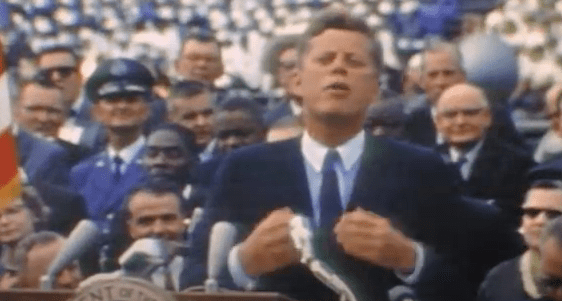
“We dare not forget today that we are the heirs of that first revolution. Let the word go forth from this time and place, to friend and foe alike, that the torch has been passed to a new generation of Americans — born in this century, tempered by war, disciplined by a hard and bitter peace, proud of our ancient heritage — and unwilling to witness or permit the slow undoing of those human rights to which this nation has always been committed, and to which we are committed today at home and around the world.
现在的世界已经大不相同了。对于在凡人手中拥有消除所有形式的人类贫困和所有形式的人类生活的力量的人。然而,我们的祖先所反对的叛逆信仰仍然是世界范围内的一个问题——认为人权不是政府的特权而是上帝之手的信仰。
He tino rereke te ao inaianei. Mo te tangata kei i ona ringa matemate te mana ki te whakakore i nga ahuatanga katoa o te rawakore o te tangata me nga momo ora katoa o te tangata. Heoi ko nga whakapono whakakeke i whawhai ai o tatou tupuna kei te raru tonu puta noa i te ao - ko te whakapono ko nga tika o te tangata ehara i te maakaatanga o te kawanatanga engari na te ringa o te Atua.
“Let every nation know, whether it wishes us well or ill, that we shall pay any price, bear any burden, meet any hardship, support any friend, oppose any foe to assure the survival and the success of liberty.
This much we pledge — and more.”
“让每个国家都知道,无论它对我们好还是坏,我们都将付出任何代价,承担任何负担,迎接任何困难,支持任何朋友,反对任何敌人,以确保自由的生存和成功。
“Kia mohio nga taangata katoa, ahakoa e pai ana ki a maatau, kaore ranei, me utu e tatou tetahi utu, waha i tetahi taumahatanga, tautoko i tetahi hoa, whakahee i te hoa riri. kia ora, kia hua nga rangatiratanga katoa.
Excerpt # 2: To Our Allies
“To those old allies whose cultural and spiritual origins we share, we pledge the loyalty of faithful friends. United there is little we cannot do in a host of cooperative ventures. Divided there is little we can do — for we dare not meet a powerful challenge at odds and split asunder.
“To those new states whom we welcome to the ranks of the free, we pledge our word that one form of colonial control shall not have passed away merely to be replaced by a far more iron tyranny. We shall not always expect to find them supporting our view. But we shall always hope to find them strongly supporting their own freedom — and to remember that, in the past, those who foolishly sought power by riding the back of the tiger ended up inside.
对于那些与我们有着共同文化和精神渊源的老盟友,我们向忠实的朋友宣誓效忠。团结起来,我们在众多合作企业中几乎无能为力。分裂我们几乎无能为力——因为我们不敢面对强大的挑战而分裂。Ki era hoa tawhito ko o ratou putake aa ahurea me o taatau wairua kei a taatau, e oati ana tatou ma te pono o nga hoa pono. He iti rawa te kotahitanga me mahi tahi tatou. Kaore e tika kia whakaaetia te wehe wehe i a taatau na te mea he maia taatau ki te anga atu ki te wero nui i te waahi ka heke mai.
“To those people in the huts and villages of half the globe struggling to break the bonds of mass misery, we pledge our best efforts to help them help themselves, for whatever period is required — not because the communists may be doing it, not because we seek their votes, but because it is right. If a free society cannot help the many who are poor, it cannot save the few who are rich.
“To our sister republics south of our border, we offer a special pledge — to convert our good words into good deeds — in a new alliance for progress — to assist free men and free governments in casting off the chains of poverty. But this peaceful revolution of hope cannot become the prey of hostile powers. Let all our neighbors know that we shall join with them to oppose aggression or subversion anywhere in the Americas. And let every other power know that this Hemisphere intends to remain the master of its own house.”
“To that world assembly of sovereign states, the United Nations, our last best hope in an age where the instruments of war have far outpaced the instruments of peace, we renew our pledge of support — to prevent it from becoming merely a forum for invective-to strengthen its shield of the new and the weak — and to enlarge the area in which its writ may run.”
“对于这个由主权国家组成的世界大会,联合国是我们在战争工具远远超过和平工具的时代的最后最大希望,我们再次承诺支持 -- -- 以防止它成为仅仅一个论坛谩骂——加强其对新弱者的保护——并扩大其令状的适用范围。”
“Ki tera huihuinga o nga kawanatanga rangatira, te United Nations, to tatou tumanako whakamutunga i roto i nga tau i tino kaha rawa atu nga taonga o te pakanga ki nga taonga o te rongomau, ka whakahouhia taatau oati tautoko - kia kore ai e waiho hei huihuinga noa iho - Hei whakakaha i tana whakangungu rakau o te hou me te ngoikore - hei whakanui i te takiwa e rere ai tana tuhinga. “
Excerpt # 3: Let Both Sides … … …
“So let us begin anew — remembering on both sides that civility is not a sign of weakness, and sincerity is always subject to proof. Let us never negotiate out of fear. But let us never fear to negotiate.”
“Let both sides explore what problems unite us instead of belabouring those problems which divide us.
“Let both sides, for the first time, formulate serious and precise proposals for the inspection and control of arms — and bring the absolute power to destroy other nations under the absolute control of all nations.
“Let both sides seek to invoke the wonders of science instead of its terrors. Together let us explore the stars, conquer the deserts, eradicate disease, tap the ocean depths and encourage the arts and commerce.
“让双方团结起来,在地球的各个角落听从以赛亚的命令——”解除沉重的负担。 . . (和)让被压迫者自由。” “Kia rapu nga taha e rua ki te whakaputa i nga mahi whakamiharo o te putaiao kaua ki nga whakamataku. Kia tirotiro taatau i nga whetu, kia wikitoria i te koraha, whakakore i te mate, pa atu ki nga hohonu o te moana me te akiaki i nga mahi toi me nga mahi tauhokohoko.“
“Let both sides unite to heed in all corners of the earth the command of Isaiah — to “undo the heavy burdens . . . (and) let the oppressed go free.”
“And if a beachhead of cooperation may push back the jungle of suspicion, let both sides join in creating a new endeavour, not a new balance of power, but a new world of law, where the strong are just and the weak secure and the peace preserved.”
“如果合作的滩头阵地可以击退猜疑的丛林,让双方共同创造新的努力,不是新的力量平衡,而是一个新的法律世界,在那里强者公正,弱者安全,维持和平。” "Ki te aukati te rangatira o te takutai mahi tahi ki te ngahere poroteehe, me uru nga taha e rua ki te hanga kirimana hou, kaua ko te toenga mana hou, engari he ao ture hou, e tika ana te hunga kaha, me nga ngoikore kia awhinahia. Kua tau te rongo. "
Now the trumpet summons us again — not as a call to bear arms, though arms we need — not as a call to battle, though embattled we are — but a call to bear the burden of a long twilight struggle, year in and year out, “rejoicing in hope, patient in tribulation” — a struggle against the common enemies of man: tyranny, poverty, disease and war itself.
“Can we forge against these enemies a grand and global alliance, North and South, East and West, that can assure a more fruitful life for all mankind? Will you join in that historic effort?”
Excerpt # 4: Ask not … …
“And so, my fellow Americans: ask not what your country can do for you — ask what you can do for your country.“
“Ana, e oku hoa Amerikana: kaua e patai he aha ta to whenua e taea ai mo koe - patai he aha ka taea e koe mo to whenua.” “好吧,我的美国朋友们:不要问你的国家能为你做什么——问问你能为你的国家做什么。”
“My fellow citizens of the world: ask not what America will do for you, but what together we can do for the freedom of man.
“Finally, whether you are citizens of America or citizens of the world, ask of us here the same high standards of strength and sacrifice which we ask of you. With a good conscience our only sure reward, with history the final judge of our deeds, let us go forth to lead the land we love, asking His blessing and His help, but knowing that here on earth God’s work must truly be our own.”
"Hei whakamutunga, ahakoa he taangata whenua koe no te United States, no te ao ranei, tena koa patai mai ki a matou i konei mo nga paerewa tiketike o te kaha me te patunga tapu e patai atu ana matou ki a koe. Ko te Hinengaro te whakahoki pono pono anake. Ko te hitori te kaiwhakawa whakamutunga mo a maatau mahi. Haere tatou ki mua, arahi i te whenua e arohaina ana e taatau, me te inoi mo tana manaakitanga me tana awhina, engari me mohio taatau ko nga mahi a te Atua i runga i tenei whenua, no tatou tonu tenei. "
“最后,无论你是美国公民还是世界公民,请在这里向我们询问我们对你的高标准努力和牺牲。正念是唯一正确的答案。历史是我们行为的最终评判者。让我们前进,带领我们所爱的国家,祈求他的祝福和帮助,但我们必须知道上帝在这个地球上的作为,这是我们的。”
 English