
Is Jesus God? 耶稣是神吗?
耶稣是神吗?
Yēsū shì shén ma?
Ko Ihu te Atua?
[Chinese]
[Chinese Pinyin]
[Maori]
Put this question in another way "Is Trinity Real?"
这个问题必须以另一种方式提出:“我们是否相信三位一体的上帝——父亲、儿子和圣灵?”
Zhège wèntí bìxū yǐ lìng yī zhǒng fāngshì tíchū:“Wǒmen shìfǒu xiāngxìn sānwèiyītǐ de shàngdì——fùqīn, érzi hé shènglíng?”
Ko tenei patai me pa ki tetahi atu ara "Kei te whakapono tatou ki te Tokotoru o te Atua kotahi - papa, tama, me te wairua tapu?"
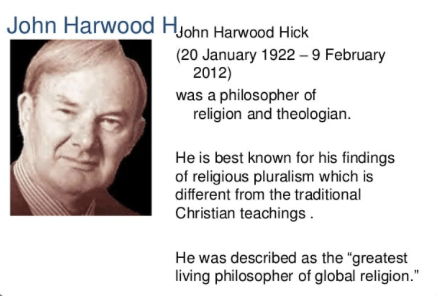
We shall start the discussion of this important question with John Hick’a “Parable of the Road”. Read the summary of this parable below:
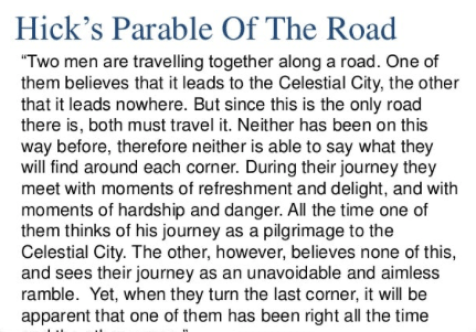
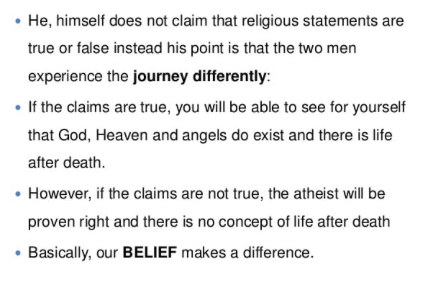
让我们从哲学家约翰希克的“道路寓言”的故事开始讨论。Ràng wǒmen cóng zhéxué jiā yuēhàn xī kè de “dàolù yùyán” de gùshì kāishǐ tǎolùn.
I timata ta maatau korerorero ma te korero a Philosopher John Hick i tapaina ko “Te Rori”.
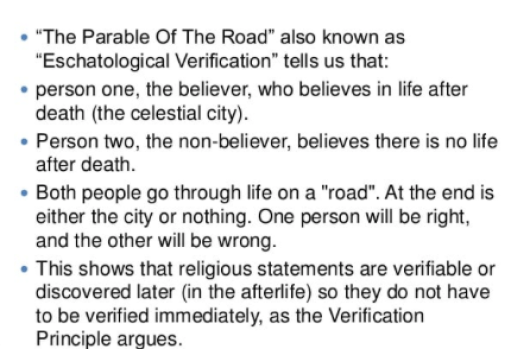
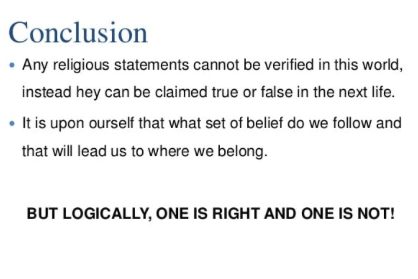
Who was correct? Would that road lead to the kingdom of God? or to nowhere? Could both of them be correct? or could both of them be wrong?
If, say, the road brought them to Shanghai, People’s Republic of China. Person A, a Chinese, would say ‘Yes, I’ve reached God’s kingdom,’ because to him, he was in familiar territory. Person B, an European totally unfamiliar with the surrounding of taking rice as the main meal, would say ‘Yes, this is nowhere.’ And both were correct. To Person C, who was an agnostic atheist, reaching Shanghai did not mean anything special for him and to Person D, a theist / deist, reaching Shanghai also did not mean that he had reached ‘nowhere’, and both were correct. The point really is that there is no definite answer to the question asked. It is our belief system that makes the difference. Now if we ask ourselves the question “Is Jesus God?” the answer depends very much on our beliefs.
NOTE: Because of the length of this article, the Chinese and the Maori translated versions of the article will be separately posted.
注:由于本文篇幅较长,本文将分别发布中文版和毛利文版。 Zhù: Yóuyú běnwén piānfú jiào zhǎng, běnwén jiāng fēnbié fābù zhōngwén bǎn hé máolì wén bǎn.
PANUI: Na te roa o tenei tuhinga, ka tukuna wehe nga tuhinga Hainamana me nga Maori.
Perhaps, it is best, at this stage, to listen to wise words of Sir Lloyd Geering, who on February 26th 2017 made the following speech from the pulpit of St. Andrew’s Church. He was then 99 years old.
Summary of the article “How my thinking has changed” – by Sir Lloyd Geering. https://www.odt.co.nz/opinion/theologians-beliefs-have-evolved-gratitude-christian-tradition-remains
https://www.standrews.org.nz/archives/30011.
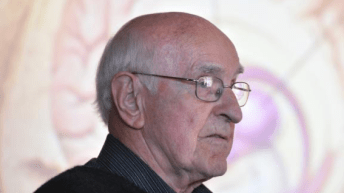
Sir Lloyd Geering started becoming interested in Christianity when he was studying in University. He was then active in the Student Christian Movement of the Presbyterian Church. By the year 1937 (he was nineteen years old then), his style of life changed as he submerged himself in activities of the Church. Every Sunday he would attend Bible class at 10am, joined the Church service at 11am and sang in the choir, taught Sunday School in the afternoon and attended the evening service at 6:30pm. On weekdays he would spend no less than four hours a day reading the stories of the Old Testament.
By the end of that year 1937, he felt the calling of God and he decided to join a three-year course studying theology at Knox Theological College in Dunedin.
At twenty, Sir Lloyd Geering was a novice in church life and he uncritically accepted what he was taught. His teachers were mostly liberal theologists and he developed an interest in the history of the Bible. To him then, the Bible was a collection of human experiences and that Christian thinking was an ever-evolving process, rather than a set of unchangeable doctrines.
He learned one useful thing about the role of theology - that the task of theology is not to expound the unchangeable dogmas said to have been revealed by God but to think through the religious experience and relate such experience to the real world. Such a liberal thinking was new during the times when he was at University. Ever since his graduation and later even as a Minister of the Presbyterian Church, he stuck to his liberal approach instead of the traditional form of dogmatic theology. As a parish minister he never once preached that Christ’s death on the cross had achieved our salvation. Rather, his sermons expounded Christianity as a way of life, based on the moral teaching of Jesus of Nazareth.
His thinking on religion was further developed to another level or stage, influenced by the works of Paul Tillich and Rudolf Bultmann. Bultmann, in particular, showed him how the story of Jesus in the New Testament was clothed in the mythical thinking that was current in the ancient world, but which was no longer relevant in the context of the daily lives of the day. To discover the truth of the New Testament Christian message for our non-mythical world, Bultmann said it must be ‘demythologised’, and lifted out of its mythical setting and re-interpreted in a manner that enabled it to speak to the current (even then, in the 1960s) secular world.
In 1966 he wrote an article that tried to explain to modern readers how to understand the resurrection of Jesus, for the mythical stories of Jesus’ resurrection and ascension into heaven could no longer be taken at face value. He started to write about what he had uncovered just to make the public aware that the myths of Christ had to be dealt with in the modern context. In one of his books, entitled “From the Big Bang to God, he tried to make it clear that, far from an unseen God having made the universe, it was the process of evolution that eventually brought forth the human beings and human language. This in turn resulted in the creation of such concepts as God.
It was clear to Geering that the evolution of the universe was a story of human construction, one that could not be told until we had created a language in which to tell it. He told us that: “We seldom recognise how much our human life depends on language. This is why the ancients unthinkingly assumed that language had existed from the beginning of time. The Bible tells us that God created the world by the use of language: “God said, ‘Let there be light!’ and there was light!” Similarly, the Fourth Gospel begins, “In the beginning was the Word”. It is not too much to say that it is language that enables us to make sense of the world we find ourselves living in.”
Lloyd Geering reminded us that we were not born with words already in our minds and our mouths, that we did not enter the human thought world until, from about the age of two, when we began to speak. The human thought-world we entered from then onwards becomes the lens through which we saw and understood the physical world. This is why we cannot remember anything from before the age of three. This was the reason why people of different cultures were live in different thought-worlds and saw the same physical world and experiences rather differently. Thus, to Geering then, no cultural tradition, such as Christianity, could claim to be the only true spiritual path and to judge all others to be false.
The second area of change that Geering experienced was the fact that Jesus of Nazareth should not be viewed as someone to be worshipped as the divine Son of God, for that sort of language belonged to the world of ancient mythology. What the works of Jesus had shown his was that Jesus was not even a prophet after the Old Testament model. To him, Jesus was just a wise man, a sage, walking in the footsteps of Ecclesiastes. Geering research revealed that Paul, for instance, had never met Jesus in the flesh. The original Jesus did not talk much about himself, and not even much about God. Rather he talked about the Kingdom of God, describing it in such parables as the Good Samaritan, the Prodigal Son, and the Leaven. Jesus used this term to describe his vision of how people should live with each other in loving relationships of reciprocal goodwill.
The third area of change in Geering’s thinking had been in the acceptance of our mortality. He described us humans as finite, earthly beings, just like all other planetary creatures. We were given one life to live and could expect no future existence beyond the grave in some heavenly spiritual realm.
For further reading on the same topic, google “Wilfred Cantwell-Smith’s Towards a World Theology” and “Myths in Christianity”. https://youtu.be/xGw_KB8q7po
Sheikh Ahmed Hussein Deedat (July 1, 1918 August 8, 2005) was an Indian-South African author, lecturer, and orator. A Muslim, he was best known for his numerous inter-religious public debates with evangelical Christians, as well as lectures, most of which were centered around Islam, Christianity and the Bible. He aimed at providing Muslims with theological tools for defending themselves against the intense missionary striving of many Christian denominations. He used English instead of Arabic or any other language to get his message across to Muslim minorities in the western world. https://youtu.be/-FqHtohLdFQ.
Q & A Session: https://youtu.be/QCsKW8AAy1U.
 English