
Meaning and End of Religion
NOTE: The Chinese version of this article will be posted separately.
宗教的意义和宗教的终结 - 注:本文中文版另行发布。
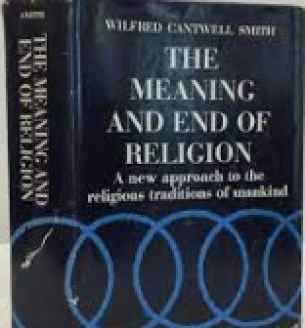
This book authored by Wilfred Cantwell-Smith was published in the year 1963. It is surprising that the contents of this important book has not been widely circulated. Recently a discussion on the topic of “the truth in bible stories” between a 82-year-old grandfather with his 17-year-old grandson, brought out the relevance and the significance of this book, especially in the context of today’s troubled societies.
What is ‘religion’? Perhaps a read of some readers’ comments on this book may well be a good setting of the environment for this important topic.
“Wilfred Cantwell Smith, maintained in this vastly important work that Westerners have misperceived religious life by making religion into one thing. He shows the inadequacy of religion to capture the living, endlessly variable ways and traditions in which religious faith presents itself in the world.” https://www.goodreads.com/en/book/show/86090
About the author
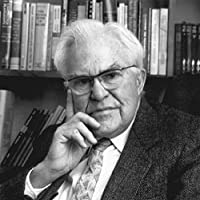
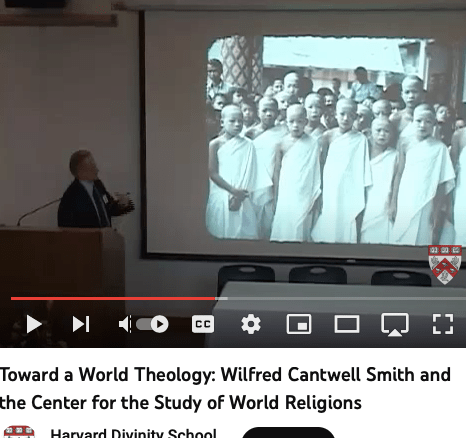
Wilfred Cantwell Smith (July 21, 1916 – February 7, 2000) was a Canadian professor of comparative religion who from 1964–1973 was director of Harvard’s Center for the Study of World Religions. The Harvard Gazette characterized him as one of the field’s most influential figures of the past century. In his 1962 work The Meaning and End of Religion he notably and controversially questioned the validity of the concept of religion.
Reader’s Book Review # 1: From David - September 9th 2022.
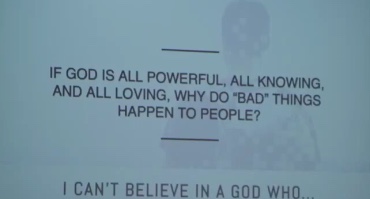
I have heard countless times, and probably often said myself, that Christianity is not a religion, it’s a relationship. Religion is what other people do - rituals and practices to try to earn God’s favour. But Christians are living in relationship, uniquely, with God. Sometimes this language contrasted religion with spirituality. There was even that viral video years ago where a spoken-word poet decried the problems of religion. https://crossroadsabc.com/media/blogs/detail/top-5-reasons-people-struggle-with-god/?gclid=CjwKCAiApvebBhAvEiwAe7mHSJVA-OKmnrzO1-JLYmLCnG9sQdVoK2VOr8n2RDHIF-OIhXCuUcg0FBoCrgQQAvD_BwE
As I read this book, it was quite humorous then to realise that attitude is not unique to Christians. Smith quotes a Buddhist who says, “Buddhism is not a religion” and a Muslim who says “Islam is not a religion.” The point, in the most mundane way I can put it, is real people in the real world do not say, “I am now going to practice my religion and try to earn God’s favor.” Or, at least, this approach to the divine, if it is how people think today, so new as to be unrecognisable to most humans throughout history.
Smith’s book is a classic in religious studies. It makes me wonder why I did not read it while literally majoring in RELIGIOUS STUDIES at Penn State 20 years ago. Maybe its my fault for doing liberal arts at an engineering school? Maybe we did read it and I was too young and dumb to realise how good it was?

Either way, this book is a brilliant work on religion. Of course, one of the main arguments is that “religion” is a term whose use has run out. Smith traces the history of the concept and the creation of “world religions” while at the same time showing how academics, and the public, are already moving away from describing large group of people by their Religion.
I’ll leave it to others to provide a more detailed review of the book; I’m sure anyone reading this can find such a review. Basically, in place of “religion” Smith wants two terms - cumulative tradition and faith. The cumulative tradition is the stuff anyone can observe through history. Faith is the internal relationship to the divine that humans practice.
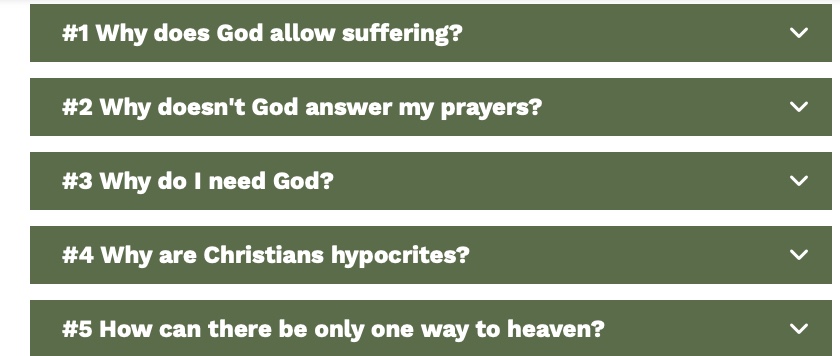
One particular point I found interesting was realising how difficult it is to define a religion. To define a religion we are looking for some ideal thing that really only exists in our imagination. The desire for such a definition is at least partly rooted in Platonic philosophy where the really real is the ideals that only exist in the spiritual realm. But when we look at lived religion, when is this ideal found? Where? In a moment in the early church? The Reformation? Some more abstract set of truths you can discern by finding what all Christians through history had in common? Is this even possible?
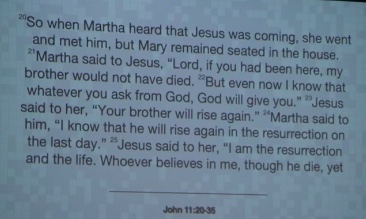
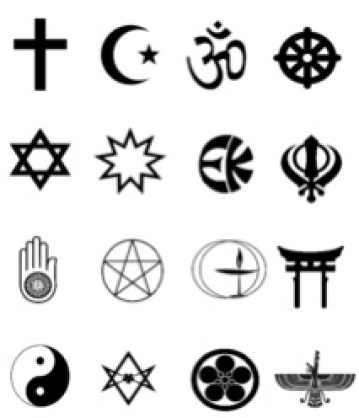
The idea of world religion happened when religion became more about a set of beliefs than about practices. Once it was primarily about a set of beliefs, this idea was then transported out into the world. I remember being given a comparative religions chart in church or campus ministry that listed different religions (Christianity, Buddhism, Hinduism, Marxism, etc.) and what they believed about different topics (creation, sin, salvation). The point was to show how Christianity provided the best answers. The problem was, such comparisons force other faiths into being primarily about belief. It approaches other peoples through a default-Christian lens.
Further, even for Christianity this was a new way to approach people. Its not that Christians prior to the modern world did not concern themselves with belief. They did. The point is, there was always a recognition that religion was not about being part of a monolithic group but about living a life of faith.
There is so much more to chew on in this book. Whether you are a person of faith (as I am) or not, this book will help better understand how we talk about religion, how we could talk better about religion and much more.
Reader’s Book Review # 2: From Damien, April 14th 2017.
Smith’s hoped for future, one in which the words “religion” and especially “religions” have disappeared from serious discourse, hasn’t yet arrived, and may seem even more distant in some ways. But his work opened the doors to that possibility, revealing to the Western world how empty these words have become. Today, people tend to sort themselves into two categories, one, “anti-religious” who define religion in such a way as to make it a strawman of primitive ignorance, easily castigated or simply ignored, the other, “religious” who define religion in a deeply personal way so idiosyncratic as to be unapproachable by anyone outside that individual’s mind. Both are extremes that eliminate any practical possibility of meaningful engagement or discourse. By carefully outlining the historical growth of the modern concept of “religion,” Smith can bring a person in either camp toward the middle – a place of deeper, broader understanding that can open the discursive doors once again. Though there are portions of the work that are dated, it is the foundational work in modern comparative religion, a field whose importance today cannot be overstated.
Reader’s Book Review # 3: From Andika Pratama, May 1st, 2014.
This book is very enlightening to me. To all those who have developed some prior judgments just by reading the title, note that this is not about the end of “religion” as you understand it. It is more about the exploration of the term “religion” itself, which is nowhere said in any religious scripture, with the exception of the Qur’an. But even so, according to Smith’s analysis, what the Qur’an means by “religion” (din) is not the same at all as the term “religion” that we in modern times seem to have been brought to believe. Overall, Smith radically proposes to drop the term “religion” altogether and instead focus on either faith or tradition.
So for those who think that they know a lot about “religion” and still use “religion” using their own preconceptions of it, this book is worth exploring and eventually pondering because it has impacts on how we deal with religious issues in a broad and practical sense.
Reader’s Book Review # 4: From John, July 11th, 2011
This classic work is a study of the evolution of “religion” as a reified, essentialist concept in modern intellectual history. Religion, as Cantwell Smith persuasively argues, is-when understood either as designating an absolute “thing” in human experience (“religion in general”) or as indicating a particular instantiation of that thing (“the Christian religion” or “the Buddhist religion”)-purely a modern intellectualist construct, one that has no parallel in pre-modern Western thought or in the ideas of non-Western cultures that have not come under decisive Western influence. Cantwell Smith further argues that the term “religion” and the concept that it communicates create barriers to true scholarly understanding of human religiousness.
The methodology proposed by Cantwell Smith involves recognizing what we have called “religions” as being, in fact, nexuses of “cumulative traditions” (the historically-observable data of religious life in history-artworks, buildings, rituals, communities) and “faith” (the inner encounter between the individual and what Cantwell Smith calls “transcendence”-presumably comparable to Otto’s Heilige or Eliade’s “the sacred,” and similarly susceptible to the charge that it is simply a smuggled-in God-concept).
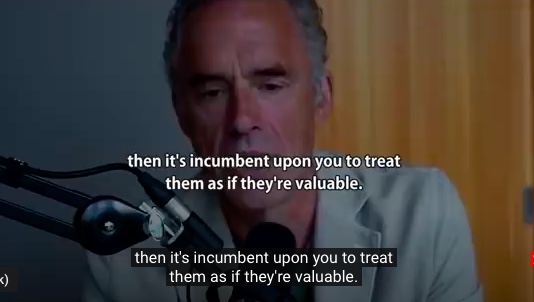
Jordan Peterson’s INCREDIBLE Journey To GOD | Heartbreaking Moments on His FAITH https://youtu.be/x6_ESSfyiYE
The Meaning and End of Religion is now nearly half a century old, and it shows its age. While the historical survey is very compelling, and the case Cantwell Smith makes in this portion of the book is persuasive, much of the rest of the work takes a decisively theological turn that reveals the author’s largely uncritical mid-twentieth-century liberal-Protestant worldview. When Cantwell Smith writes that “Men of different religious communities are going to have to collaborate to construct jointly and deliberately the kind of world of which men of different religious communities can jointly approve, as well as one in which they can jointly participate”, it’s hard for this not to sound like the culturally-imperialist fantasy of white, affluent, first-world liberals like the author.
In spite of these reservations, The Meaning and End of Religion is a work of real erudition and one which has helped to establish important themes in the methodological and theoretical study of religion over the past five decades.
========== ========== ==========
Wilfred Cantwell-Smith had convinced many to the view that religion should not be viewed as an abstract set of sacred ideas and doctrines but should best be considered and understood as the living, vital faith of individual persons, as part and parcel of the very existence of the human race. One of the consequences of this view is that no one can truly “understand” a religious tradition without some degree of subjective empathy with the situation of the participants of that religious tradition.
Smith argued that Christians, as an example of a particular religious grouping, should not be making exclusive claims to truth and salvation in Jesus Christ. Instead, Smith was of the view that a Christian, or for that matter, any person should have a moral duty to respect the identity and the religious beliefs of others with whom this world is shared.
Smith explained in this book “The Meaning and End of Religion (1963)” that the term “religion” had no plural, nor was “religion” to be considered a system doctrine prior to the seventeenth century. Prior to that century, “religion” had the meaning of ‘the quality of trusted piety’ that Smith saw as present in the lives of participants in various religious traditions.
Smith advocated the concept of “world theology” but this phrase had cause controversy amongst many scholars of religion and religious faiths. Common sense dictates that if one treats the word “world” as an adjectival qualification of the second word “theology”, the dream of Wilfred Cantwell-Smith would be impossible to achieve and would always stay as an ideal. For, humankind is forever variegated in religious traditions and it would never be possible to have one uniform theology for the entire world. Every day sees the dawn of a new religious tradition, a new religious cult and it would never be possible for all such religious faiths to see eye-to-eye.
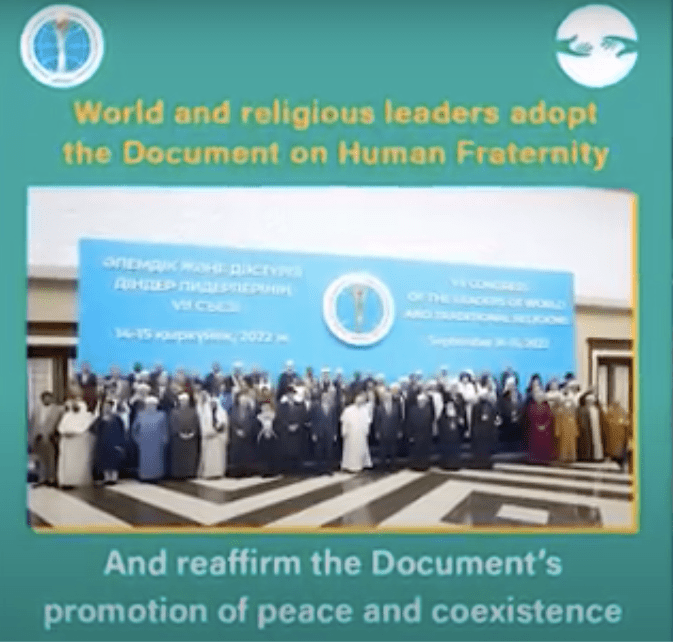
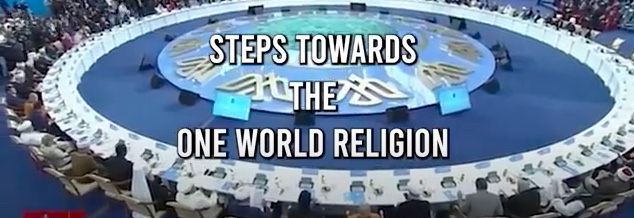
ITS HAPPENING!! One World Religion 2022 | Chrislam | Pope Francis https://youtu.be/igoUrZwkuZc
To Smith, “the study of religion is the study of persons, as I have long argued; and indeed of human lives at their most intimate, most profound, most primary, and most transcendent level.” [from Towards a World Theology (1981), page 48.]
This is particularly true in today’s world of global village where the internet and the many technical advances in modern telecommunications have brought all races of mankind so much closer together, especially in terms of understanding one another’s belief systems. The lives of many groups in many countries can be affected, within a short period in time, by one single deed or misdeed, in the most far-flung corner of the world, indeed of the universe. The current COVID 19, and the current war in Ukraine are examples of such happenings. Cultural and religious pluralism appear to be the order of the day as social groups come to grips with current situations. The need for the understanding of diverse and variegated practices - culturally and/or religiously - is now seen as morally desirable for the common good, that of the very preservation of the human race.
 English