
The Ukraine War 乌克兰战争
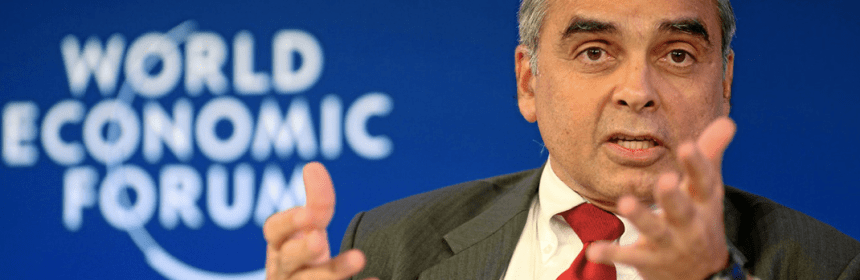
Kishore Mahbubani is a wise man. He is a Singaporean and has been Singapore’s representative in the United Nations for two terms (from 1984 to 1989 and from 1998 to 2004). During his last term he had served as the President of United Nations Security Council. After his diplomatic career he became an academic serving as the Dean of the Lee Kuan Yew School of Public Policy at the National University of Singapore.
Kishore has just published a book entitled “The Asian 21st Century” and we can listen to him at https://youtu.be/Y3RYeyKIVHg https://youtu.be/Y3RYeyKIVHg
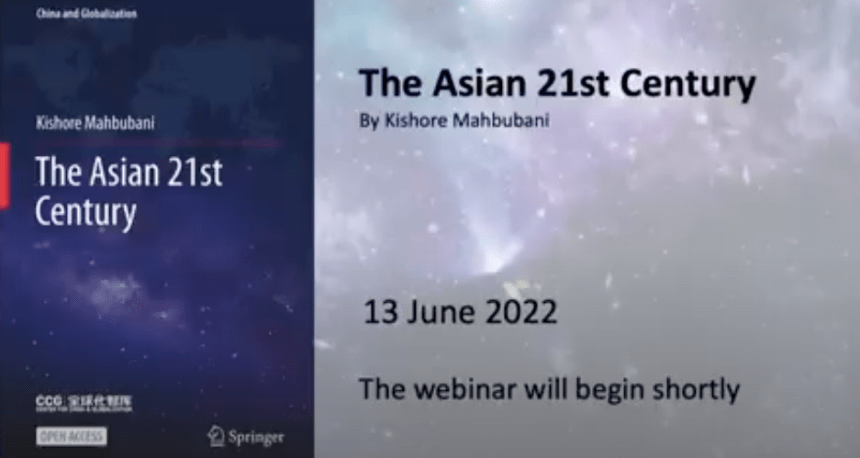
We live in hugely paradoxical times. We will see greater change in the twenty-first century than we have in any previous human century. Huge leaps in science and technology, accompanied by huge economic and social advances in many societies around the world, especially Asian societies, will mean that the texture and chemistry of the twenty-first century will be massively different from the nineteenth and twentieth centuries. How will it be massively different? It will be different in three significant dimensions. First, we will see the end of the era of Western domination of world history. Second, we will see the return to the success of many Asian societies, especially the two most populous societies of China and India. Third, as a result of the rapid shrinkage of the world, through both technological leaps and growing interdependence, partly through global trade, humanity is no longer living on a vast planet. It is living in a small, densely interconnected global village. Indeed, when future historians look at the twenty-first century, they will marvel at how many big changes happened in the human condition in a small space of time. ‘The Asian 21st Century’ is a collection of essays by Kishore Mahbubani that will demonstrate the multitude of ways that make it clear that we will soon be sailing full steam ahead into the Asian twenty-first century. Watch this lecture to find out more about the book, and about Asia in the 21st Century.
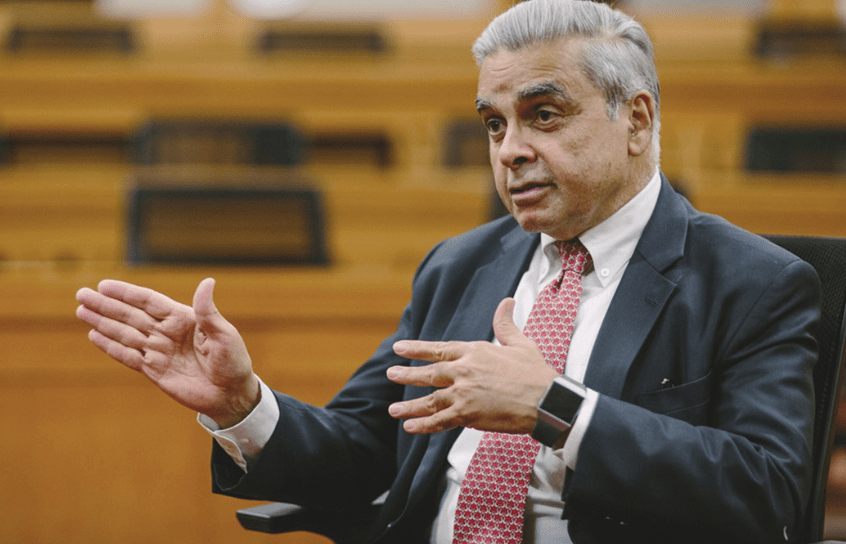
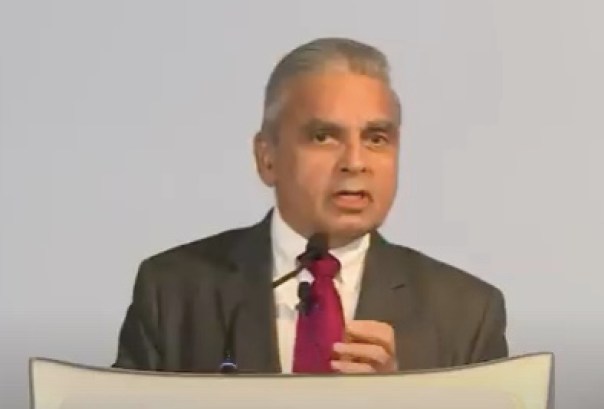
The most important portion of this hour-and-a-half book launch by Kishore must be at the 26:41 mark until 32:59. Here below are some excerpts of Kishore Mahbubani’s speech which are relevant to us, going forward.
Excerpt # 1: “Singapore is known for many things - its prowess in the financial world, openness and transparency conducting business, our innovations in engineering, its robotics biomedical and medical fields, world-class institutions a systematic inclusive multicultural approach to nation-building, and of course the deep desire to be world-class in everything that we do here.”
Excerpt # 2: “I would say it is the absence of the culture of pragmatism in European cultures because all they had to do was reach a compromise with Russia and that would have prevented that war.”
Excerpt # 3: “The danger of the next big geo-political war will be over Taiwan because there you have two forces meeting yet literally you are caught within a rock and a hard place because China has made it absolutely clear that if Taiwan declares independence, China will declare war. On the other side and this of course is a long story, the United States has decided that China is the biggest geopolitical challenge to the United States at least for the next ten years.”
Excerpt # 4: “Inclusiveness is the answer to all wars. In Europe, I think one of the biggest mistakes that Europe made especially after 2014 was to expel Russia from the G8 because we do not solve a problem by expelling somebody who is geographically our neighbour.”
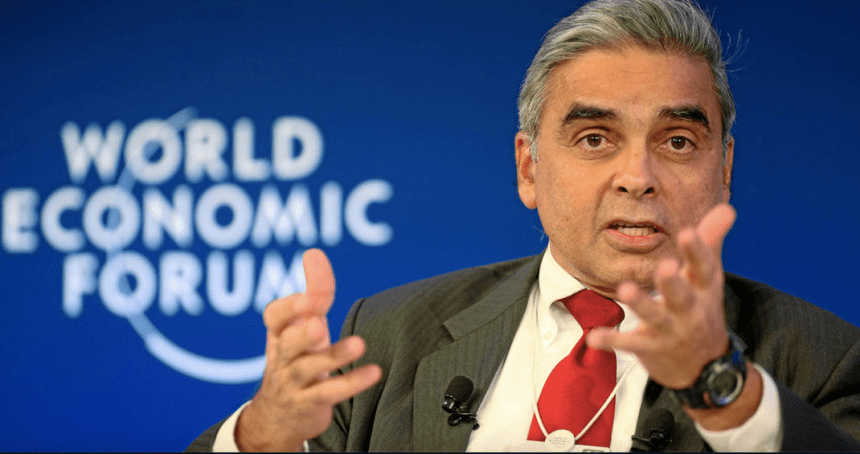
The advice from Kishore Mahbubani on the pragmatic solution to end the Ukraine War that has already caused so much sufferings can be found in his speech from the webpage https://www.straitstimes.com/opinion/byinvitation-ukraine-and-the-wests-quest-for-a-perfect-solution
“Having visited both the US and Europe in recent weeks, I can say with some confidence that the West is a deeply troubled place. The populations are angry. And the best-educated Western elites, who are supposed to lead their societies in the right direction, are instead leading them in the wrong direction. As a friend of the West, I would like to suggest a wiser course of action.”
He expresses the view that there are always solutions to world’s problems and the most important aspect of any solution is not war, but peace. Western countries should not impose their ‘democratic idea’ to other independent countries. The West should accept that the ‘so-called’ imperfect solutions may well be able to make a country’s population happier.
China is one country that Kishore wants to bring out as an example of success without the western concept of ‘one-man-one-vote’ democratic principle. He makes a point in regard to moral philosophy. “At the end of the day,” he says, ” we have to give moral priority to the sufferings of the poor, the bottom ten to twenty per cent of the world’s population. Indeed, it would be cruel and callous to ignore their sufferings.”
The greatest American political philosopher of recent times, John Rawls, emphasised that the most just society was the one that took care of the bottom 10 per cent. As he outlined in his seminal work, A Theory Of Justice, any social or economic inequalities, if they are to satisfy the principles of justice, “are to be to the greatest benefit of the least-advantaged members of society”.
“Three critical factors
“And why are the very poor suffering? It’s the result of three critical factors.
“First, the massive stimulus packages post-Covid-19, especially in the US, have unleashed global inflation. As Martin Wolf wrote in the Financial Times, “The combination of fiscal and monetary policies implemented in 2020 and 2021 ignited an inflationary fire”.
“Second, the illegal Russian invasion of Ukraine, followed by the massive Western sanctions on Russia, have led to a massive spike in energy prices.
“Ironically, despite (or perhaps, because of) these sanctions, the European Union, has paid more money for Russian gas. Since the war began on Feb 24 this year, the Europeans have paid more than US$60 billion (S$83 billion) for Russian oil and gas, while complaining that India and China were buying too much Russian oil. This led to the now famous quip from the Indian Foreign Minister, Dr S. Jaishankar, who said “our total purchases for the month would be less than what Europe does in an afternoon”.
“Third, the Omicron virus, a tricky virus, has broken through the defences of China’s zero-Covid policy. This led to massive shutdowns, including in Shanghai from March. Since China is the factory of the world, supply shocks have also contributed to global inflation. In short, we have had an almost perfect storm.
What should be the rational response? To find a perfect solution? Or to accept an imperfect solution that alleviates the sufferings of many people, including the people of Ukraine and the massive number of poor people in the world?
“The West has been pushing for a perfect solution. The rest of the world would prefer to see their sufferings decrease from an imperfect solution.
“What’s the perfect solution? This is what the West is pursuing in Ukraine: total withdrawal of Russian forces from Ukraine. No compromise.
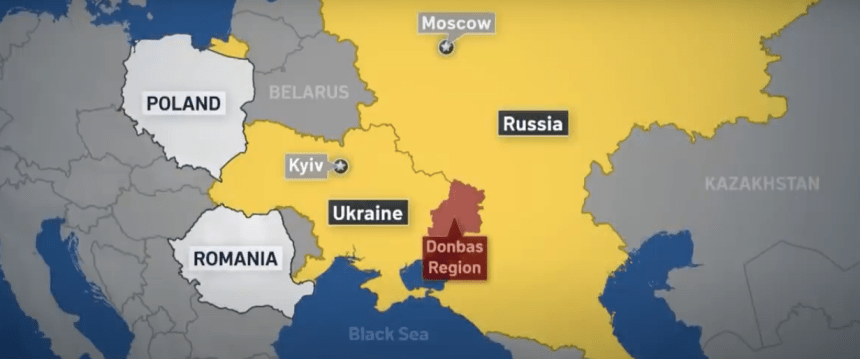
“Certainly, if the West could accomplish it, it should go for it. But what are the prospects of the West achieving this perfect solution in Ukraine? The answer is zero.
“In short, the apparently rational West is pursuing an impossible solution. And in the process, the people of Ukraine are suffering. And, equally importantly, the Western search for a perfect solution is causing enormous suffering for a massive number of poor people.
“World Trade Organisation (WTO) director-general Ngozi Okonjo-Iweala said: “The war in Ukraine has created immense human suffering, but it has also damaged the global economy at a critical juncture. Its impact will be felt around the world, particularly in low-income countries, where food accounts for a large fraction of household spending… Smaller supplies and higher prices for food mean that the world’s poor could be forced to do without.”
“Call a ceasefire
“So what is the imperfect solution for Ukraine?
“The first step is to call for an immediate ceasefire. Why? Each day that the war continues, hundreds are dying. Plus, if Ukraine is going to feed the world again in 2023, it needs to get fertiliser so its farmers can start planting in 2022. More food in 2023 equals less suffering for the global poor.
“The second step is to start talking to Russia. There should be two levels of talks. The first should be between Ukraine and Russia. The second should be between the West and Russia. And what would be the outcome of these two steps? Ukrainian lives would be saved. And the whole world would breathe a sigh of relief.
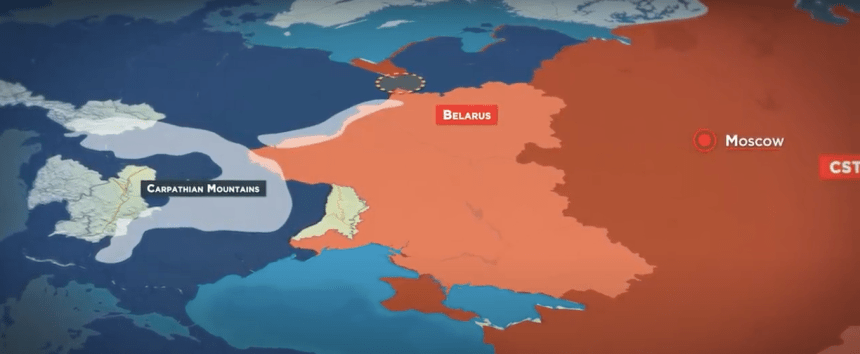
“Then comes the hard slog. Given the huge chasm between Western and Russian positions on Ukraine, there will be no immediate long-term solution. But we’re more likely to get one if talks begin. And we’re more likely to get one if we can get more countries in the world to talk to Russia.
“This is why it’s a huge strategic mistake by the West to get Indonesia, as the host of the G-20 meeting on Nov 15-16, to disinvite President Putin from this meeting. And it would be an even bigger mistake for the West to boycott this G-20 meeting if Mr Putin attends.
“There’s one statistic that every Western leader should memorise and repeat each night before going to sleep: the West comprises 12 per cent of the world’s population. The rest make up 88 per cent.
“If Mr Putin comes to Jakarta in November, as he should, he will hear the views of the West. And he will hear the views of the rest. Mr Putin is not likely to listen to the West since there’s zero trust between Russia and the West. But he will listen to the rest. The West is therefore stabbing itself in the foot by calling for Mr Putin to be disinvited.
“And why is the West pushing for Mr Putin to be excluded? Here we come back to the main theme of this essay: because the West is pushing for the perfect solution of trying to defeat Russia. But this perfect solution will never come about.
“Hence, the West should listen to Indonesia and all the non-Western members of the G-20 (who effectively represent 88 per cent of the world’s population) and try to find some kind of a compromise solution for Ukraine. Such a compromise solution will save the lives of Ukrainians. And it will alleviate the sufferings of the hundreds of millions of poor people in the world.
“In short, the pragmatic solution is also the ethical solution.”
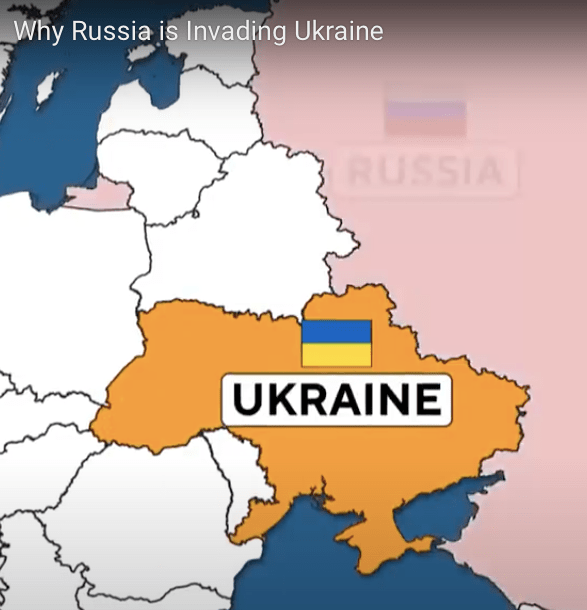
Why Russia is invading Ukraine? https://youtu.be/If61baWF4GE
作者迈克尔·金马奇、迈克尔·考夫曼在其发表在美国杂志《外交事务》上的文章中,讨论了俄罗斯在乌克兰边境的军事准备活动,以及莫斯科是否真的准备再次动用硬武力入侵一个欧洲国家。两名作者认为,鉴于俄罗斯在乌克兰的利益受到威胁,并且希望巩固自身作为地缘政治参与者的地位,再加上美国威慑力出现的下降,爆发战争的前景或许并不遥远。
这个冬季,俄罗斯对乌克兰发动军事袭击的前景迫在眉睫,因为在过去的几个月内,莫斯科加强了它在乌克兰边境沿线的军事部署,从而为俄罗斯通过军事行动解决乌克兰政治僵局以有利于其自身利益而铺平了道路。尽管俄罗斯总统普京习惯在外交场合中作出动用武力的暗示,但是莫斯科这次的行动似乎不仅仅是暗示。如果危机各方未能达成协议,那么冲突的火焰就可能会在更大范围内再度点燃。
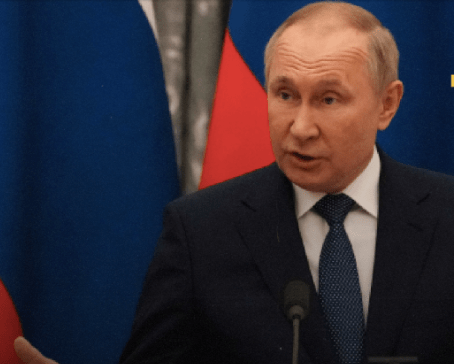
那么让我们想想,当普京能够从维持地区现状的过程中受益时,他又为什么要冒险去改变地缘政治和经济上的局面呢?俄罗斯在2014年夺取了克里米亚半岛,当时这场军事行动可谓是欧洲自二战以来最大规模的一场行动。当西方因俄罗斯入侵乌克兰而对俄罗斯实施制裁时,这些制裁却没有留下很深的伤痕——俄罗斯的整体经济仍然保持稳定。与此同时,莫斯科继续通过“北溪2号”天然气管道控制着欧洲的能源市场,而这将加剧德国对俄罗斯天然气的依赖,尽管存在一些法律障碍,但该管道项目似乎仍在向前推进。与此同时,美国与俄罗斯目前正举行会谈,以实现双方之间的战略稳定——普京总统和拜登总统已于去年6月举行了会晤,旨在为双方建立更易于理解的关系。
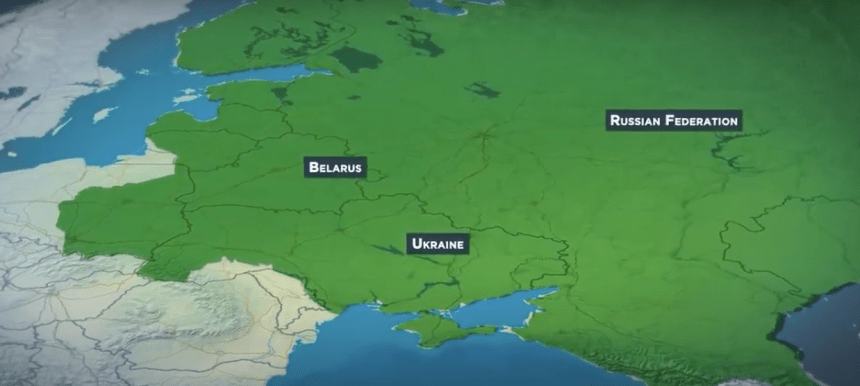
然而,在这种平静的表面之下,有一条进程却将俄罗斯和乌克兰引向双方之间未解决冲突的再度爆发之中,而这可能会再次重绘欧洲版图,并破坏美国为改善它与俄罗斯关系而付出的努力。莫斯科在乌克兰的政治影响力年复一年地下降,基辅政府在去年也对俄罗斯的要求采取了果断立场,并且暗示它绝不会为了调和与普京的关系而低头。而欧洲国家则似乎都支持乌克兰的立场,与此同时,基辅正在扩大它与俄罗斯的欧美竞争对手之间的安全合作。
同时,自西方2014年对俄罗斯实施制裁以来,莫斯科已重建其财政状况,并且拥有了高达6200亿美元的外汇储备,此外,由于高油价和预期的能源供应短缺,俄罗斯将在今年对欧洲产生尤为重大的影响。随着俄罗斯在政治和经济上的信心不断增强,再加上美国将注意力和资源全部放在与中国之间的竞争之上,也许这些都使普京相信,乌克兰现在对于美国而言,只是一个具有边缘重要性的地区。
俄罗斯领导人已经宣布他们厌倦了外交,他们认为乌克兰与美国和北约的日益融合是他们无法容忍的情况,因此,莫斯科已经准备好动用武力重新调整平衡,如果它无法与华盛顿或基辅通过和平方式解决危机的话。
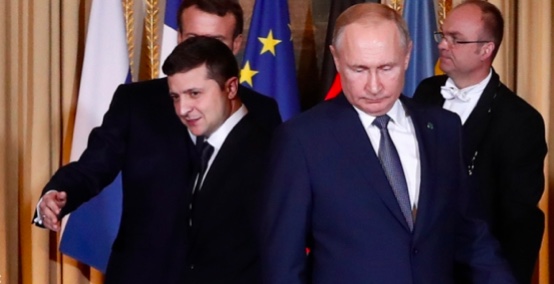
战鼓敲响
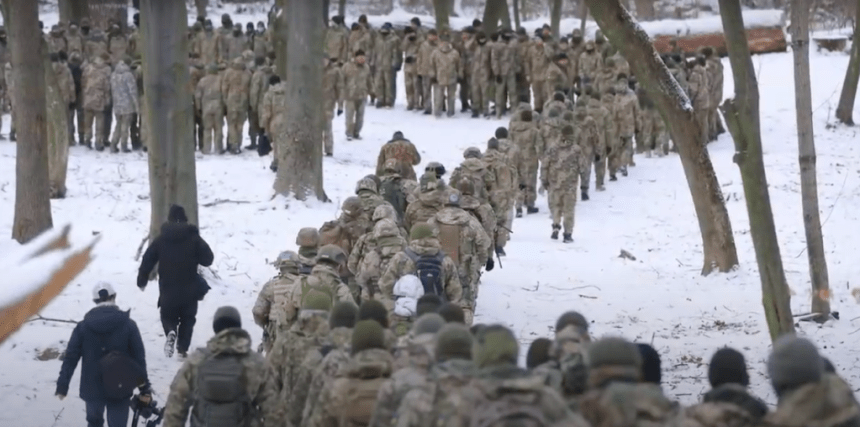
俄罗斯当前的军事部署并不表明入侵迫在眉睫,也许莫斯科现须还没有作出发起军事行动的政治决定。然而,在过去几个月内,俄罗斯的军事活动远远超过了平常的训练周期,其部队已经行动了数千公里,来到与乌克兰接壤的西部军区,此外,还将高加索地区的其余军事部队派往了克里米亚半岛。这些并不是例行演习,而明显是在为可能发起的军事行动重新分配部队和装备。
在过去一年中,什么发生了变化?并带来了如此之多的变数?首先,俄罗斯在乌克兰的战略未能产生一项可以接受的政治解决方案。乌克兰总统泽连斯基在竞选活动之中公开表示愿意与俄罗斯对话之后,又在一年前颠覆了与俄罗斯达成解决方案的可能性,从而使后者有关于通过外交手段实现其目标的希望彻底破灭。俄罗斯、乌克兰、德国与法国之间的谈判也陷入了僵局,莫斯科再也找不到摆脱西方制裁的方法,而在这方面的政治和外交努力也宣告失败,与此同时,俄罗斯非常清醒地记得,此前曾通过武力行动实现了自己的目标。
在此之际,乌克兰加深了与美国、英国和北约其他成员国之间的伙伴关系,美国也为乌克兰军队提供了致命的军事支持,而这却成为了扎在莫斯科背后的一道芒刺,让它慢慢形成这样一种立场,即乌克兰加入北约是俄罗斯不容跨越的红线,甚至全面拒绝乌克兰与西方之间日益增长的结构性防务合作。俄罗斯领导层在过去一年来,已经以最为强烈的措辞表明了自身的立场,并对它在乌克兰的红线发出警告,而且认为美国没有对它的言论作出严肃的回应。2021年10月,普京指出,乌克兰虽然没有获得北约的正式成员国资格,但是“实地的军事发展已在进行中,并且对俄罗斯构成了威胁”。
这很可能不仅仅是一句空话,因此,俄罗斯领导层看不到通过外交途径解决问题的前景,并认为乌克兰正被逐渐拉入美国的安全轨道,或许正因为如此,它认为战争在所难免。俄罗斯领导人确信,动用武力并不容易,也必然会招致后果,但是他们认为乌克兰已经走上了不可接受的道路,因此,为挽救先前的政策,他们面前的选择非常有限,或者这已经让俄罗斯领导人得出了这样一个结论,即现在诉诸军事选择的成本将低于今后。
 English