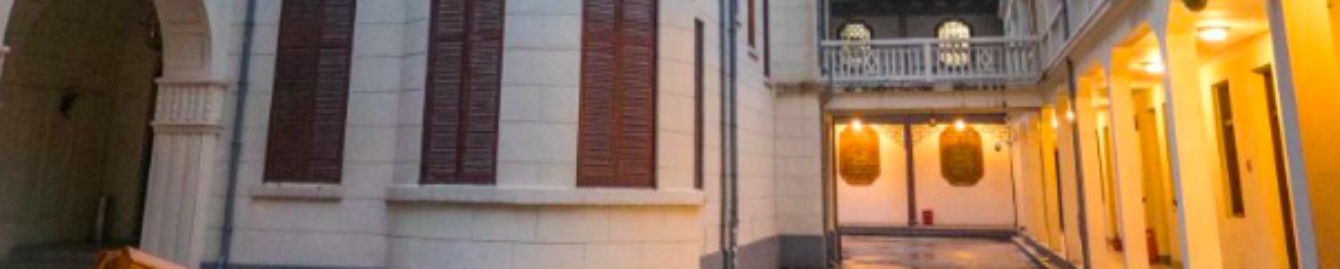
Shi Liangcai’s palatial home in Shanghai 史量才上海别墅
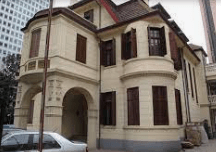
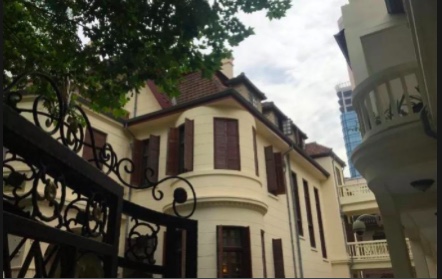
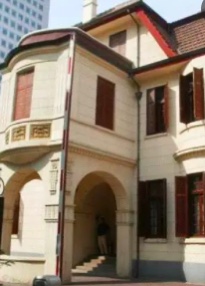
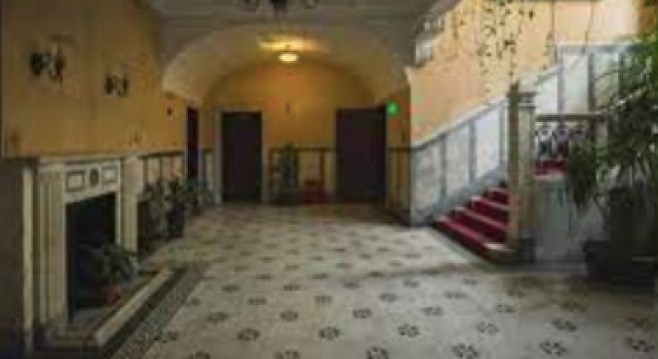
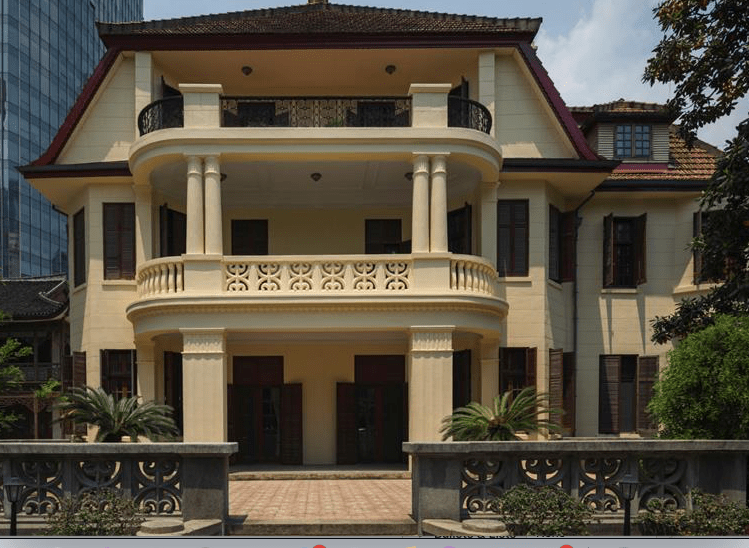
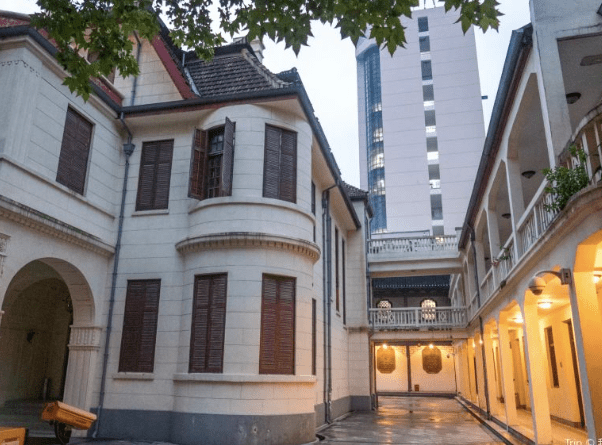
This building is located at 257 Tongren Road, in Shanghai. It is a brick and tiled French-styled villa constructed in 1922 by Shi Liangcai, the founder of the newspaper known as Shen Bao. It covers an area of 1,222 square metres. Its facade includes open-air verandahs on the second and third floors. The interior is richly decorated by plaster cornices on the ceiling and patterned mosaic floors. Both fireplaces and a grand staircase are fashioned from marble with grey-creamy patterns.
该建筑位于上海市铜仁路257号。这是一栋砖瓦法式别墅,由《申报》创办人史量才于1922年建造。它占地1,222平方米。它的立面包括二楼和三楼的露天阳台。室内装饰华丽,天花板上的石膏飞檐和图案马赛克地板。壁炉和大楼梯均由带有灰色奶油图案的大理石制成。
Who is Shi Liangcai? Shi (January 2, 1880 - November 13, 1934) was a Chinese journalist best known for his ownership of Shen Bao and for his murder at the hands of assassins engaged by President Chiang Kai-shek. During his short life he had achieved some important milestones including: (a) the start a sericultural (the study of the production of silk and the rearing of silkworms for this purpose) school for women in Shanghai; (b) the taking over of Shen Bao in 1912 and further the papers’s liberation orientation; (c) the provision of shelter and resources for anti-Japanese. Shi was a strong supporter of the Human Rights Defence Alliance established by Madam Soong Qing Ling, the second wife of revolutionary leader, Dr. Sun Yat-sen.
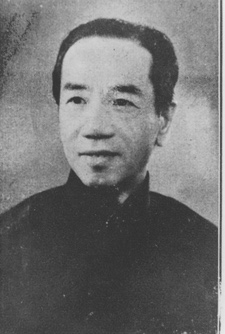
Shi Liangcai 史量才
史量才是谁?石(1880 年 1 月 2 日 - 1934 年 11 月 13 日)是一名中国记者,以他拥有申報和被蒋介石总统雇佣的刺客谋杀而闻名。在他短暂的一生中,他取得了一些重要的里程碑,包括: (a) 在上海开办一所蚕桑(研究丝绸生产和养蚕)女子学校; (b) 1912 年接管新报,进一步推动报纸的解放方向; (c) 为抗日提供庇护所和资源。史先生是革命领袖孙中山的第二任妻子宋庆龄夫人建立的人权捍卫联盟的坚定支持者。
The following article (in full) by Qiao Zhengyue is sourced from https://www.shine.cn/feature/art-culture/1907319351/
At the quiet stylish garden villa at 257 Tongren Road, a mourning tune from a guqin (traditional string instrument) can be heard coming from the chic abode one wintertime day in 1934. The sorrowful lament is being played by the wife of Shi Liangcai (Shih Liang-ts’ai), a journalist, publisher and long regarded as China’s answer to “Joseph Pulitzer.”
1934年冬日的一天,在铜仁路257号宁静时尚的花园别墅里,可以听到古琴(传统弦乐器)的哀歌从别致的居所中传出。 这首悲伤的哀歌是由记者、出版商、长期以来被视为中国对“约瑟夫·普利策”的回应的史量才(Shih Liang-ts'ai)的妻子演奏的。
Shi had been assassinated, on November 13, on his way back via the Hu-Hang Highway (between Shanghai and Hangzhou) by a Kuomintang secret agent.
11 月 13 日,史量才在通过沪杭高速公路(沪杭之间)返回途中被国民党特工暗杀。
上海档案馆上海近代史研究员张耀军说:“中国新闻史上的重要人物史量才是一位心地善良的新闻工作者,他总是试图向公众讲真话。”
“A significant person in Chinese journalistic history, Shi was a newspaperman with an upright heart who always tried to tell the truth to the public,” said Zhang Yaojun, a researcher of modern Shanghai history from the Shanghai Archives.
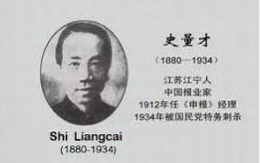
Shi grew up in Songjiang, now part of Shanghai. He was proprietor of the Shun Pao (Shanghai News), the most widely circulated Chinese newspaper in Shanghai before he passed away in 1934.
Shi had a versatile working experience after he passed the Xiucai Examinations of the Imperial Court (for civil service recruitment) during the Qing Dynasty (1644-1911) — the equivalent to a bachelor’s degree, at the age of 20.
Five years later, he turned to studying silk farming at Zhejiang Sericulture College and started the first Women’s Sericulture School in Shanghai.
史量才在松江长大,现在是上海的一部分。在 1934 年去世之前,他是上海发行量最大的中文报纸《上海新闻》的所有者。
史量才在清朝(1644-1911)通过修才科举(招考公务员)后,20岁,获得了相当于学士学位的多才多艺的工作经验。
五年后,他转入浙江蚕学院学习丝绸,并在上海创办了第一所女子蚕桑学校。
此外,他在1910-15年间担任多个政治职务,包括清朝和民国年间苏州盐务局局长和上海巡回海关税务局局长。
“在担任这些职务期间,史量才对充满欺骗和勒索的中国政界深感失望,” 张说。 “他后来转行报业,希望通过新闻在中国唤起伦理意识和社会正义。”
In addition, he held several political positions between 1910-15, including the posts of director of the Salt Administration Bureau of Suzhou and director of Customs Revenue Administration of the Shanghai Circuit during both the Qing and Republic of China years.
“While serving these posts, Shi was deeply disappointed with Chinese political circles, which were full of deceit and blackmail,” Zhang said. “He then switched to the newspaper business, hoping to arouse ethic consciousness and social justice through journalism in China.”
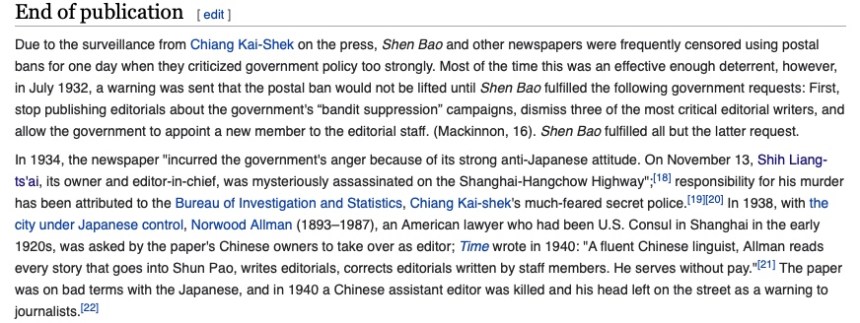
Shi became the publisher of the Shun Pao in 1912 when the paper was still in a precarious stage with a daily circulation of only a few thousand copies. A competent publisher, he employed talent, improved management, focused on advertising, reduced costs and successfully won support from financiers in the neighboring Jiangsu and Zhejiang provinces.
1912年,史量才成为《申报》的出版人,当时该报还处于岌岌可危的阶段,日发行量只有几千份。作为一个称职的出版商,他聘用了人才,改进了管理,专注于广告,降低了成本,并成功赢得了邻近江浙地区金融家的支持。
1931年以后,《申报》的抗战论提高了该报的影响力和发行量。
After 1931, Shun Pao’s opinion of the war against Japanese invaders enhanced the paper’s influence and circulation.
According to “Who’s who in China,” a column in The China Weekly Review dated April 5, 1930, the paper grew to be one of the most influential newspapers in the country with a daily circulation of more than 150,000 copies. Shi himself also became “one of the most prominent persons among the local gentry of Shanghai in educational, social and philanthropic endeavours, being the director of a number of universities, hospitals and philanthropic societies.”
据 1930 年 4 月 5 日《中国周报》的专栏“中国名人录”报道,该报已成为中国最具影响力的报纸之一,日发行量超过 15 万份。史量才本人也成为“上海地方绅士中教育、社会和慈善事业中最杰出的人物之一,担任多所大学、医院和慈善社团的负责人”。
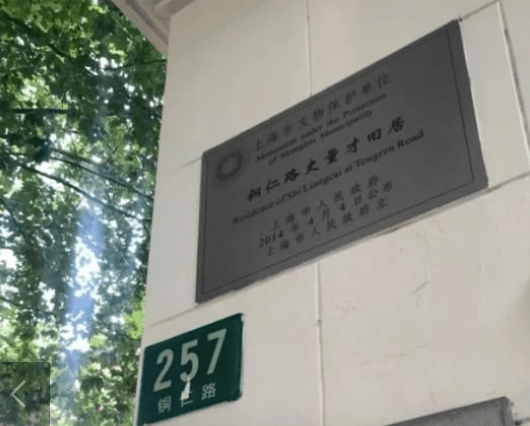
Shi Liangcai was also one of the most successful business promoters in Shanghai being financially interested in several banks, drug stores, cotton yarn factories and bookstores. The column also stated his residence address on Hardoon Road, which is today’s Tongren Road.
史量才也是上海最成功的商业推动者之一,在金融上对几家银行、药店、棉纱厂和书店感兴趣。专栏还写了他在哈顿路的住址,也就是今天的铜仁路。
史量才在铜仁路的宅邸,是一幢黄色砖木结构,上面铺着红瓦。
Shi Liangcai’s residence on Tongren Road is a yellow-hued brick-and-wood structure topped by red tiles.
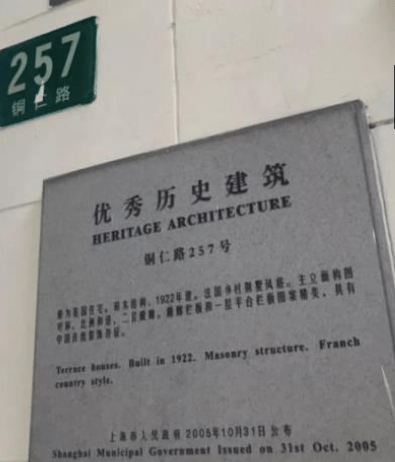
据静安区房地管理局档案显示,这是一栋1922年史量才建的法式乡村别墅,占地1222平方米,三层别墅外立面为露天二楼和三楼的阳台,各种大小和风格的经典订单。
现为上海市人民对外友好协会办公室,建筑内外保存完好。室内装饰华丽,天花板上的石膏飞檐和图案马赛克地板。壁炉和大楼梯均由带有灰色奶油图案的大理石制成。
According to archives of Jing’an District Housing and Land Management Bureau, it is a French country-style villa built by Shi in 1922. Covering an area of 1,222 square meters, the facade of the three-story villa is graced by open-air verandas on the second and third floors, and classical orders in varied sizes and styles.
Now used as the office of Shanghai People’s Association for Friendship with Foreign Countries, the building is well preserved inside and out. The interior is richly decorated by plaster cornices on the ceiling and patterned mosaic floors. Both fireplaces and a grand staircase are fashioned from marble with grey-creamy patterns.
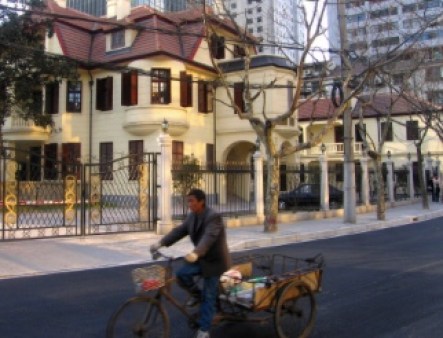
The small, stylish garden is planted with lush lawns and trees. Also in the yard, a red building with traditional Chinese decorations is said to have been used as Shi family’s ancestral hall.
小而时尚的花园种植着郁郁葱葱的草坪和树木。院子里还有一座红色的中国传统装饰建筑,据说曾被用作史量家的祠堂。
In 1932, Shi founded a club named “Ren Shen (after the Chinese name of the Year of the Monkey)” at this residence to unite patriotic Chinese capitalists and intellectuals. They often gathered to discuss strategies to fight the Japanese invaders. Shi’s later tragedy resulted from his growing social influence, Anti-Japanese attitudes and free journalism opinion.
1932年,史量才在此成立了一个名为“仁神”的俱乐部,以团结爱国的中国资本家和知识分子。他们经常聚在一起讨论对抗日本侵略者的策略。史量才后来的悲剧源于他日益增长的社会影响力、抗日态度和自由新闻舆论。
“After Chiang Kai-shek murdered Deng Yanda, a left-wing leader of Kuomintang party, in 1933, Soong Ching Ling, widow of Dr Sun Yat-sen, wrote an English letter of protest. With Shi’s help and resources, a Chinese translation of the letter was published by local news agencies which irritated Chiang,” Zhang says.
“1933年蒋介石杀害国民党左翼领袖邓演达后,孙中山遗孀宋庆龄写了一封英文抗议信。在史量才的帮助和资源下,这封信的中文译本由当地新闻机构发表,激怒了蒋,”张说。
Shun Pao’s expose of Kuomintang government’s non-resistance policy during the war impaired the image and interest of Chiang’s regime, aroused his hatred and finally made him decide to “shut Shi up for good.”
申报揭露国民党政府在战争期间的不抵抗政策,损害了蒋政权的形象和利益,激起他的仇恨,最终使他决定“永远闭史量才的嘴”。
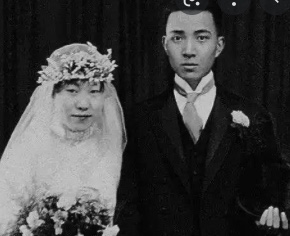
According to archive files, on November 13, 1934, the 55-year-old was returning home, in company with his wife Shen Qiushui, son Shi Yonggeng, niece Shen Lijuan, and the son’s schoolmate Deng Zuxun in his private motorcar, to Shanghai via the Hu-Hang Highway following a brief vacation at his wife’s residence in the lakeside city of Hangzhou.
档案资料显示,1934年11月13日,55岁的他与妻子沉秋水、儿子施永庚、侄女沉丽娟、儿子的同学邓祖勋等人乘坐私家车回上海。在湖畔城市杭州的妻子家中短暂度假后,途经沪杭高速公路。
Their car was halted by the henchmen’s car, a Buick convertible, at Wenjiabu, midway between Hangzhou and Haining. Seven men piled from the obstructing vehicle, punctured the tires of Shi’s car, shot the chauffeur and Deng dead and pursued Shi into a roadside hut where they killed him on the spot. His body was dropped into a dry cistern.
他们的车在杭州和海宁中间的温家堡被追随者的汽车——一辆别克敞篷车拦住。七名男子从阻碍车辆上冲下来,刺破了施的汽车轮胎,射杀了司机和邓,并将施追进路边的小屋,当场将他杀死。他的尸体被扔进了一个干涸的水池。
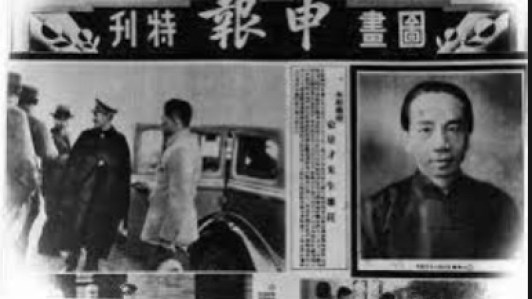
“Deng, 23, was a schoolmate at the Hangchow (today Hangzhou) Christian College of Shi Yonggeng, son of the publisher, who managed to run to safety together with Shi’s wife and niece, except for a bullet in the arm of Shen Qiushui that was later removed in Hangchow,” The China Press reported on November 14, 1934, with a photo of Shi’s car, a Studebaker.
23岁的邓是出版人之子施永庚杭州基督教学院的同学,与史量才的妻子和侄女一起逃到了安全的地方,只是沉秋水的手臂中了一枪, 1934 年 11 月 14 日,《中国报》刊登了施的汽车斯图贝克的照片。
Shi’s assassination was a great shock in Shanghai, widely mourned as a serious loss to the country. More than 1,300 people attended a memorial service held at the Chinese Chamber of Commerce on December 23, 1934. Many noted figures of the times attended the service or presented mourning scrolls.
史量才的遇刺在上海引起了巨大的震动,人们普遍为国家的重大损失而哀悼。 1934年12月23日,1300多人参加了在中华总商会举行的追悼会。许多时代名人参加了追悼会或赠送了丧卷。
Mayor Wu Te-chen of the Municipality of Greater Shanghai, who presided over the ceremonies, eulogized the life endeavours of the murdered publisher.
主持仪式的大上海市区市长吴德臣为被害出版人的一生奋斗。
Mayor Wu recalled that Shi devoted his lifetime to four lines of social welfare work. He should be commemorated as one of the pioneers of journalism in China. His name was also associated with enterprises for the promotion of education and culture.
吴市长回忆说,史量才一生从事四项社会公益事业。作为中国新闻事业的先驱之一,他应该被纪念。他的名字还与促进教育和文化的企业联系在一起。
Generally, Shi took interest in anything that proved to be for the well-being of the nation and the people at large. He should be particularly remembered for the time and enthusiasm given to the preservation of peace and order in Shanghai during the Sino-Japanese hostilities.
总的来说,史量才对任何事关国家和人民福祉的事情都感兴趣。他在中日战争期间为维护上海的和平与秩序所付出的时间和热情尤其值得人们铭记。
Wu further pointed out that local participating groups should carry on the unfinished task of promoting social welfare in Shanghai, to which the late newspaper publisher had dedicated himself, The China Press reported on December 24, 1934.
1934 年 12 月 24 日,《中国报》报道,吴进一步指出,地方参与团体应继续完成已故报纸出版商致力于推动上海社会福利的未竟任务。
In a paper titled “Analysis about Shi Liangcai’s Subject Consciousness of Journalist,” Fudan University PhD researcher Ye Chong finds that Shi created a “golden era” of Shun Pao under his management.
复旦大学博士研究员叶冲在一篇题为《史良才记者主体意识分析》的论文中发现,史量才在他的管理下开创了申报的“黄金时代”。
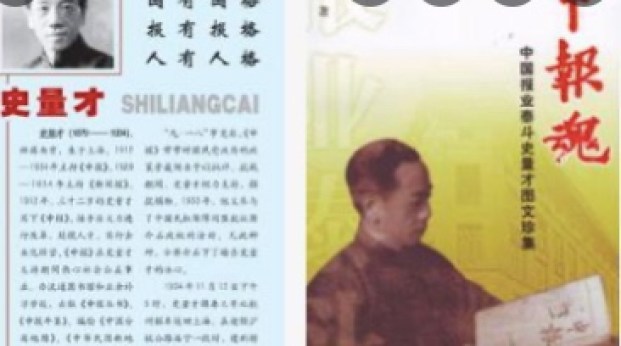
“Shi found a way of publishing a newspaper for the general public which was unprecedented in China. Before Shi, Chinese or foreign newspapermen published newspapers either for the purpose of missionary, earning money, enhancing their own political powers or gaining political positions. Unlike them, Shi and his Shun Pao initiated a new epoch of free journalism,” Ye said.
“史量才先生找到了一种面向大众出版报纸的方式,这在中国是前所未有的。史量才前,中外报人出版报纸,或以传教、赚钱、增强自身政权或谋取政治地位为目的。与他们不同,施和他的《申报》开创了自由新闻的新纪元,” 叶说。
Among the Chinese and English newspaper reports of Shi’s death and memorial service, a small photo in a bilingual picture magazine named “Dazhong Huabao” was most touching.
中英文报纸对史量才逝世和追悼会的报道中,最感人的是一本名为《大众画报》的双语画报中的一张小照片。
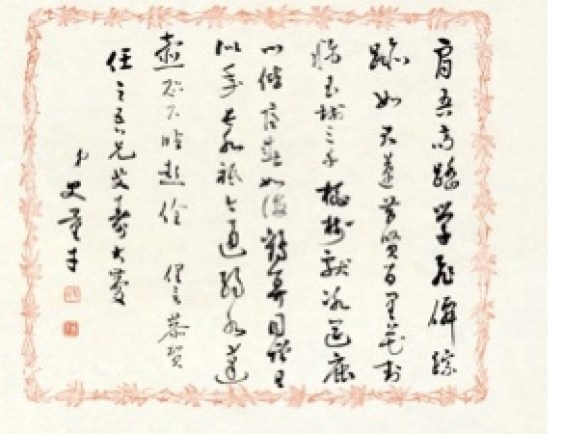
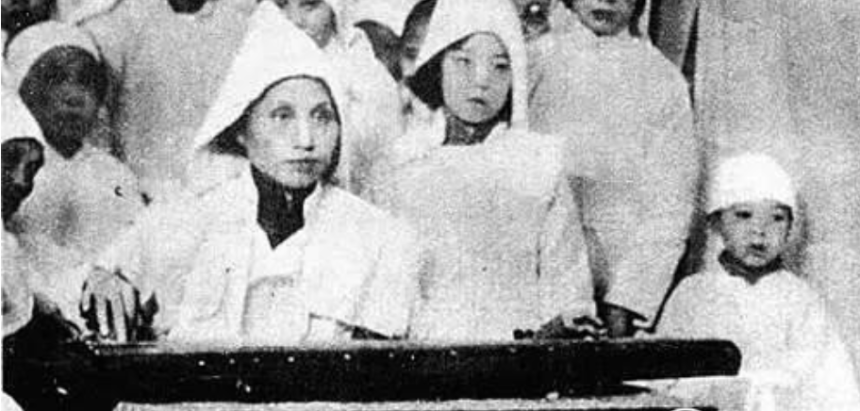
The magazine published a photo showing the mourning hall of Shi’s Hardoon Road residence where his wife Shen Qiushui was seen in white attire playing guqin. It says “Mrs Shi is playing a mourning tune on a seven-string guqin before the body of Mr Shi. The tune sounded like sobbing and visiting mourners cried on hearing the tune.”
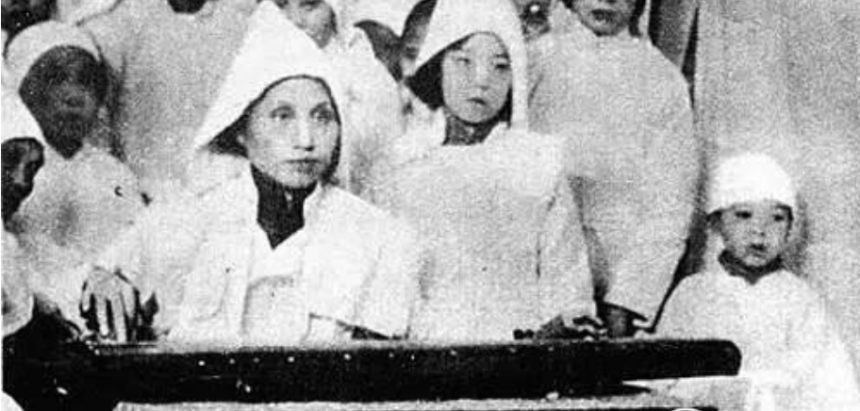
该杂志刊登了一张照片,照片显示时氏哈顿路家的灵堂,他的妻子沉秋水身着白衣弹奏古琴。上面写着:“史夫人在史先生身前弹奏七弦古琴。这曲子听起来像是在抽泣,来访的送葬者听到这曲子就哭了。”
It is said Shi got to know Shen through her skills on guqin performance. Shen later burnt the guqin after the burial of Shi and lived a quiet, reclusive life in Qiushui Shanzhuang, a villa bestowed by Shi to her in Hangzhou.
据说史量才是通过她的古琴演奏技巧认识沉的。 沉葬石后,焚烧古琴,隐居在史量才赐给她的杭州别墅秋水山庄。
Sad instrumental Chinese Music to mourn the death of a valuable Chinese citizen. https://youtu.be/UE51sdCbjiI
 English