
Prime Ministers of New Zealand 新西兰的总理
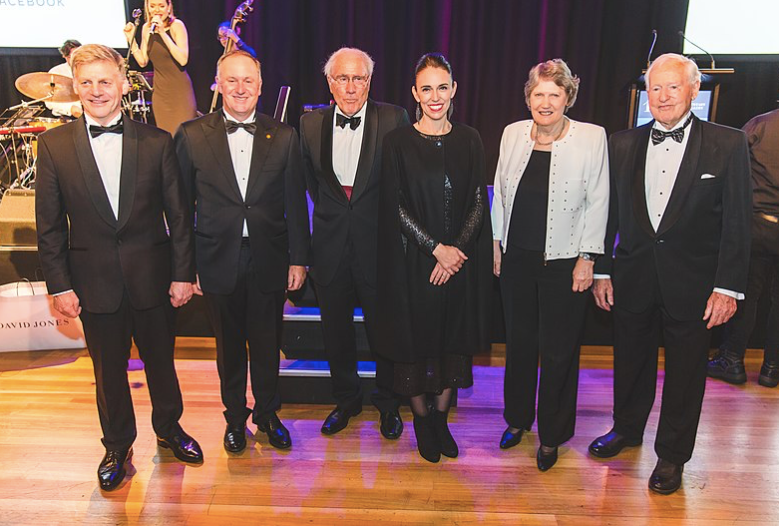
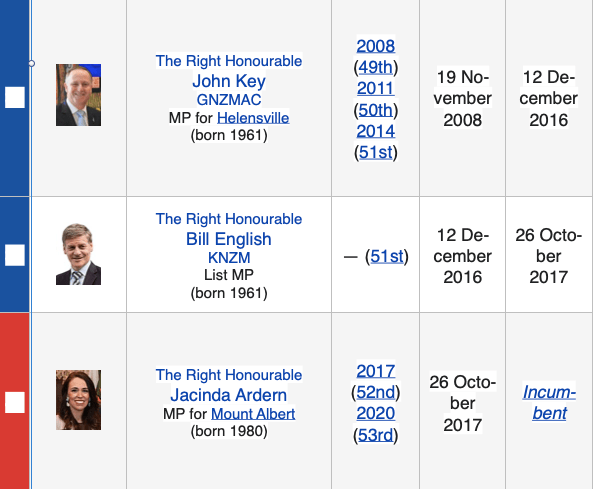
(1) Ardern - Jacinda Kate Laurell Ardern is the current Prime Minister of New Zealand, since the year 2017. At the very moment she is concentrating on dealing with COVID19 and OMICRON. View her latest news from the website: https://www.stuff.co.nz/national/politics/300523020/covid19-nz-jacinda-ardern-says-mandates-will-wind-down-after-omicron-peak.
(1) Ardern - Jacinda Kate Laurell Ardern 自 2017 年起担任新西兰现任总理。目前,她正专注于应对 COVID19 和 OMICRON。从网站上查看她的最新消息:https://www.stuff.co.nz/national/politics/300523020/covid19-nz-jacinda-ardern-says-mandates-will-wind-down-after-omicron-peak.
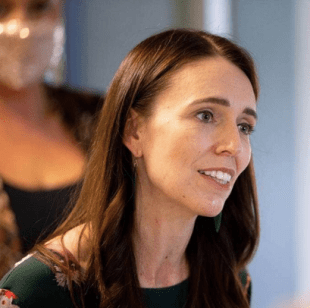
Prime Minister Jacinda Ardern says the vaccine pass and mandate system will begin to lift once New Zealand is through its Omicron peak in March. Ardern said vaccine passes had always been “temporary” and the “least bad option” to make sure people who had done the right thing had more freedoms. COVID19 cases were likely to peak in mid to late-March, followed by a rapid decline in case numbers, she said.
总理杰辛达·阿德恩(Jacinda Ardern)表示,一旦新西兰在 3 月份度过 Omicron 高峰期,疫苗通过和授权制度将开始解除。 Ardern 表示,疫苗通行证一直是“暂时的”,是确保做正确事情的人拥有更多自由的“最不坏的选择”。她说,COVID19 病例可能在 3 月中下旬达到顶峰,随后病例数迅速下降。
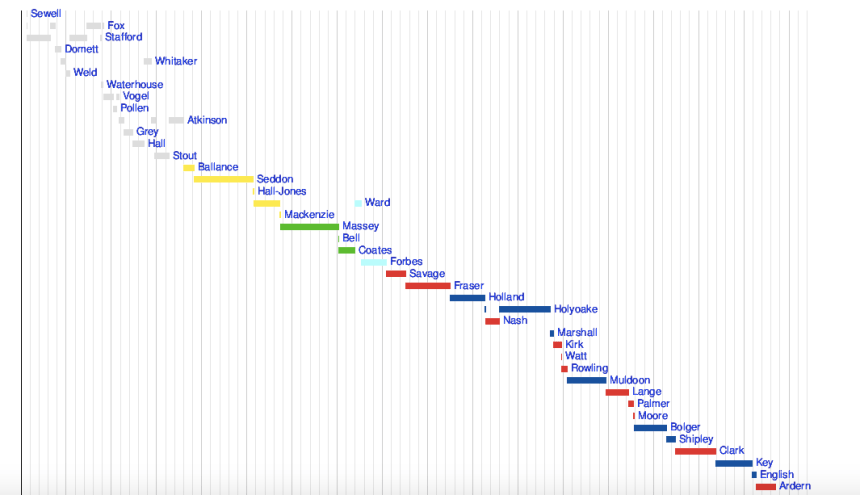
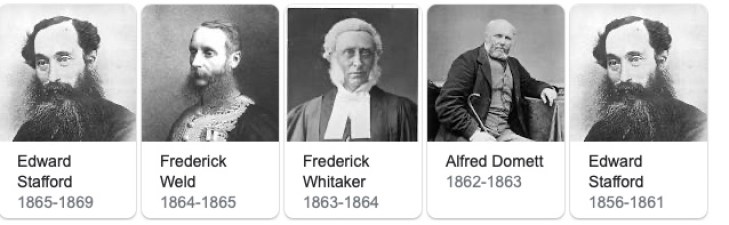
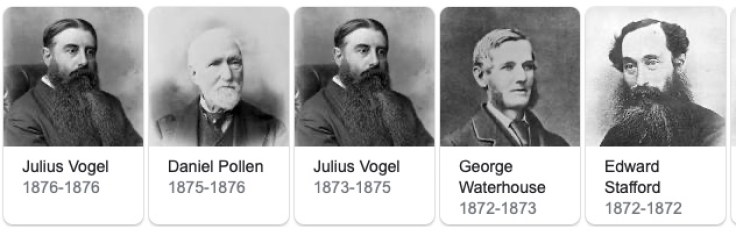
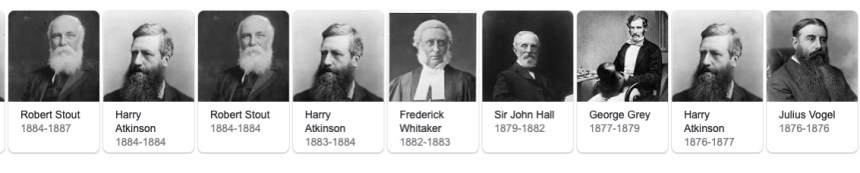
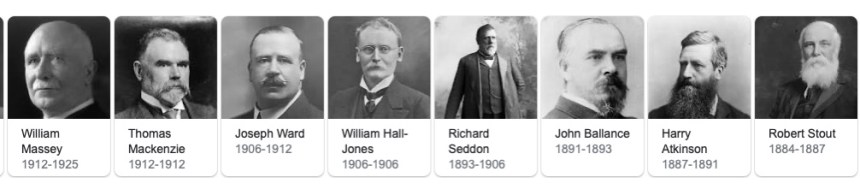
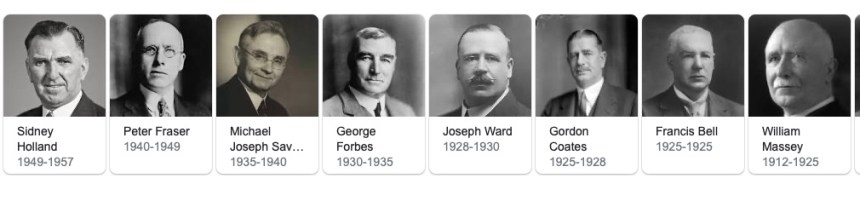
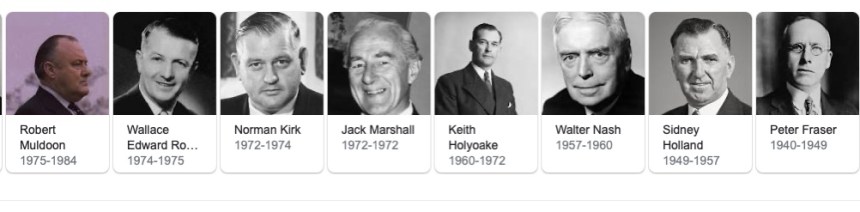
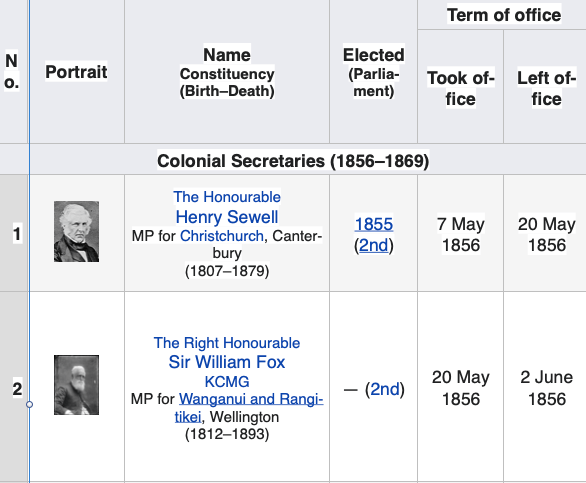
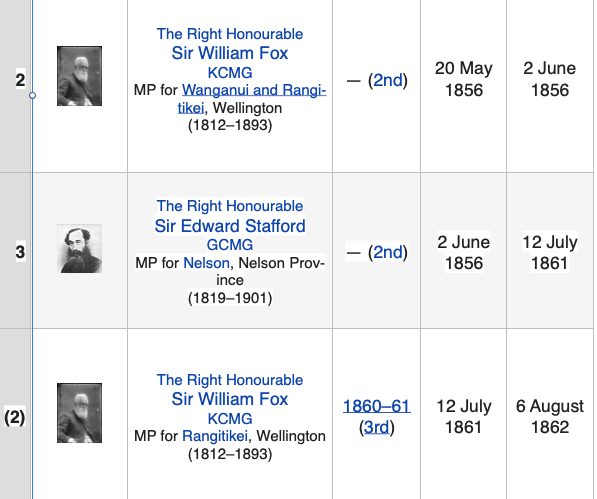
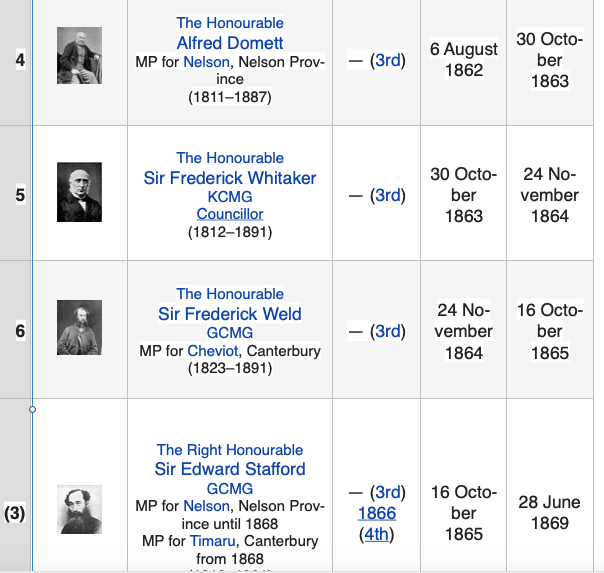
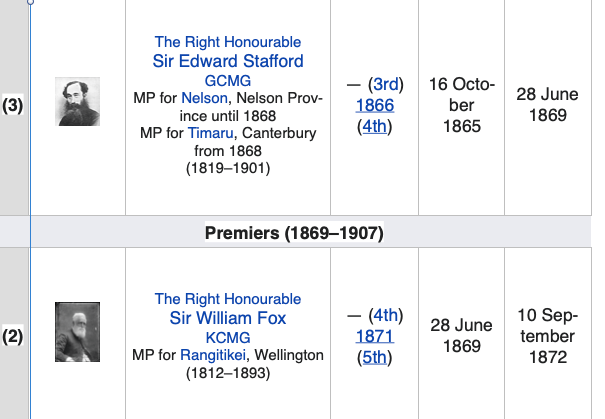
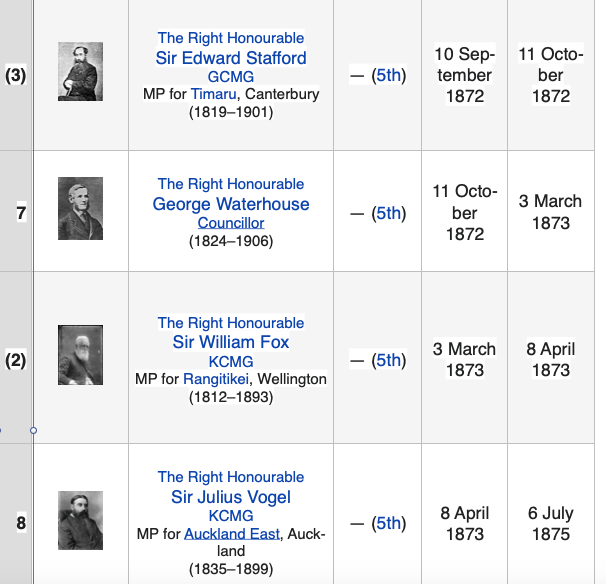
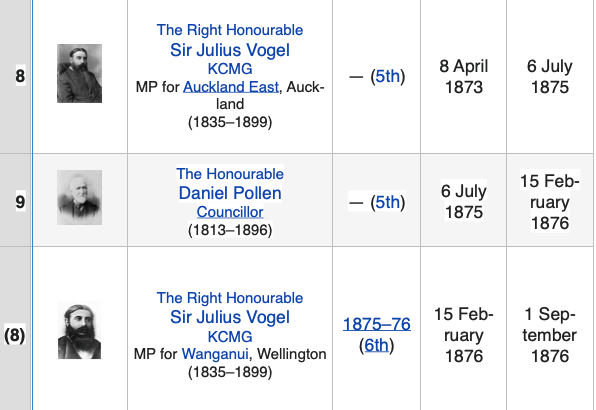
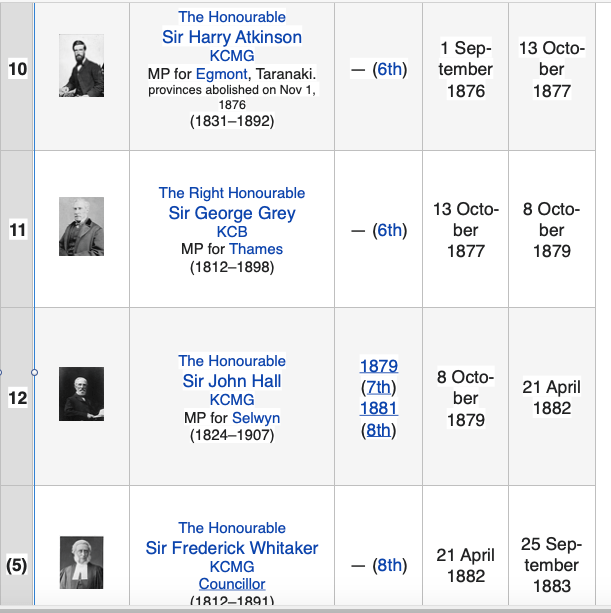
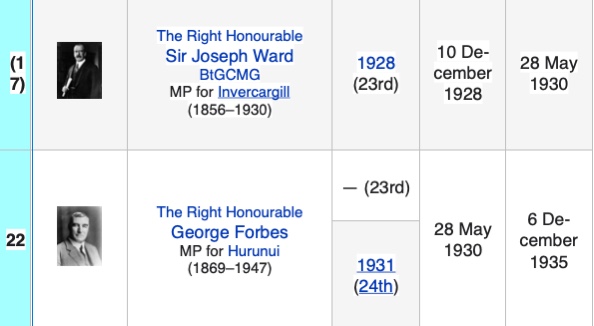
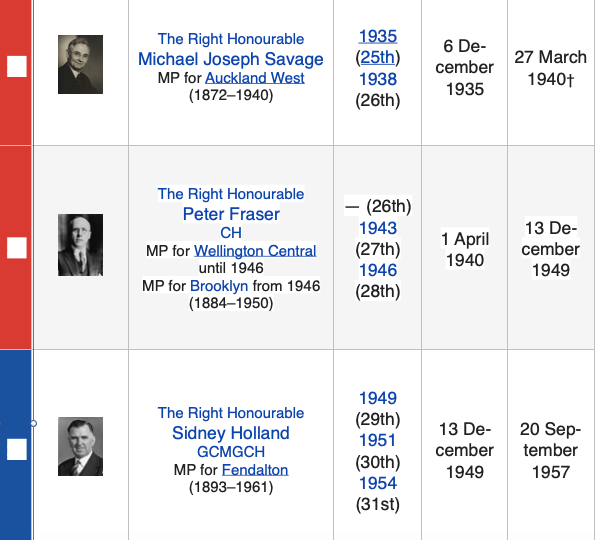
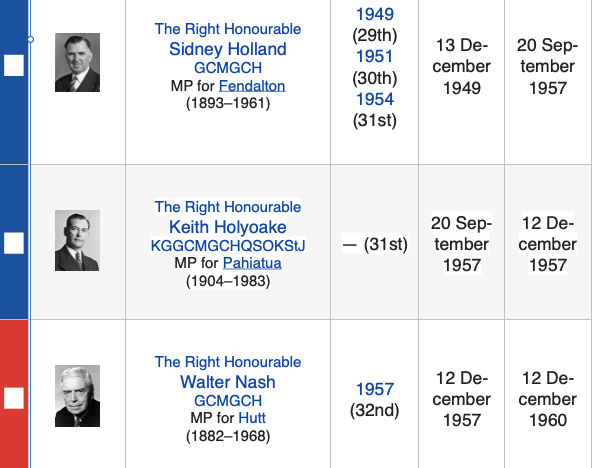
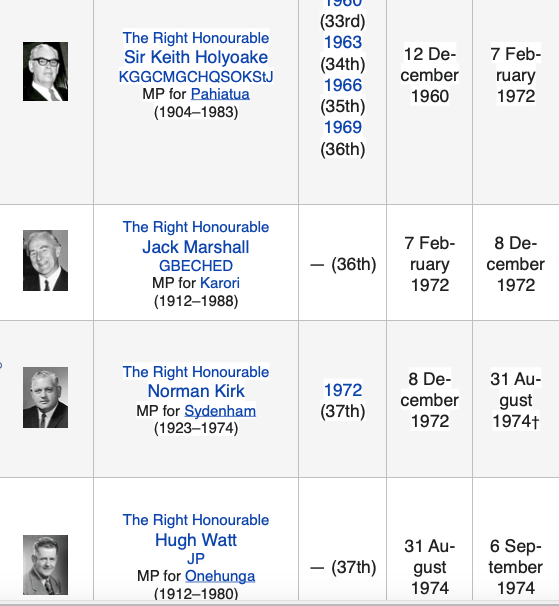
Below is the time line showing all the Prime Ministers of New Zealand from Sewell (1856) to Ardern (2017 - now).
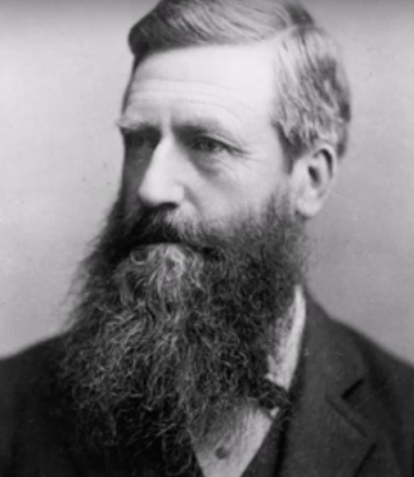
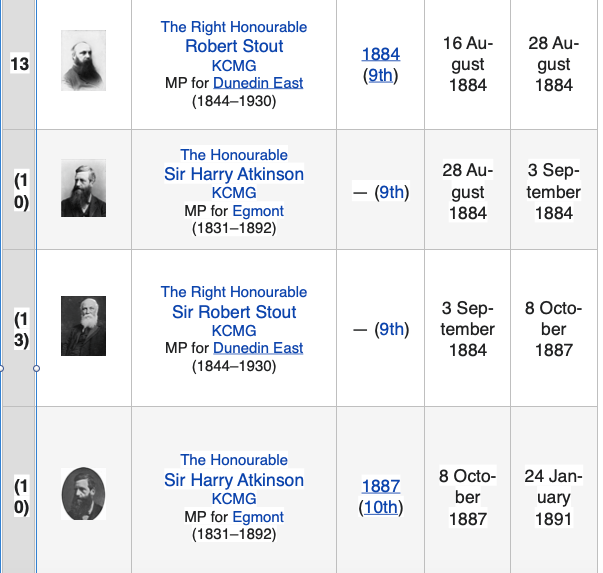
(2) Atkinson - Sir Harry Albert Atkinson (1831 - 1892) KCMG served as the tenth premier of New Zealand on four separate occasions in the late 19th century, and was Colonial Treasurer for a total of ten years.
(2) 阿特金森 - 哈里·阿尔伯特·阿特金森爵士 (Sir Harry Albert Atkinson, 1831 - 1892) KCMG 在 19 世纪后期曾四次担任新西兰第十任总理,并担任殖民地财政部长共计十年。
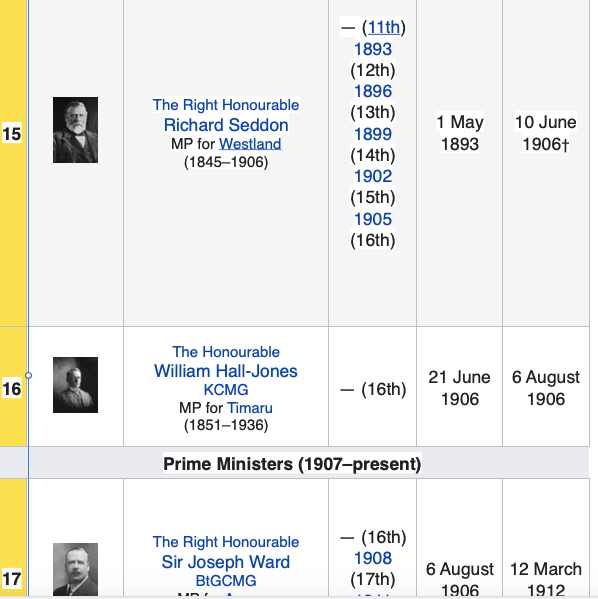
(3) Ballance - John Ballance, Prime Minister from 24 Jan 1891–27 Apr 1893. He led the Liberals Party to power and he was remembered by voters as Prime Minister who saw them returning to prosperity.
(3) 巴伦斯——约翰•巴伦斯,1891 年 1 月 24 日至 1893 年 4 月 27 日任总理。他领导自由党掌权,并被选民铭记为总理,见证了自由党恢复繁荣。
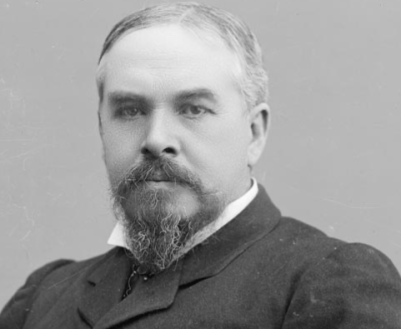
John Ballance owned a newspaper company in Whanganui and before becoming the Prime Minister, he had served as Treasurer to George Grey’s Government in 1866. who led the Liberals to power in 1891, was called ‘the rainmaker’ by voters relieved to see the return of prosperity.
约翰·巴兰斯在旺格努伊拥有一家报业公司,在成为总理之前,他曾于 1866 年担任乔治·格雷政府的财务主管。他于 1891 年领导自由党掌权,被选民称为“造雨者”,他们为看到政府的回归而松了一口气。国家繁荣起来了。
Kind, but not charismatic, Ballance inspired loyalty from his ministers. He was tougher than he appeared, steering his government through difficult financial times.
Ballance 善良但不具有超凡魅力,激发了他的部长们的忠诚。他比看上去更坚强,带领政府度过困难的财务时期。
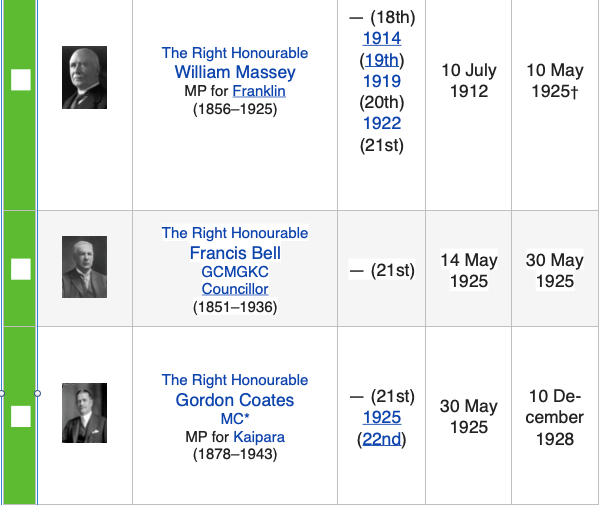
(4) Bell - Francis Bell was the Prime Minister of New Zealand for a short period from 14th to 30th May, 1925. He was the first New Zealand-born prime minister, holding office in a caretaker capacity following the death of William Massey.
(4) 贝尔 - 弗朗西斯·贝尔于 1925 年 5 月 14 日至 30 日短暂担任新西兰总理。他是第一位出生于新西兰的总理,在威廉·梅西去世后担任看守职务。
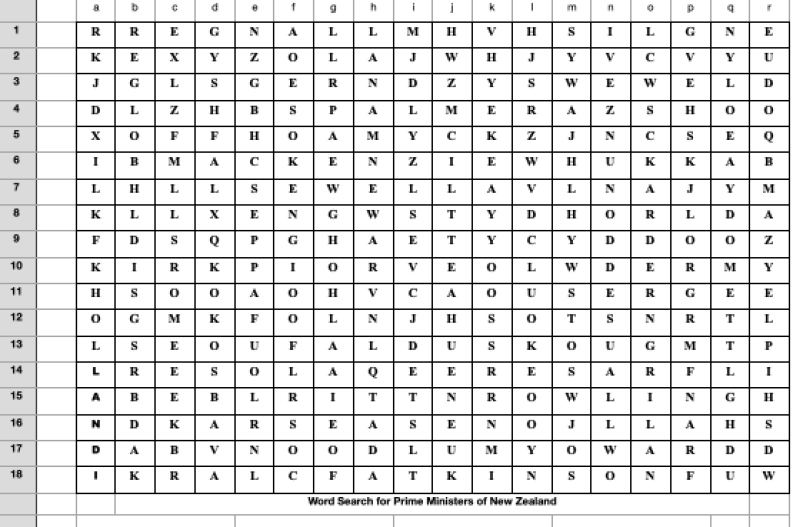
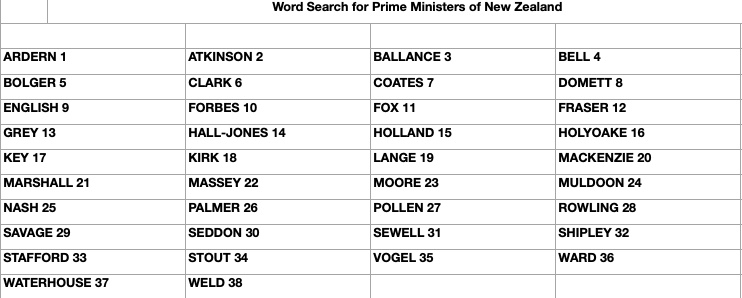
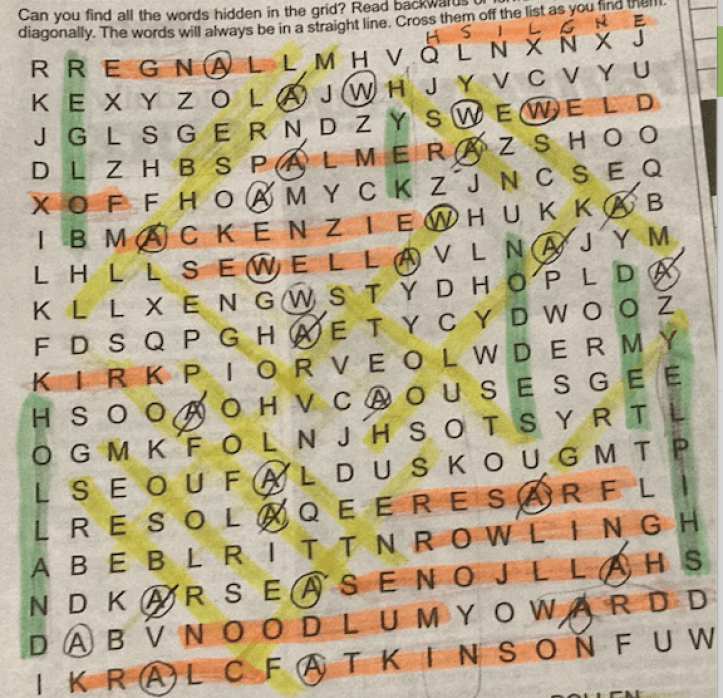
Word Search: From the Grid of Alphabets below, find the hidden Surnames of the Prime Ministers of New Zealand as shown in the next Table, starting with ARDERN right through to WELD (alphabetically arranged). The names can be placed forwards or backwards; up or down; or diagonally and will always be in straight lines.
单词搜索:从下面的字母表中,找到新西兰总理的隐藏姓氏,如下表所示,从 ARDERN 开始一直到 WELD(按字母顺序排列)。名称可以向前或向后放置;上或下;或对角线,并且总是在直线上。
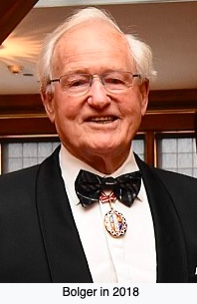
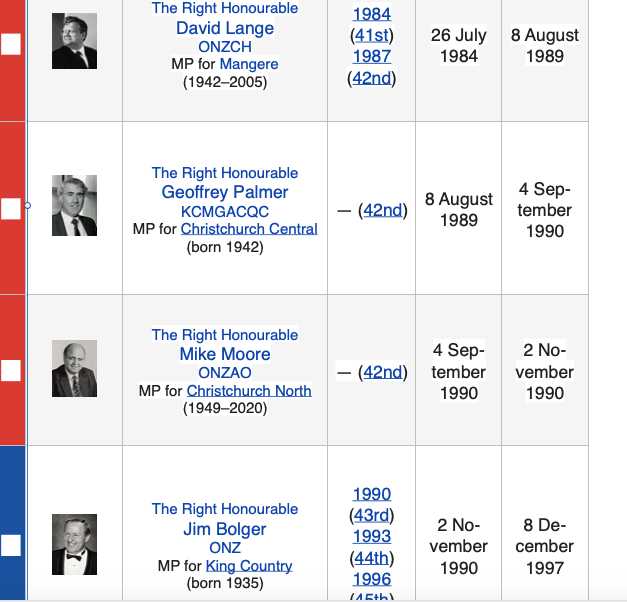
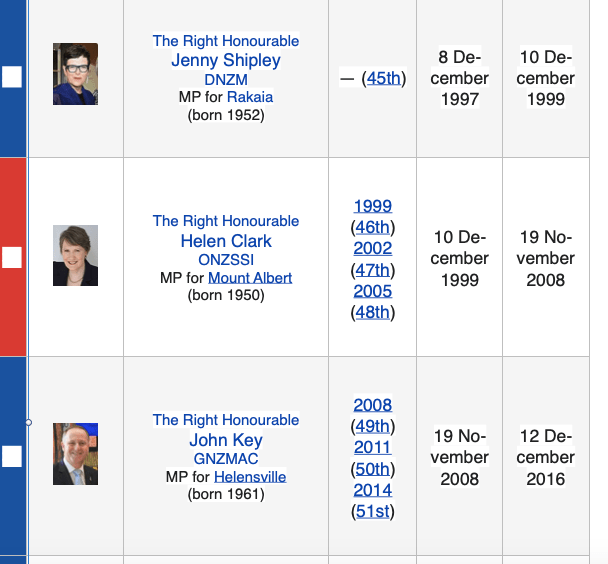
(5) Bolger - JIm Bolger was Prime Minister from 1990 to 1997. He led the National Party to a landslide victory in the 1990 election fought under the ‘first past the post’ system of voting. He was elected on the promise of delivering a ‘decent society’ following the drastic economic reform (known as Rogernomics) of the previous Labour Government. However, shortly after taking office, his Government was forced to bail out the Government Bank - Bank of New Zealand, and as a result, the Government reneged on a number of promises to reform the economy. Instead, his Government continued with the free-market approach of the previous Government, while implementing drastic cuts to public spending. In 1993, Bolger’s National Party was re-elected to office with a much reduced majority. By 1996 election, under a new MMP (Mixed Member Proportional) system of election, Bolger of the National Party, although emerged as the largest party but failed to capture more than 50% of the votes, was forced to enter a coalition with the New Zealand First Party. Bolger continued as Prime Minister, however his critics argued that he gave the inexperienced NZ First too much influence in his Cabinet. On 8 December 1997, Bolger was effectively ousted as leader by his caucus of MP’s and was replaced as Prime Minister by Jenny Shipley.
(5) 博尔格 - 吉姆·博尔格 (Jim Bolger) 于 1990 年至 1997 年担任总理。他带领国家党在 1990 年的选举中取得压倒性胜利,该选举是在“第一次过任”投票制度下进行的。 他被选为承诺在以前的经济改革(称为Rogerhomics)之后提供“体面的社会”. 然而,在上任后不久,他的政府被迫救助政府银行——新西兰银行,结果,政府违背了多项改革经济的承诺。相反,他的政府继续沿用前任政府的自由市场方式,同时大幅削减公共开支。 1993年,博尔格的国家党被重新选举到了大多数减少的办公室。 到 1996 年大选,在新的 MMP(混合成员比例)选举制度下,国家党的博尔格虽然成为最大的政党,但未能获得超过 50% 的选票,被迫与新党组成联盟。新西兰第一党。博尔格继续担任总理,但他的批评者认为,他在内阁中给了缺乏经验的新西兰优先党太大的影响力。 1997 年 12 月 8 日,博尔格实际上被他的议员核心小组赶下台,并由珍妮·希普利接任总理。
(6) Clark - Helen Clark was the Prime Minister after Jenny Shipley when she led the Labour Party to victory at the 1999 election. She remained in power as the Prime Minister of New Zealand until the 2008 election when her Labour Party was defeated by the National Party’s John Key. During her term in office, she implemented several major economic initiatives like the New Zealand Superannuation Scheme, the formation of the KiwiBank and Kiwisaver. She also introduced the Foreshore and Seabed Act 2004 which caused major controversy within the New Zealand public. In foreign affairs, her Government sent troops to the Afghanistan War but did not contribute combat troops to the Iraq War. In terms of international trade, New Zealand signed several free-trade agreements with countries including an important one with China.

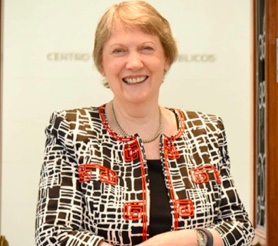
(6) 克拉克 - 海伦·克拉克是继珍妮·希普利 (Jenny Shipley) 领导工党在 1999 年大选中获胜之后的首相。她一直担任新西兰总理直到 2008 年大选,当时她的工党被国家党的约翰·基击败。在任职期间,她实施了多项重大经济举措,如新西兰养老金计划、KiwiBank 和 Kiwisaver 的成立。她还介绍了在新西兰公众中引起重大争议的 2004 年前滩和海底法案。在外交方面,她的政府派兵参加阿富汗战争,但没有向伊拉克战争派遣战斗部队。在国际贸易方面,新西兰与国家签署了多项自贸协定,其中与中国签署了一项重要协定。Q+A with Helen Clark May 13th 2019 http://Q+A with Helen Clark
(16) Holyoake - Keith Jacka Holyoake served as Prime Minister for a brief period in 1957 and later served a much longer period as Prime Minister from 1960 to 1972. From 1977 to 1980, he also served as the 13th Governor-General of New Zealand. He is the only New Zealand politician to date to have held these two high level positions.
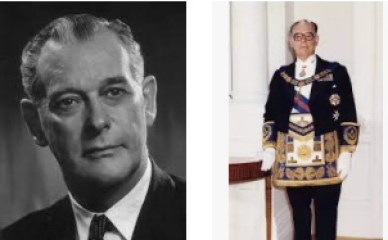
(16) 霍利奥克 - 基思·杰卡·霍利奥克 (Keith Jacka Holyoake) 于 1957 年短暂担任总理,后来在 1960 年至 1972 年担任总理的时间更长。 1977 年至 1980 年,他还担任新西兰第 13 任总督.他是迄今为止唯一担任这两个高级职位的新西兰政治家。
Holyoake left school when he was twelve to help on his parents’ farm. He was home educated by his mother, who had been a school teacher. He was a hard worker and was physically strong. He took the farm over by his 20s and established himself in the farming community. Besides being in the local producer organisations, he represented his district in tennis and in rugby, and from 1930 to 1933, he was president of the Golden Bay – Motueka Rugby Union.
霍利奥克十二岁时离开学校去帮助他父母的农场。他是由他的母亲在家教育的,他的母亲曾是一名学校老师。他是一个勤奋的人,而且身体很强壮。他在 20 多岁时接管了农场,并在农业社区建立了自己的地位。除了在当地的制片人组织中工作外,他还代表他所在的地区参加网球和橄榄球比赛,从 1930 年到 1933 年,他是金湾 - 莫图伊卡橄榄球联盟的主席。
The Holyoake government was responsible for bringing the office of ombudsman into the government. He took broadcasting and censorship out of direct political control and he set up a number of other autonomous or quasi-autonomous government organisations. He improved parliamentary scrutiny of the executive, including introducing a daily oral question period.
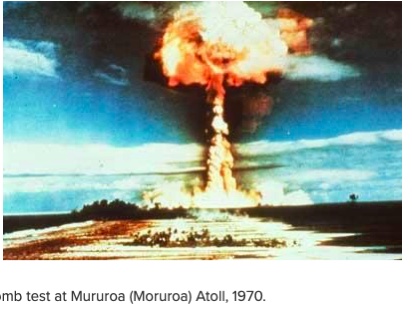
The existence of the New Zealand Security Intelligence Service (SIS) was for the first time publicly admitted, and its minister, the prime minister, was also publicly acknowledged. A comprehensive review of the public service led to reform, restructuring and rationalisation. The government published and endeavoured to act upon the Hunn Report, a major and damning report on the disadvantaged position of Maori n New Zealand society. Holyoake ended the practice of an apartheid sporting body in South Africa dictating the racial composition of touring New Zealand rugby teams. He also, in 1963, announced the policy of banning the storage or testing of nuclear weapons within New Zealand territory and he was the first of a succession of New Zealand leaders to protest continued French nuclear testing in the Pacific region.
霍利奥克政府负责将监察员办公室纳入政府。他使广播和审查制度脱离了直接的政治控制,并建立了许多其他自治或准自治的政府组织。他改进了议会对行政部门的审查,包括引入每日口头提问时间。新西兰安全情报局(SIS)的存在首次被公开承认,其部长、总理也被公开承认。对公共服务的全面审查导致了改革、重组和合理化。政府发布并努力根据 Hunn 报告采取行动,这是一份关于毛利人在新西兰社会处于不利地位的重大而严厉的报告。霍利奥克结束了南非种族隔离体育团体规定巡回新西兰橄榄球队的种族构成的做法。他还于 1963 年宣布了禁止在新西兰境内储存或试验核武器的政策,他是新西兰领导人中第一个抗议法国继续在太平洋地区进行核试验的领导人。
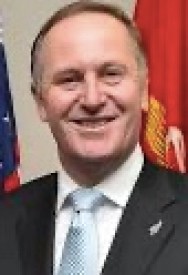
(17) Key - John Key, born 8th August 1961, was the Prime Minister from the year 2008 to the year 2016 when he resigned from Parliament to give the Prime Minister’s post to his deputy, Bill English.
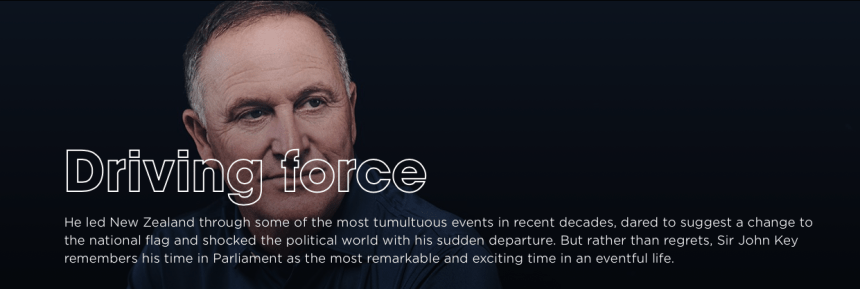
As head of global foreign exchange for Merrill Lynch, Key had been flown back from London in 1999 to speak as a financial expert at an event where the then Prime Minister David Lange was the Master of Ceremony. “He was an amazing guy and a hilarious speaker,” recalled Sir John. “But when he asked me if I was going to stay in London forever, and I told him no, I was going to come back and run for parliament, his whole face and demeanour changed. “ He said ‘I don’t care who you are running for, just don’t do it. It was a terrible experience for me.’” Wise words or not, Key’s mind had been made up decades earlier. “I wanted to be Prime Minister when I was 11 years old. I was always fascinated by the role.” In 2001, the 40-year-old millionaire (another childhood goal ticked off) left the high-rise buildings of the financial world bound for a tiny one-story weatherboard building, housing the National Party’s office in the re-established Helensville electoral.
作为美林证券的全球外汇主管,Key 于 1999 年飞回伦敦,作为金融专家在当时的首相大卫兰格担任司仪的活动上发表讲话。 “他是一个了不起的人,也是一个有趣的演讲者,”约翰爵士回忆道。 “但当他问我是否会永远留在伦敦,我告诉他不,我会回来竞选议会时,他的整个脸和举止都变了。 “他说‘我不在乎你在为谁竞选,只是不要这样做。对我来说,这是一次可怕的经历。’”不管是不是明智的话,Key 的想法在几十年前就已经下定了。 “我 11 岁时就想当首相。我一直对这个角色很着迷。” 2001 年,这位 40 岁的百万富翁(另一个童年的目标被勾掉了)离开了金融界的高层建筑,前往一座小型的单层挡风板建筑,在重建的海伦斯维尔选举区中设有国家党办公室。
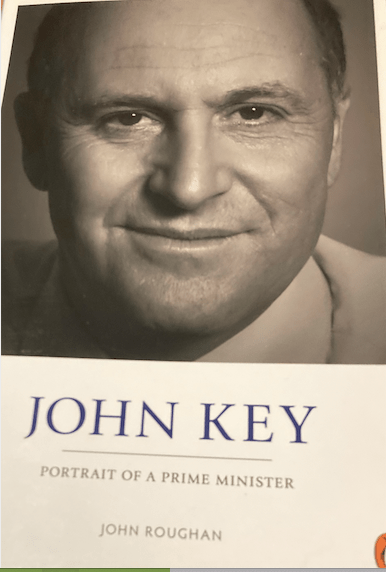
In the book ‘John Key - Portrait of a Prime Minister’ the author John Roughan traces the path that John Key took to achieve his eleven-year old dream to be the Prime Minister of the country. John Key was from a broken home. His parents with their daughter Liz immigrated to New Zealand from England in 1955, settling in Auckland. They had two other children later, Sue and John. John was born on 9th August 1961. By 1967, Ruth, John mother, left her husband George with her three children and settled in Christchurch. John later became a currency trader and he was good at this job, later working for Bankers Trust in Singapore, Merrill Lynch in Hong Kong and then in London and New York. By the time he entered politics as the National Party’s electoral candidate for Helensville, north Auckland, he was a wealthy man.
在《约翰·基 - 总理的肖像》一书中,作者约翰·鲁根追溯了约翰·基为实现他 11 岁的梦想成为该国总理所走的道路。约翰基来自一个破碎的家庭。 1955年,他的父母带着女儿莉兹从英国移民到新西兰,定居在奥克兰。后来他们又生了两个孩子,苏和约翰。约翰出生于 1961 年 8 月 9 日。到 1967 年,约翰的母亲露丝带着三个孩子离开了丈夫乔治,定居在基督城。约翰后来成为一名外汇交易员,他很擅长这份工作,后来在新加坡的信孚银行、香港的美林证券以及伦敦和纽约工作。当他作为国家党在奥克兰北部海伦斯维尔的选举候选人进入政界时,他已经是一个富有的人了。
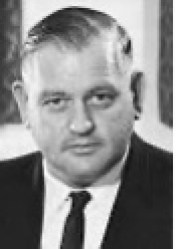
(18) Kirk - Norman Eric Kirk, Prime Minister from 1972 to his sudden death in 1974 due mainly of hard work. Before entering Parliament he was the elected Mayor of Kaiapoi from 1953 to 1957. He stressed the need for regional economist development and he adopted a foreign policy that was more independent of the United States of America. In 1973, he strongly opposed French nuclear tests in the Pacific and he promoted racial equality and prevented the South African rugby team from touring New Zealand during 1973.
(18) 柯克——诺曼·埃里克·柯克,1972 年任首相至 1974 年突然去世,主要是因为勤奋工作。 在进入议会之前,他于 1953 年至 1957 年担任凯亚波市长。他强调了发展区域经济学家的必要性,并采取了更加独立于美利坚合众国的外交政策。 1973年,他强烈反对法国在太平洋进行核试验,提倡种族平等,并阻止南非橄榄球队在1973年访问新西兰.
Kirk had a reputation as the most formidable debater of his time and once famously said that “there are four things that matter to people: they have to have somewhere to live, they have to have food to eat, they have to have clothing to wear, and they have to have something to hope for.” Owing to his energy, charisma and powerful oratory, as well as his untimely death, Kirk remains one of the most popular New Zealand prime ministers. Kirk set a frenetic pace implementing a great number of new policies. In particular, the Kirk government had a far more active foreign policy than its predecessor, taking great trouble to expand New Zealand’s links with Asia and Africa. Immediately after his election as Prime Minister, Kirk withdrew all New Zealand troops from Vietnam, ending that nation’s eight-year involvement in the Vietnam War.
柯克以他那个时代最强大的辩论者而闻名,他曾经说过“对人们来说有四件事很重要:他们必须有地方住,他们必须有食物吃,他们必须有衣服穿,他们必须有一些希望。”由于他的精力、魅力和强有力的演讲,以及他的英年早逝,柯克仍然是最受欢迎的新西兰总理之一。柯克制定了实施大量新政策的狂热步伐。特别是,柯克政府的外交政策比其前任要积极得多,不遗余力地扩大新西兰与亚洲和非洲的联系。在他作为总理选举之后,柯克撤回了所有新西兰在越南的军队,结束了国家八岁的越南战争的参与。
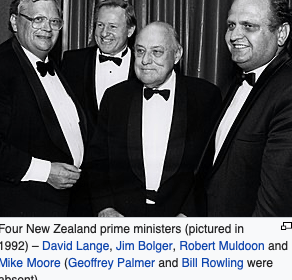
(19) Lange - David Russell Lange was the Prime Minister of New Zealand from 1984 to 1989. David Lange’s debate at Oxford University on the topic of nuclear weapons held on 1 March 1985 was one of the highlights of his premiership. https://youtu.be/OeHTziiFVx0
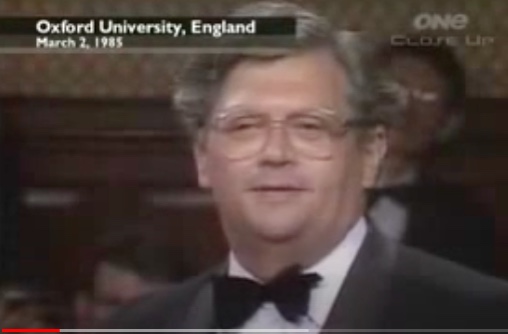
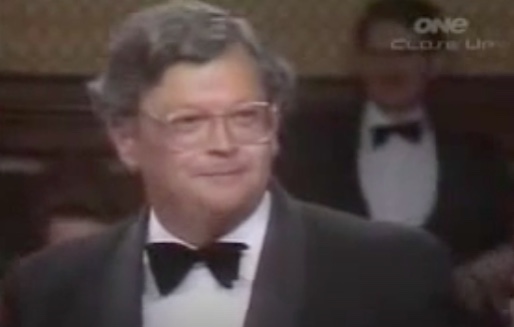
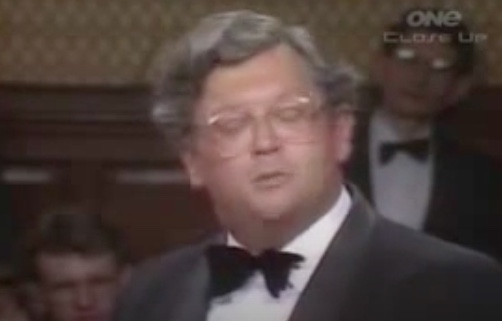
兰格 - 大卫兰格于 1984 年至 1989 年担任新西兰总理。大卫兰格于 1985 年 3 月 1 日在牛津大学就核武器主题进行的辩论是他担任总理期间的亮点之一。 https://youtu.be/OeHTziiFVx0
David Lange was a lawyer by profession. He was first elected to the New Zealand Parliament in the Mangere by-election of 1977 and soon he gained a reputation for cutting wit and eloquence. He became Prime Minister when the country was in financial difficulties and the first thing he did on becoming the Prime Minister was to devalue to New Zealand currency. He also freed up the New Zealand economy by removing tariffs on imported goods and he encouraged his Finance Minister, Roger Douglas to have a free-trade policy which was known later as Rogernomics. He also fulfilled a campaign promise to deny New Zealand’s port facilities to nuclear-armed and nuclear-powered vessels, making New Zealand a nuclear-free zone. Lange and his party were re-elected in August 1987 but he resigned two years later and was succeeded by his deputy, Geoffrey Palmer. He retired from Parliament in 1996. In later years, Prime Minister Helen Clare described the New Zealand’s nuclear-free legislation as his most important legacy during his period as Prime Minister.
大卫兰格是一名职业律师。当国家陷入财政困难时,他成为了总理,他成为总理后做的第一件事就是让新西兰货币贬值。他还通过取消对进口商品的关税来解放新西兰经济,并鼓励他的财政部长罗杰·道格拉斯制定一项后来被称为 Rogernomics 的自由贸易政策。他还兑现了一项竞选承诺,拒绝向拥有核武器和核动力的船只提供新西兰的港口设施,使新西兰成为无核区。 1987年8月,兰格和他的党被重新选出,但他曾在两年后辞职,并由他的杰弗里帕尔默的副手成功。他于 1996 年从议会退休。后来,海伦·克莱尔总理将新西兰的无核立法描述为他担任总理期间最重要的遗产。
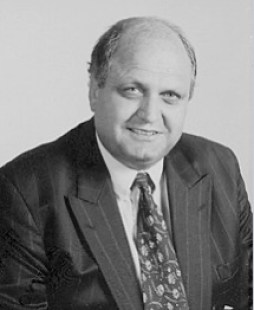
(23) Moore - Michael Kenneth Moore was a New Zealand politician, union organiser, and author. In the Fourth Labour Government he served in several portfolios including Minister of Foreign Affairs, and became the 34th prime minister of New Zealand for 59 days before the 1990 general election. Michael Moore’s father died when he was five years old and he was therefore reared by his solo-mother and educated at Dilworth School as a border. He left school at the age of fourteen and became a labourer and a printer. He became an active trade unionist and at the age of seventeen was elected to the Auckland Trades Council. He became the first youth representative on the Labour Party executive and was vice-president of the International Union of Socialist Youth for two consecutive terms. In 1999 he was elected to the post of Director-General of the World Trade Organization. Later Moore became the New Zealand Ambassador to the United States. He had a heart valve operation in 2014 and was admitted to hospital in Washington DC in April 2015 after a mild stroke. In November 2015, he announced that he would leave his post on 16 December and return to New Zealand due to his deteriorating health. Moore died at his home in Auckland on 2 February 2020, aged 71.
(23) Moore - Michael Kenneth Moore 是新西兰政治家、工会组织者和作家。在第四届工党政府中,他曾担任包括外交部长在内的多个职务,并在 1990 年大选前成为新西兰第 34 任总理,为期 59 天。迈克尔·摩尔的父亲在他五岁时去世,因此由他的单身母亲抚养,并在迪尔沃思学校接受教育。他十四岁离开学校,成为一名工人和印刷工。他成为一名活跃的工会会员,17 岁时被选入奥克兰贸易协会。 他成为工党行政部门的第一位青年代表,并连续两届担任国际社会主义青年联盟副主席. 1999 年,他成为世界贸易组织的总干事。后来摩尔成为新西兰驻美国大使。他在 2014 年进行了心脏瓣膜手术,并于 2015 年 4 月因轻度中风入院。 2015年11月,因健康状况恶化,他宣布将于12月16日离职,返回新西兰。摩尔于 2020 年 2 月 2 日在奥克兰的家中去世,享年 71 岁。
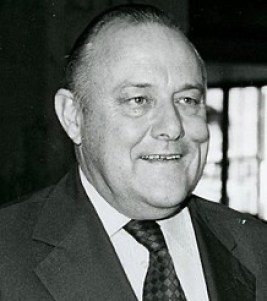
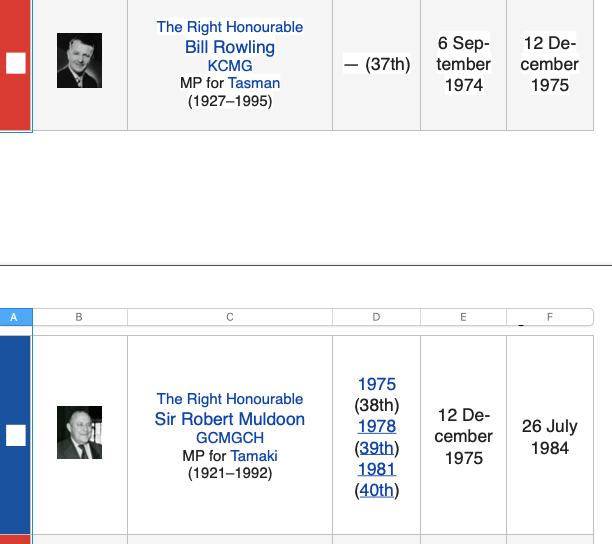
(24) Muldoon - Robert David Muldoon was the Prime Minister from 1975 to 1984. He was known to be the first world leader to have an informal and abrasive personality. He served as a corporal and later sergeant in the army during the second World War. He completed his training as an accountant and returned to New Zealand to practice as a cost accountant. He was first elected to Parliament in 1960 and soon became the Minister for Tourism in 1967 and the Minister of Finance from 1967 to 1972. During these years, he built up an informal but solid backing amongst National’s mostly rural cohort of frustrated conservatives, which he labelled “Rob’s Mob”. His tenure as Prime Minister was plagued by an economic pattern of stagnation, high inflation, growing unemployment, and high external debts and borrowing. Economic policies of his Government included national superannuation, wage and price freezes, industrial incentives, and the Think Big industrial projects.
(24) Muldoon - Robert David Muldoon 从 1975 年到 1984 年担任总理。众所周知,他是第一个拥有非正式和粗暴个性的世界领导人。在第二次世界大战期间,他曾担任下士,后来在军队中担任中士。他完成了会计培训,回到新西兰从事成本会计工作。他于1960年第一次选出议会,并于1967年成为旅游部长,1967年至1972年的财政部长。在这些年期间,他建立了一个非正式的,但在国家大多数农村恐惧保守党队伍中建立了一个非正式的支持,他标记为“罗布的暴徒”。他在担任总理期间受到经济停滞、高通胀、失业率上升以及高额外债和借贷的困扰。他的政府的经济政策包括国家养老金、工资和价格冻结、工业激励措施以及 Think Big 工业项目。
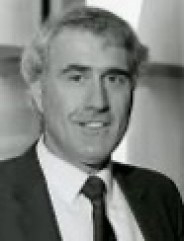
(26) Palmer - Geoffrey Winston Palmer is still a practising New Zealand lawyer, legal academic, and past politician, who was a member of Parliament from 1979 to 1990. He served as the 33rd Prime Minister of New Zealand for a little over a year, from August 1989 until September 1990, leading the Fourth Labour Government. As the Minister of Justice from 1984 to 1989, Palmer was responsible for considerable reforms of the country’s legal and constitutional framework, such as the creation of the Constitution Act 1986, the New Zealand Bill of Rights, the Imperial Laws Application Act and the State Sector Act. He served as president of the New Zealand Law Commission from 2005 to 2010.
(26) Palmer - Geoffrey Winston Palmer 仍然是新西兰执业律师、法律学者和过去的政治家,1979 年至 1990 年担任议会议员。他担任新西兰第 33 任总理一年多一点,从1989年8月到1990年9月,领导第四届工党政府。作为 1984 年至 1989 年的司法部长,帕尔默负责国家法律和宪法框架的重大改革,例如制定 1986 年宪法法案、新西兰权利法案、帝国法律适用法案和国家部门行为。他于 2005 年至 2010 年担任新西兰法律委员会主席。
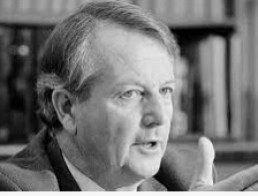
(28) Rowling - Wallace Edward Rowling, commonly known as Bill Rowling was Prime Minister of New Zealand from 1974 to 1975, a little over a year. Before he was elected to the Parliament in 1962, he was a lecturer in Economics. Shortly after entering Parliament he began to rise to the position of Labour Party President from 1970 to 1973 and served as the Minister of Finance from 1972 to 1974, when he was appointed Prime Minister following the untimely death of Norman Kirk. His attempt to retrieve the economy ended with an upset victory by the National Party in November 1975. He continued as the Leader of the Opposition for two more general elections before retiring from politics in 1983. He served as the Ambassador to the United States from 1985 to 1988.
(28)罗琳——华莱士爱德华罗琳,俗称比尔罗琳,1974年至1975年担任新西兰总理,一年多一点。在进入议会之前,他是一名经济学讲师。进入议会后不久,他于 1970 年至 1973 年升任工党主席,并于 1972 年至 1974 年担任财政部长,在诺曼·柯克英年早逝后被任命为总理。 1975 年 11 月,他的经济复苏尝试以国民党的惨败告终。他在 1983 年从政界退休之前,继续担任反对党领袖参加了两次大选。他从 1985 年起担任驻美国大使到 1988 年。

(31) Henry Sewell (Prime Minister 7 May to 20 May 1856, 14 days in office) Life - 1807 to 1879, 72 years. He was later the Treasurer (Finance Minister) under a different Prime Minister.
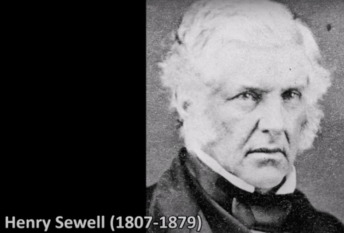
(31) 亨利·休厄尔(1856 年 5 月 7 日至 5 月 20 日首相,任职 14 天) 生平——1807 年至 1879 年,72 岁。他后来成为另一位总理的司库(财政部长)。
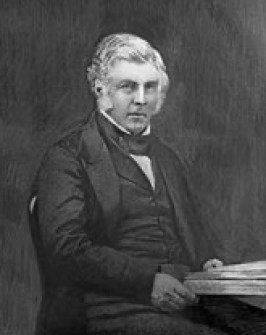
“Henry Sewell, our first premier – or colonial secretary as early premiers were called – was more of a sojourner than a settler. Although he spent 17 years in New Zealand in three periods between 1853 and 1876, he never put down deep roots.
“Sewell followed his father into the law – and into debt. In 1842 Thomas Sewell died owing so much that Henry took 30 years to settle the bills. Two years later his woes were compounded by the death of his wife, Lucinda. A sister cared for their six children until Sewell married Elizabeth Kittoe in 1850.
“亨利·休厄尔,我们的第一任总理——或者早期总理被称为殖民部长——更像是一个旅居者,而不是一个定居者。尽管他在 1853 年至 1876 年的三个时期在新西兰度过了 17 年,但他从未扎下深厚的根基。“休厄尔跟随他的父亲进入法律——并负债累累。1842 年,托马斯·休厄尔去世时欠下的债太多,以至于亨利用了 30 年的时间来解决账单。两年后,他的妻子露辛达的去世加剧了他的困境。一位姐姐关心直到 1850 年休厄尔与伊丽莎白·基托结婚之前,他们的六个孩子。
“He worked for the Canterbury Association and came to New Zealand in 1853 to wind up its affairs. Witty and well-read, he pitched into colonial politics, serving in ministries whenever he lived here, but he was too reserved and elitist for the rough and tumble of colonial politics, as the brevity of his premiership showed.
“Opposed to the use of force against Maori, Sewell was highly distressed by the outbreak of war in Taranaki in the year 1860, and resigned from the government in protest at the land confiscation policy.
“He left politics in 1873 and returned to England, where he died six years later.
By Gavin McLean“
“他为坎特伯雷协会工作,并于 1853 年来到新西兰结束其事务。他机智而博学,投身于殖民政治,每当他住在这里时都在部委任职,但他过于矜持和精英主义,不适合粗野正如他短暂的总理任期所表明的那样,殖民政治的动荡。
“反对对毛利人使用武力,休厄尔对 1860 年塔拉纳基爆发的战争深感痛心,并辞去政府职务以抗议土地没收政策。他于 1873 年离开政界,回到英格兰,六年后他在那里去世。
The Solution to Word Search is shown below (colour coded):
单词搜索的解决方案如下所示(颜色编码):
 English