
Seven Years On 七年后

NOTE: Due to the length of this article, it will NOT be translated into the Chinese Language. A thousand apologies! 注意:请注意: 由于本文篇幅较长,不会翻译成中文。一千个道歉!
This is an article written by American Columnist Thomas Friedman entitled “Seven Years between China and the United States of American” that is worth reading. The article was written in the year 2008, published by the New York Times on August 26th. Note how this Columnist had predicted the situation. Our thanks to Edmund who brought this to our attention.
Thomas Loren Friedman, an American political commentator, and he has written extensively on foreign affairs, global trade, the Middle East, globalisation, and environmental issues. In this article he writes on the relationship between China and the USA.
“Beijing
“After attending the spectacular closing ceremony at the Beijing Olympics and feeling the vibrations from hundreds of Chinese drummers pulsating in my own chest, I was tempted to conclude two things: “Holy mackerel, the energy coming out of this country is unrivalled.” And, two: “We are so cooked. Start teaching your kids Mandarin.”
“However, I have learned over the years not to over-interpret any two-week event. Olympics do not change history. They are mere snapshots of a country posing in its Sunday bests for all the world to see. But, as snapshots go, the one China presented through the Olympics was enormously powerful and it is one that Americans need to reflect upon this election season.
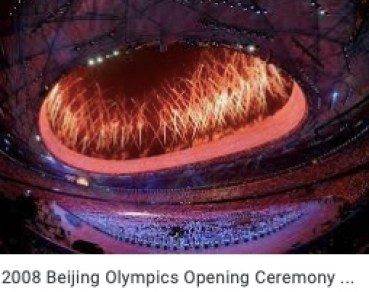
“China did not build the magnificent $43 billion infrastructure for these games, or put on the unparalleled opening and closing ceremonies, simply by the dumb luck of discovering oil. No, it was the culmination of seven years of national investment, planning, concentrated state power, national mobilisation and hard work.
“Seven years … Seven years … Oh, that is correct. China was awarded these Olympic Games on July 13, 2001 just two months before the 9/11 event in USA.
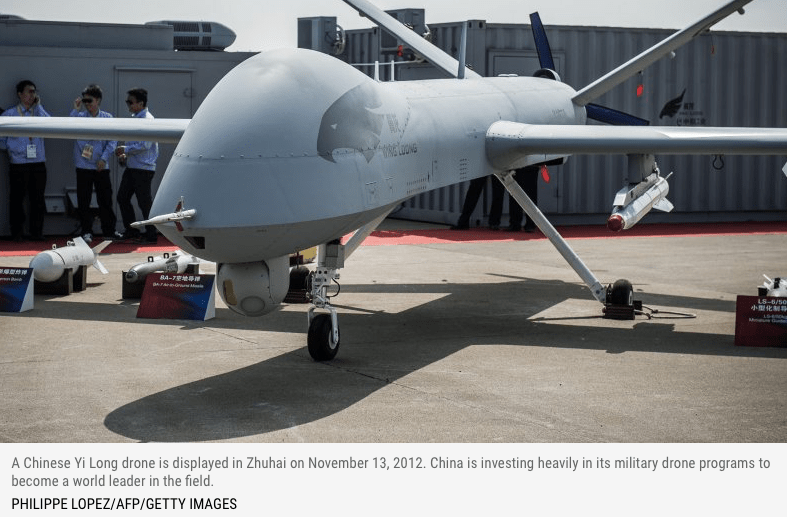
“As I sat in my seat at the Bird’s Nest, watching thousands of Chinese dancers, drummers, singers and acrobats on stilts perform their magic at the closing ceremony, I could not help but reflect on how China and America have spent the last seven years: China has been preparing for the Olympics; as we have been preparing for Al Qaeda. They have been building better stadiums, subways, airports, roads and parks. And we have been building better metal detectors, armoured HUMVEE’s (High Mobility Multipurpose Wheeled Vehicle) and pilotless drones.
“The difference is starting to show. Just compare arriving at La Guardia’s dumpy terminal in New York City and driving through the crumbling infrastructure into Manhattan with arriving at Shanghai’s sleek airport and taking the 220-mile-per-hour magnetic levitation train, which uses electromagnetic propulsion technology instead of steel wheels and tracks. In a blink of an eye, you have arrived in downtown Shanghai. Then, ask yourself: Who exactly lives in a third world country?
“In my opinion: as a modern country, China has accepted the main concepts of modern national sovereignty and human rights. But the characteristics of Chinese civilisation make it unique. One of the characteristics of Chinese development model is that ‘Learning plus Innovation plus the Scale Effect from a huge population base is equal to impact on China and impact on the world. Many foreign companies investing in China have a slogan that “if they can be the first in China, they can be the first in the world.

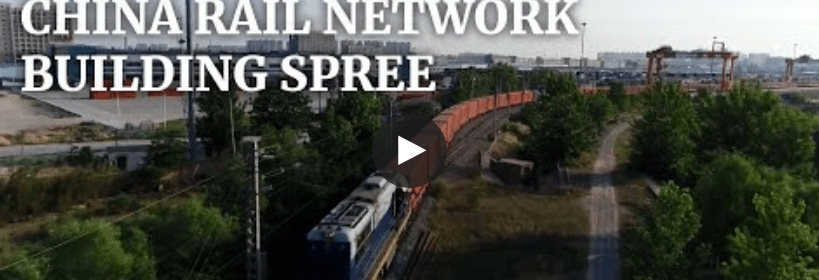
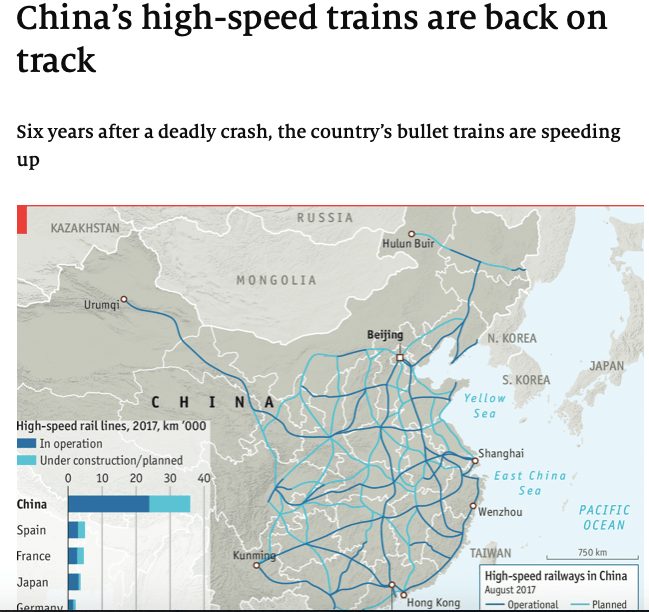
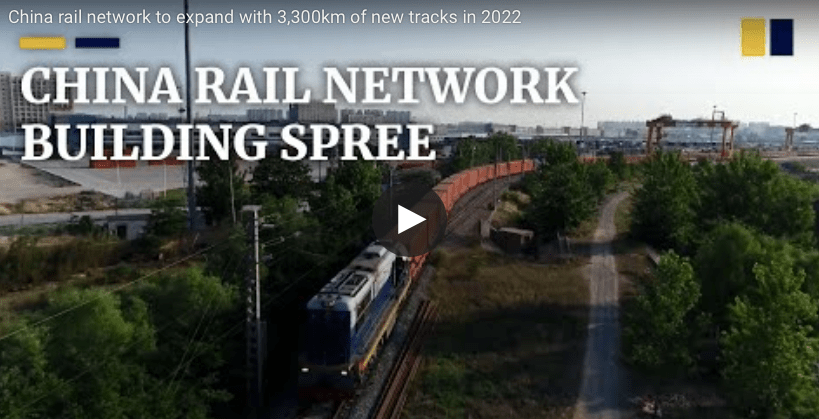
“With the rise of China, this trend is beginning to expand to more and more fields, such as tourism, aviation, Jim and television, sports, education, new energy, modernisation models, and high-speed rail.
“True, if you drive an hour out of Beijing, you meet the vast dirt-poor third world of China. But here is what is new: The rich parts of China, the modern parts of Beijing or Shanghai or Dalian, are now more state of the art than rich America. The buildings are architecturally more interesting, the wireless networks more sophisticated, the roads and trains more efficient and nicer. And, I repeat, they did not get all this by discovering oil. They got it by digging inside themselves.
“Some of us are more envious of the life of a small country with few people. In fact, a small country has the difficulties of a small country. Small countries cannot withstand storms, but big countries have much more room for manoeuver when they encounter storms.
“I realise the differences between USA and China. We were attacked on 9/11; they were not. We have real enemies; theirs are small and mostly domestic. We had to respond to 9/11 at least by eliminating the Al Qaeda base in Afghanistan and investing in tighter homeland security. They could avoid foreign entanglements. Trying to build democracy in Iraq was a war of choice and is unlikely to ever produce anything equal to its huge price tag.
“Then, by contrast China is a relatively developed developing country, but a major earthquake in 2010 caused a large drop in China’s GDP, and the entire economy may be out of breath for two years. When China encounters a natural disaster, the entire economy suffers. Even now, the country’s economy remains stagnant.
“For most countries, industrial upgrading often means relocating industries to foreign countries. China, in contrast can carry out large-scale industrial gradient transfers within itself, which prolongs the life cycle of China’s manufacturing industry.
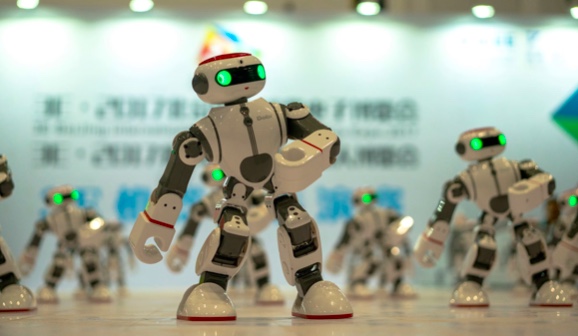
“The first rule of holes is that when you are in one, stop digging. When you see how much modern infrastructure has been built in China since 2001, under the banner of the Olympics, and you see how much infrastructure has been postponed in America since 2001, under the banner of the war on terrorism, it is clear that the next seven years need to be devoted to nation-building in America.
“We need to finish our business in Iraq and Afghanistan as quickly as possible, which is why it is a travesty that the Iraqi Parliament has gone on vacation while 130,000 U.S. troops are standing guard. We can no longer afford to postpone our nation-building while Iraqis squabble over whether to do theirs.
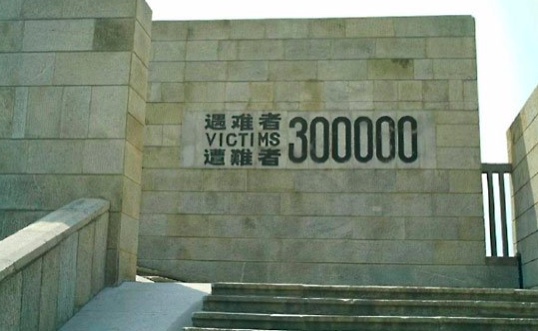
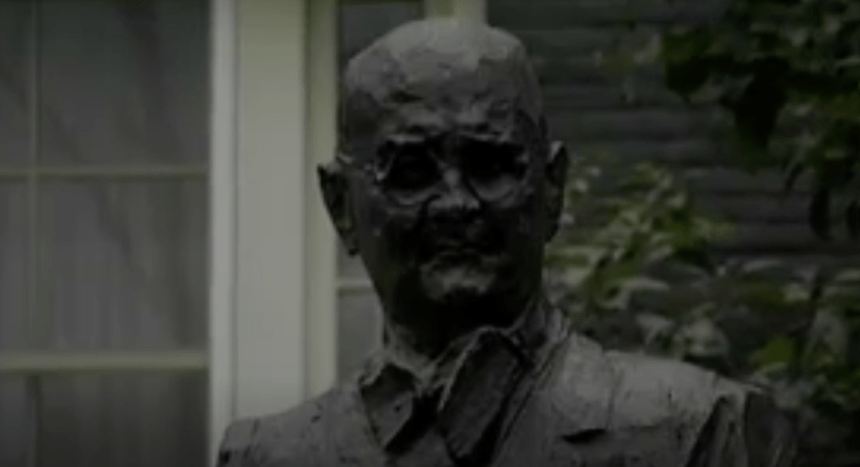

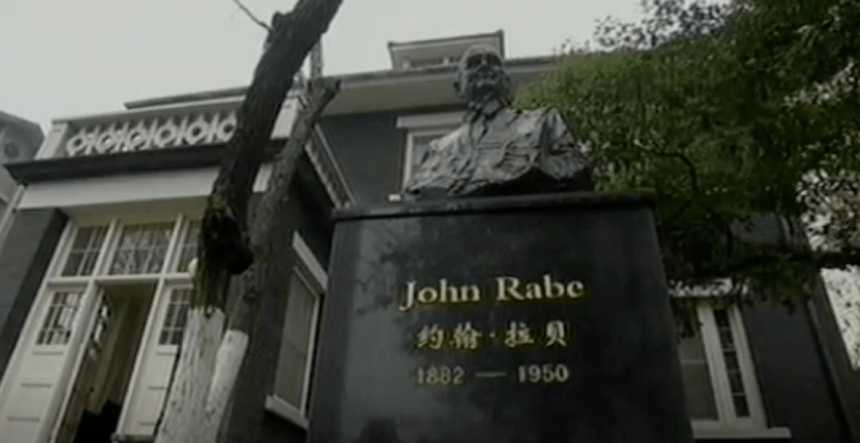
Learn about the Nanjing Massacre: https://www.britannica.com/event/Nanjing-Massacre.
“Culture: the collision of Chinese and Western cultures over the past three decades has not caused most Chinese people to lose their cultural confidence. The Confusion craze, the Lao Zhi craze, the chanting craze, the calligraphy and the brush-painting crazes, the traditional medicine craze, the health care craze, all reflect the revival of traditional Chinese culture.
“The catering culture, health preservation culture and leisure culture are also incomparable to other cultures. Street restaurants anywhere in China can make thirty to forty kinds of dishes while most restaurants in the United Stated and in Europe rarely have more than eight to twelve varieties.
“Some of us are always worried that the Chinese lack religious sentiment. In fact, anyone who is a little familiar with religious history knows that religious conflicts in human history have led to countless wars. The conflicts between Christian denominations and between Christianity has islam alone have histories over thousands of years, resulting in human tragedies in which countless lives were killed.
“Economy: Economics in the traditional Chinese sense is not “market economics” strictly speaking, but “people-oriented economics’. In China’s long history, if a government cannot develop the economy, improve people’s livelihood, and handle catastrophes well, it will lose the support of the people, lost the ‘mandate of heaven to govern’, and eventually be overthrown by the people.
“Today’s political parties in China are a continuation of the historically unified Confusion ruling bloc tradition, not Western political parties that compete with each other on behalf of differing interest groups. Many people in the West only agree with the legitimacy of the regime arising from multi-party competition, which is a very shallow political concept.
“I once met an American scholar who questioned the legitimacy of the Chinese regime, and I asked him why he did not question the legitimacy of his own country first. You took other people’s land, colonised, immigrated, and exterminated Red Indians to form today’s America. I asked him to explain to me where is the legitimacy and legality of such a country? In the end he could only tell me that that was history, to be forgotten.
“So, can we question the source of the legitimacy of Western regimes with China’s concept of “selecting the best and appointing the best”? Bush’s eight years in power brought economic recession to the United States, annihilation to Iraq, and disaster to the world. The financial tsunami brought about is an example.
“The biggest feature of China’s historical legitimacy is the political tradition of “selecting the best and appointing the able” and governing the country with “the people’s hearts turn against their backs”.
“In Chinese political culture, the concepts of “a game of chess in the whole country” and “if one side is in trouble, all sides will support it” cannot be produced by other cultures. I have discussed the Chinese model with Indian scholars and they said that on the surface, China is centralised, but each reform in China actually has strong local characteristics, which compete with each other and complement each other, so the Chinese system is better than that on India. The system is more dynamic.
“They have learned from the West and have established a strong modern government system, but at the same time they have their own unique political and cultural resources. The combination of the two makes it easier for us to overcome the populism that plague Western democracies today.
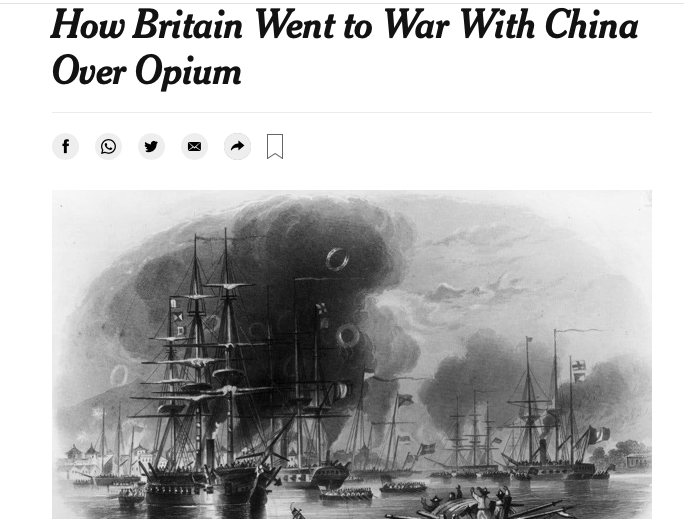
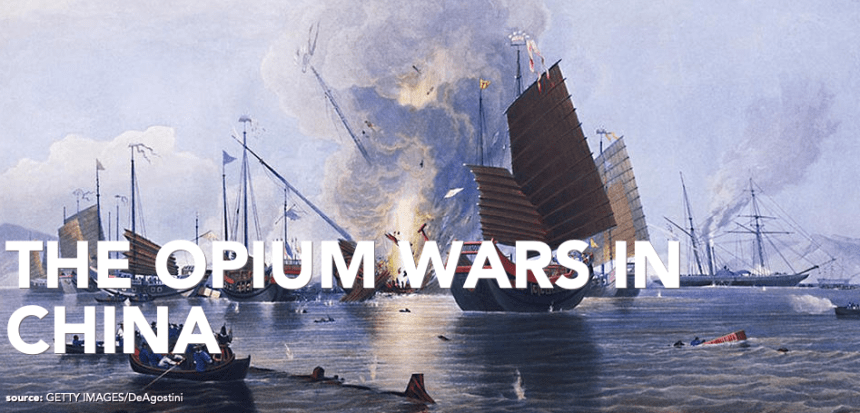
Read about the Opium Wars: https://asiapacificcurriculum.ca/learning-module/opium-wars-china
“At the political level, many in the West also take it for granted that as Chinese middle class grows, China will also accept the Western confrontational political model. But they also discovered today that today’s Chinese middle class seems to value China’s political stability more than any other class. They understand that the “democratisation” of the West has brought about chaos and turmoil to many countries, and that their hard-earned wealth accumulation has actually benefited from China’s more that three decades of political stability.
“Frankly speaking, what China has shown today cannot be summed up by the overly simple or even crude concepts of ‘advanced’ and ‘backward’, ‘democracy’ and ‘dictatorship’, ‘high human rights’ and ‘low human rights’. “
Wow! Thought provoking!
 English