MAORI LESSON 3a, TORU CLASS 29 07 2020. with Chinese 毛利语言,第3课a,TORU, 29 07 2020 使用中文
“Maori Language and Culture should be a compulsory subject in all New Zealand schools.”
“在所有新西兰学校中,毛利人的语言和文化应该是强制性的。”
In Hanyu Pinyin for learners of the Chinese Language: “Zài suǒyǒu xīnxīlán xuéxiào zhōng, máolì rén de yǔyán hé wénhuà yīnggāi shì qiángzhì xìng de.”
Let us start this lesson with the homework given to the class to do for the seven days from 29th July to 4th August.
让我们从7月29日至8月4日的7天课上的家庭作业开始本课.
Hanyu Pinyin (for those wanting to learn Mandarin): Ràng wǒmen cóng 7 yuè 29 rì zhì 8 yuè 4 rì de 7 tiān kè shàng de zuòyè kāishǐ běn jié kè.
Topic: Tohu Patai (Question mark) / Tere AHA (What speed) / Tohu Waa (Time).
主题 Zhǔtí:Tohu Patai(问号)(wènhào) / Tere AHA(什么速度)(shénme sùdù) / Tohu Waa(时间)(shijian)
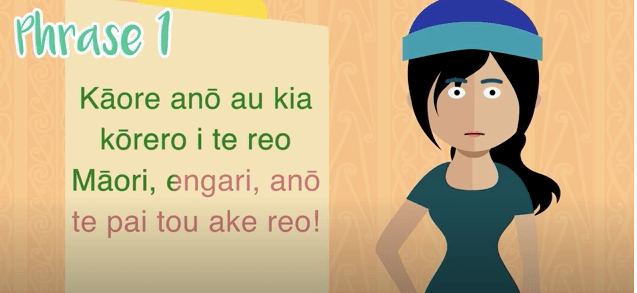
Translate the following sentences.
Whakamaahia nga rerenga korero e whai ake nei.
译以下句子。Fānyì yǐxià jùzi.
(1) Kei te haere te tama ki te kura ki te ako.
The boy is going to school to study.
这个男孩要去学校读书.
Hanyu Pinyin (for those wanting to learn Mandarin): Zhège nánhái yào qù xuéxiào dúshū.
kei te = present tense; haere = go; tama = boy; kura = school; ako = learn.
haere = 去; tama = 男孩; kura = 学校; ako = 读书.
(2) E haere ana te tama ki te kura it te ako?
Is the boy going to school to study?
这个男孩要去学校读书吗?
Hanyu Pinyin (for those wanting to learn Mandarin): Zhège nánhái yào qù xuéxiào dúshū ma?
E ….. ana = present tense. = 现在时.
(3) Kua ako tau pepi ki te hikoi?
Has your baby learned to walk yet?
Kua = present continuous tense; tau pepi = your baby; hikoi = walk.
您的宝宝学会了走路吗?
Hanyu Pinyin (for those wanting to learn Mandarin): Nín de bǎobǎo xuéhuìle zǒulù ma?
tau pepi = 您的宝宝; hikoi = 走路.
(4) I te whakarite ou mata i te Huritau o Mere inanahi?
Did your parent prepare for Mary’s Birthday yesterday?
你父母昨天为玛丽的生日做准备了吗?
Hanyu Pinyin (for those wanting to learn Mandarin): Nǐ fùmǔ zuótiān wèi mǎlì de shēngrì zuò zhǔnbèile ma?
ou matua = your parent; whakarite = prepare; Huritau = birthday; inanahi = yesterday.
ou matua = 您的父母; whakarite = 准备 Huritau = 生日; inanahi = 昨天。
(5) Apopo, ka titro koe ki toku motoka?
Tomorrow, will you look at my car?
明天你看我的车吗?
Hanyu Pinyin (for those wanting to learn Mandarin): Míngtiān nǐ kàn wǒ de chē ma?
Apopo = tomorrow; titro = look at; koe = you; toku = my; motoka = car.
Apopo = 明天; titro = 看; koe = 你; Toku = 我的; motoka = 汽车。
(6) Kei te aha koe e hoa?
What are your friend doing?
你的朋友在做什么?
Hanyu Pinyin (for those wanting to learn Mandarin): Nǐ de péngyǒu zài zuò shénme?
aha = what; koe = your; hoa = friend.
aha = 什么; koe = 您的; hoa = 朋友。
(7) I aha te ropu ako inanahi?
What did your group study yesterday?
该研究小组昨天做了什么?
Nín de xiǎozǔ zuótiān xuéxíle shénme? Hanyu Pinyin (for those wanting to learn Mandarin)
ropu = group; ako = study; inanahi = yesterday.
ropu = 组; ako = 学习; inanahi =昨天.
(8) I te aha te kaihanga whare ki te whare o Hone i te ra nei?
What is the builder doing to John’s house today?
今天,建设者对约翰的房子做了什么?
Jīntiān de jiànshè zhě duì yuēhàn de fángzi zuòle shénme? Hanyu Pinyin (for those wanting to learn Mandarin)
whare = house; kaihanga = builder; ra nei = today.
whare = 房子; kaihanga = 建筑商; ra nei = 今天。
(9) Kei te tunu tou Mama i te aha?
What is your mother cooking?
你妈妈在煮什么?
Nǐ māmā zài zhǔ shénme? Hanyu Pinyin (for those wanting to learn Mandarin)
tunu = cooking, roasting, grilling. tou mama = your mother.
tunu = 煮; tou Mama = 你的妈妈.
(10) I hanga nga kotiro i te aha?
What did the girls make?
女孩们做了什么?
Nǚháimen zuòle shénme? Hanyu Pinyin (for those wanting to learn Mandarin)
hanga =build, create, make; kotiro = girls.
hanga =构建,创建,制作; kotiro =女孩。
(11) Kua whakapai ta taua tamaiti i te aha?
What has our child improved?
我们的孩子有什么进步?
Wǒmen de háizi yǒu shé me jìnbù? Hanyu Pinyin (for those wanting to learn Mandarin)
whakapai = improve. taua tamaiti = our child.
whakapai =改善。 taua tamaiti =我们的孩子。
(12) I kite koe i te aha inanahi?
What did you see yesterday?
你昨天看到了什么?
Nǐ zuótiān kàn dàole shénme? Hanyu Pinyin (for those wanting to learn Mandarin)
kite = see; koe = you; inanahi = yesterday.
kite = 看; koe = 你; inanahi = 昨天。
Young Aotearoa Rockstars help revitalise te reo Māori in Christchurch https://youtu.be/qPL0L-jQT10. The streets of Christchurch could soon be buzzing with more te reo Māori thanks to Aotearoa Rockstars, a new initiative being led by local school students keen to break down barriers by breaking down te reo for everyone in their local communities. Te Rauhiringa Brown explains.
Ko nga Tianui o Rockstars e awhina ana ki te whakaora i te reo Māori ki Christchurch https://youtu.be/qPL0L-jQT10. Kaore i roa ka ara ake te huarahi o Christchurch me te nui ake o te reo Māori e mihi ana ki a Aotearoa Rockstars, he kaupapa hou e arahina ana e nga akonga kura o te rohe e hiahia ana ki te tarai i nga aukati ma te haehae i te reo mo te katoa o o ratou hapori. Ka whakamāramahia e Te Rauhiringa Brown.
年轻的Aotearoa Rockstars帮助振兴克赖斯特彻奇的毛利人https://youtu.be/qPL0L-jQT10。得益于Aotearoa Rockstars,基督城的街道可能很快就会有更多的毛利人在嗡嗡作响。这是一项由当地学校学生领导的新倡议,他们热衷于通过为当地社区的每个人打破障碍来打破障碍。 Te Rauhiringa Brown解释道。
Part 2: Questions and Answers:
Wahanga 2: Nga Uinga me nga Whakautu:
第2部分:问题与解答:
Translate the questions below into Maori Language and then answer the questions in Maori.
Whakamaorahia nga patai kei raro ki te Reo Maori ka whakautuhia nga paatai i te reo Maori.
将以下问题翻译成毛利语,然后用毛利语回答问题。
After that, translate the questions into the Chinese Language and answer the questions in Chinese.
I muri i tera, whakamaorihia nga patai ki te Reo Haina me te whakautu i nga paatai i roto i te Hainamana.
之后,将问题翻译成中文并用中文回答问题。
(1) Are you going to the game? Yes, I am going to the game.
Haere ana koe ki te kemu? Ae, Kei te haere ahau ki te kemu?
(2) Will you be ready? Yes, I am ready.
Ka rite ranei koe? Ae, ka rite ahau.
(3) Was Mere making bread? Yes, Mere was making bread.
Ko Meri te hanga taro? Ae, ko Mere kei te mahi taro.
(4) What is the dog doing to that bone? The dog is biting the bone.
He aha te kurii e mahi ana ki taua wheua? Ko te kuri kei te ngau i te wheua.
(5) What has happened to the window? The window has been broken by a cricket ball.
Kua ahatia te matapihi? Kua pakaru te matapihi e tetahi poro kirikiti.
(6) What will you Mum do? My Mum will bake a cake.
Ka aha ta Mum? Ka tunuhia e taku Mama he keke.
(7) What is Haki playing? Haki is playing rugby.
He aha te takaro a Haki? Ko te Haki kei te takaro whutupaoro
(8) What was your sister making yesterday? My sister was making a dress yesterday.
He aha te mahi a to tuakana i inanahi? Kei te taera taku taangata i te kakahu inanahi.
(9) Tomorrow what will you sing at school? Yes, tomorrow I will sing at school.
Apopo ka waiata koe i te kura? Ae, apopo ka waiata au i te kura.
Translate the following conversation into (a) Maori Language and (b) Chinese Language:
将以下对话翻译成(a)毛利语和(b)中文:
Whakamaorehia te korerorero e whai ake nei ki te (a) Reo Maori me (b) Te Reo Hainamana:
Hone: Hi there Mere.
Hone: Kia ora Mere.
Mere: Hi, Hone.
Mere: Kia, Hone.
Hone: How are you?
Hone: Kei te pēhea koe?
Mere: I’m good. How are you.
Mere: Kei te pai ahau. Kei te pehea koe.
Hone: I’m well, thanks.
Hone: Kei te pai, kei te mihi.
Mere: What are you doing there, Hone?
Mere: Tena te mahi nei koe, Hone?
Hone: I’m building, Mere.
Hone: Kei te hanga whare ahau, Mere.
Mere: Wow! You are building. What are you building?
Mere: Pai! Kei te hanga koe. Kei te hanga koe i te aha?
Hone: I’m building a play house. My mokopuna are coming tomorrow.
Hone: Kei te hanga whare au taitara. Ka tiro mai aku tama aa apopo.
Mere: Awesome. Your mokopuna are coming. That will be up, above, and beyond
Mere: Aea. Kei te haere mai to mokopuna. Ka ea ake, ki runga ake, ki tua atu.
Mere: OK, get cracking Hone! See you.
Mere: OK, kikia Hone! Tirohia koe.
Hone: See you again, Mere.
Hone: Tena koe, Mere.
=====
 English