The History of China 中国通史
General History of China EP1 | China History | A Complete History of China | History of China. 100 Episodes. published in YouTube on August 23, 2018. Episode 1 History https://youtu.be/CTRvs6bW6CQ.
China is one of the world’s earliest civilizations with written Chinese pictorial character scripts carved on bronze vessels and animal bones as long ago as around the year 1250 BC.
During this long civilized culture of over three thousand years, China had experienced many natural disasters such as floods, typhoons, earth erosions, and the like. China had also gone through dynasties of human experiences of all sorts. Sour, sweet, bitter, or spicy (酸 甜 苦 辣) experiences are well recorded in stories passed down generation after generation in written books. Its culture is, therefore, more refined with vocabulary words precisely describing almost all human states of mind. Even in human relationships, the Chinese Language has precise words for every situation. For instance, ‘Uncle’ in the western sense has, in Chinese, been translated into at least four different characters, showing whether the ‘uncle’ is paternal or maternal and whether older or younger than the parent. Children have been taught from a young age to treat strangers with the same surname as relatives.
From YouTube, there are now a series of 100 episodes of recorded videos with English Language subtitles for us to watch if we are interested in the history of China. This source is very valuable for students in schools who are having history assignments on the topic of China. The links to the ten episodes are given below. A brief summary of Episode 1 is also given. Thereafter, it is easy to click on the appropriate website links to the other episodes, located on the sidebar.
Episode 1: https://youtu.be/CTRvs6bW6CQ General History of China EP1 | China History | A Complete History of China | History of China 1,317,133 views•Aug 23, 2018.
“Regardless of the difficulties, the Chinese people were able to surmount all challenges and moved forward by resiliently struggling to overcome the obstacles and finding ways to solve the situations.
However enormous the issues were, the Chinese people remained resilient and calm to choose the paths that were suitable and continued to build the happiness of China humanity.
This is the history of China, colorful by diversity, , magnificent, and continuous without ending. The land has got countless legendary stories emerging and interpreted. China’s history is like a lighthouse illuminating the path of our future survival.” [2:20 - 3:02]
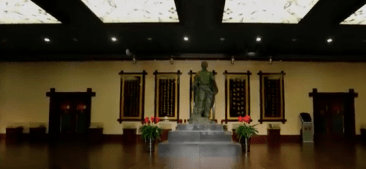
The recorded history of China dated way back to between 800 BC and 200 BC during the lives of philosophers like Lao Zi, Confucius, Mencius, Zhang Zi, and Mo Zi had lived. These thinkers had influenced the way of living of the Chinese population over the years of turmoil and hardships.
During the Mo Zi’s period (c 470 BC to 391 BC) China had many skilled craftsmen, especially carpenters, joiners, and carvers. Mo Zi himself started working life as a carpenter and was extremely skilled in creating devices. He was schooled in Confucianism in his early years, but he viewed Confucianism as emphasizing too much on elaborate rituals which he felt were detrimental to the livelihood and productivity of common people. His main teaching was the universal love of our fellow human beings with no discrimination between the rich and poor, friends and strangers, the very opposite to war.
One of the many philosophers with a great influence on Chinese culture and on the Chinese way of everyday lives of the Chinese race to this day is Confucius. His thoughts were later (over a hundred years later) consolidated by Mencius. But during the Qin Dynasty (221 - 205 BC) Confucianism fell into darkness and Confucian ideology appeared to be buried forever. [6:11 to 9:00]
The Han Dynasty (206 BC to 220 AD) revived the importance of Confucian thinking. Liu Bang, the founder and first emperor of the dynasty held the most solemn worship of Confucius in public. He wanted to use the Confucian ceremony to feel and to highlight the majesty of an emperor. During the time of Emperor Wu (156 - 88 BC), Confucianism became the essence of ideologies for China. Confucianism relies on the principles of Benevolence, Righteousness, Propriety, and Trustworthiness. It advocates a centralized authority and it emphasizes the notion of respect and order.
In 138 BC, a man named Zhang Qian was sent on a mission by Emperor Wu to make contact with tribes to the west. He and his party were captured by the Xiongnu tribe, but Zhang Qian escaped and continued west. He reached Afghanistan, in an area known as Bactria, which was under Greek control. In Bactria, Zhang Qian saw bamboo and textiles brought from China and asked how they had gotten there. He was told that the items came from a kingdom in Afghanistan called Shendu.
Buddhism entered China at the end of the Han Dynasty. During the Tang Dynasty (618 - 907 AD), Confucianism, Buddhism, and Taoism appeared together in politics and society.
However, alongside the decline of the Tang Dynasty (906 AD), there were hundreds of years of ongoing wars. During such wartimes, Confucianism went to the bottom of darkness.
The Tang Dynasty, after 820 AD, was full of palace intrigue marked by plotting eunuchs assassinating one emperor after another.
In 835 AD, Emperor Wenzong hatched a plot with his chancellor and general to put an end to eunuch plotting. Their plan, later known as “The Sweet Dew incident,” led to the murder of 1,000 government officials, as well as the public executions of three top ministers and their families.
By 860 AD, the countryside was in chaos, with gangs and small armies robbing merchants, attacking cities, and slaughtering scores of people. Huang Chao, who had failed his civil service exams, led his army on the capital and took control.
In contrast to the golden age of poetry in the Tang Dynasty, Huang Chao ordered the deaths of 3,000 poets after an insulting poem had been written about his regime.
In 907 AD, the Tang Dynasty was obliterated for good when Zhu Wen, a former follower of Huang Chao, proclaimed himself “Emperor Taizu,” the first emperor of the Hou Liang dynasty. His would be the first of the infamous “Five Dynasties,” short-lived kingdoms that rose and fell during the next 50 years of chaotic power struggles in Chinese history.
In 605 BC, during the short-lived Sui Dynasty, China started a system of centralized examinations known as the bureaucratic examinations. The main purpose of such examinations was for the appointment of magistrates, judges, civil servants, and palace appointments. The Tang Dynasty (618 - 907 AD) expanded the examination during the reign of Empress Wu Zetian.
The Tang Empire (618–907) is noted as one of the longest surviving empires in the region. They controlled the Central Asian Silk Road and flourished culturally for over a century before natural disasters and internal conflicts brought about a gradual decline and finally insurrection ended the empire.
There are some facts about the Tang Dynasty worth noting. [Source: https://www.chinahighlights.com/travelguide/china-history/tang-dynasty-facts.htm ]
Fact # 1: A Woman General helped to found the new Tang Dynasty.
A general by the name of Li Yuan (256 BC - 195 BC) was one of the commanders in the tyrannical Sui Empire. Their massive wars and vast construction projects involving and killing of millions and high taxes made the Sui court very unpopular. Li Yuan decided to attack and called his sons to help him. But it was his daughter who made history by raising an army of rebel leaders of 70,000 strong to capture several cities before joining her father at Chang’an (Xi’an) where Li Yuan captured the city and called himself Emperor Gaozhu in 617 AD.
Fact # 2: Emperor Gaozhu was deposed off by his own son.
The Big Goose Pagoda stands at the site where an earlier temple was built in Chang’an in 652 AD.
Emperor Gaozhu had a short reign of only 9 years. In 626 AD. Li Shimin (599–649 AD) who was one of Gaozhu’s sons tricked one of his rival brothers and killed him. Then he entered the palace and forced his father to abdicate and declared himself the Emperor Taizong (唐太宗, Tang Great Religious). Gaozhu died in the year 649 AD, and he was buried in the Zhaoling Mausoleum.
Fact # 3: The Tang Dynasty had the only female emperor in Chinese history.
Wu Zetian 624 - 705 AD, was the de facto ruler of China, first through her husband the Emperor Gaozong then through her sons the Emperors Zhongzong and Ruizong, from 665 to 690. She subsequently became the Empress of the Zhou Dynasty of China, ruling from 690 to 705. She is notable for being the only female Emperor in the history of China.
Wu was the concubine of Empress Taizong. After his death, she married his successor—his ninth son, Emperor Gaozong, officially becoming Gaozong’s huonghou (皇后, empress consort, a title for the reigning emperor’s main consort) in 655 AD. She had considerable political power, especially after Gaozong’s debilitating stroke in 660 AD. Wu Zetian became the administrator of the court, a position equal to that of the Emperor until the year 705.
After her wedding to Emperor Gaozong, Empress Wu’s rise to power was swift. A strong, charismatic, and well-educated woman who enjoyed the absolute interest of her husband, Empress Wu Zetian was the most powerful and influential woman at court during a period when the Tang Empire was at the peak of its power and glory. She was more decisive and proactive than her husband, and she is considered by historians to have been the real power behind the throne and the ruling figure for more than eighteen years. She was often present when the Emperor held court and even held court independently when the Emperor was unwell. She was given charge of the Emperor’s imperial seal, implying that her perusal and consent were necessary before any document or order received legal validity. Empress Wu Zetian herself was the only one in Tang history to equally share the most power of running the entire empire with husband Emperor Gaozong legally. Empress Wu Zetian was granted certain honors and privileges which were not enjoyed by any Chinese empresses before or after.
Besides her career as a political leader, Wu Zetian also had an active family life. Although family relationships sometimes became problematic, Wu Zetian was the mother of four sons, three of whom also carried the title of emperor, although one held that title only as a posthumous honor. One of her grandsons became the renowned Emperor Xuanzong of the Tang Dynasty.
Fact # 4: The Tang Dynasty was strangely alike the Western Han Dynasty that existed som eight hundred years ago.
Silk Road trade was an important source of imperial wealth during the Tang Dynasty.
Although separated by 800 years, the empires of the Tang and the Western Han were similar in many ways:
They both emerged during a general rebellion against a tyrannical emperor of a large, brutal, and very short-lived empire.
Confucian thinking bureaucrats ruled in both dynasties and the dynasties prospered under stable rulers.
The population of the country during the two dynasties was the same around 50 to 60 million.
The land areas of the two dynasties were about equal.
The Silk Road trade brought prosperity and great cultural exchanges to both dynasties.
Both dynasties ended by fragmentation into warring states during the times of great natural catastrophes.
Fact # 5: The Tang Dynasty was the most populous dynasty.
During the first 130 years, the Tang Empire reached its height before the An Lushan Rebellion in 756 AD. A census was taken in 742 AD, and the population of the empire is estimated to have been about 50 or 60 million. It had twice the population of the second most populous empire at the time, the Umayyad Empire.
Fact # 6: The Tang Dynasty had produced China’s best poets.
The Du Fu thatched cottage in Chengdu was built in memory of the great poet Du Fu.
The Chinese generally think that the best poetry was written during the early and middle eras of the Tang Dynasty. The best poets in Chinese history are thought to be Li Bai and Du Fu. They both survived the An Lushan Rebellion, and the hardships colored and tempered their poetry to touch even the hearts of modern Chinese. Their poems are appreciated because of their simple style and common subject matter.
Li Bai (701 - 762 AD) was one of the greatest romantic poets of ancient China. He wrote at least a thousand poems on a variety of subjects ranging from political matters to natural scenery.
Du Fu (712 - 770 AD) also wrote more than a thousand poems. He is thought of as one of the greatest realist poets of China. His poems reflect the hard realities of war, dying people living next to rich rulers, and primitive rural life.
Fact # 7: Chang’an was the biggest city in the world during that period between 700 to 800 AD.
Huaqing Hot Spring was a famous imperial royal garden located near Xi’an. It is famed for both its dainty spring scenery and the romantic love story of Emperor Xuanzong (ruled 712-756 AD) and his concubine Yang Guifei.
Wealth increased, and the empire became more urbanized. In 600 AD, 600,000 people lived in Chang’an, and only Constantinople was as populous.
About the year 700 AD, Chang’an became the biggest city in the world with a population of a million people. Only Baghdad in the Middle East was anywhere near its size.
In 800 AD, after the Lushan Rebellion and several wars, 900,000 lived there, and it was still the biggest city. By the year 900 AD, the population fell to about 750,000, and Baghdad was bigger.
Fact # 8: External attacks and civil war caused the death of millions of people.
In the middle Tang Era from about 750 to 790 AD, civil war, famine, and external attacks caused the death of millions. In the year 750, the Nanzhao in Yunnan in the south rebelled against the Tang Dynasty and defeated two armies. Then Muslim Arabs attacked from the west in 751 AD and defeated a Tang army.
An Lushan was a general who rebelled in 755 AD and captured both Luoyang and Chang’an. The civil war severely weakened the army and the empire as a whole. The Tibetan Empire took advantage of the war and captured a large part of the northern land area including Chang’an in 763 AD.
Fact # 9: In the last fifty years of the Tang Dynasty, the country suffered severe natural disasters.
The Yellow River is now shallow and tamed due to damming, but in the late Tang era flooding was frequent.
First, in 858 AD, the Grand Canal was flooded. Much of the land in the northern part of China was inundated with water. There were many floods of the Yellow River at the end of the Tang Dynasty.
Then in the year 873 AD, a horrific drought and famine swept not only in China but the whole of Eurasia. It was a period of cold and dry climate like the Little Ice Age of 1600 AD. Agricultural production fell by more than half and people and livestock were starved.
Fact # 10: The Tang Dynasty ended when the people rebelled claiming that the Ruling Class had lost the Mandate of Heaven to govern.
As in many other times in history, the people interpreted the extreme natural catastrophes as a sign that the empire had lost the Mandate of Heaven to rule. It was an ancient political concept that encouraged people to rebel. In 874 AD, survivors of the floods and droughts started a ten-year rebellion called the Huang Chao Rebellion. Both Chang’an and Luoyang were captured, and the rulers greatly weakened.
Afterward, small armies controlled various areas, and government convoys were attacked. In 907AD, Zhu Wen deposed the last Tang Emperor. The Chinese empire broke up into warring territories.
What do you learn from this lesson on China History:
- Who was the First Emperor? Emperor Kangxi; Emperor Taizong; Qin Shihuang; Emperor Wudi.
- Which was the last Chinese dynasty? Ming; Qing; Song; Yuan.
- Where is the Forbidden City? Shanghai; Beijing; Xi’an; Hong Kong.
- Normally, when the emperor died who would take the throne? His eldest son; His favorite son; A peasant rebellion; His brother.
- Which was the longest dynasty? Qin; Han; Qing; Zhou.
- Has there been a female ruler in China? Yes; No.
- In ancient China law, could a man have many wives? Yes; No.
- In ancient China, an ordinary person could become a government official by: Being good at kungfu; Passing the government exam; Paying a lot of money; Democratic election.
- Which dynasty was ruled by Mongols? Yuan; Qing; Tang; Sui.
- What was the main reason for building the Great Wall? Transportation; Defense; Sightseeing; To prevent Chinese citizens from escaping.
 English