
Conflicting Values - 冲突的价值观
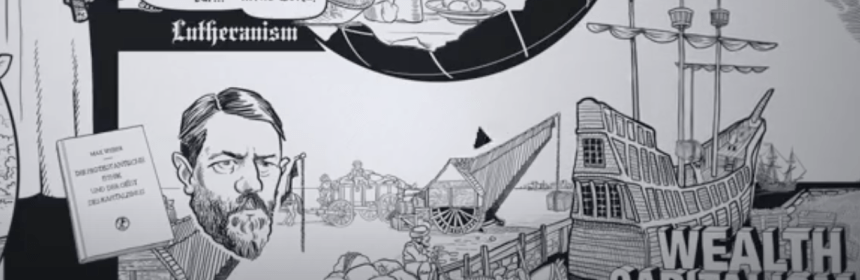
As a background to the opinion expressed herein, there is the need to refer back to an article published in the year 2005 entitled “Conflicting Values: A Tribute to Max Weber”. This long article is reproduced in full and briefly commented at the end of the opinion expressed here.
作为本文所表达观点的背景,有必要参考 2005 年发表的一篇题为“冲突的价值观:向 Max Weber 致敬”的文章。这篇长文全文转载,并在此处表达的意见末尾简要评论。
Since the paper published in the year 2005, some seventeen years ago, progress in integrating the western culture with the eastern culture has not happen. In fact, the conflicting values between the two cultures have drifted further away from one another, with the Western countries insisting that the one-man-one-vote democratic system should be the standard for all countries in the world. This simplistic ideology has never been totally accepted in the Eastern society.
自2005年发表该论文以来,大约十七年前,西方文化与东方文化的融合并没有取得进展。事实上,两种文化之间的冲突价值观已经渐行渐远,西方国家坚持认为“一人一票”的民主制度应该成为世界各国的标准。这种简单化的意识形态在东方社会从来没有被完全接受过。

Me or We Culture: https://youtu.be/78haKZhEqcg
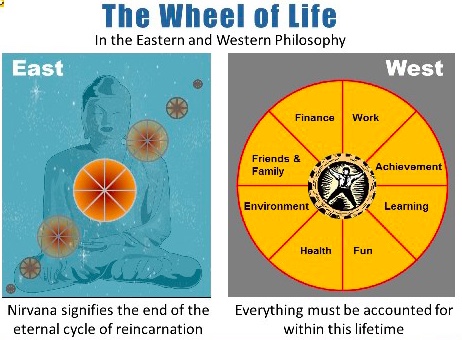
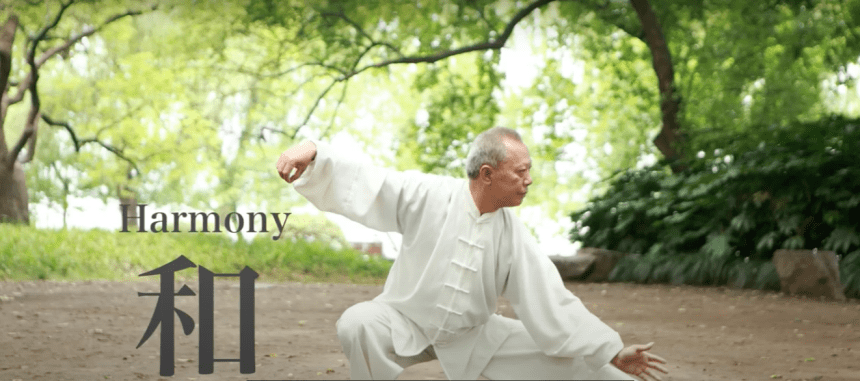
In relationships with others and those around us, the West believes in the Me Culture where individuals are encouraged to develop on his or her to the best of his or her ability. He or she are responsible of his or her well-being. His or her circle of responsibility extends only to members of the immediate family - parents, spouse and children. The East on the other hand believes in the We Culture where an individual is trained to help out others in his or her extended family members whenever he or she can. These Me and We Cultures can be seen at the meal table where each member of the West (Me) family orders meals for individual consumption whereas each of the East (We) family member orders for group consumption the dishes to be shared.
在与他人和我们周围的人的关系中,西方相信“我”文化,鼓励个人尽其所能地发展自己。他或她对自己的幸福负责。他或她的责任范围仅限于直系亲属——父母、配偶和子女。另一方面,东方相信“我们”文化,在这种文化中,个人受过培训,可以在可能的情况下帮助他或她的大家庭成员中的其他人。这些我和我们的文化可以在餐桌上看到,西方(我)家庭的每个成员都点餐供个人食用,而东方(我们)家庭的每个成员都点菜共享。

CONFLICTING VALUES: A TRIBUTE TO MAX WEBER
Dr. Francis P Lai
Published in Prajñâ Vihâra, Volume 6, Number 2, July-Decmber 2005, 115-132 115 © 2000
冲突的价值观:向 MAX WEBER 致敬. 作者:黎鹏飞 博士. 发表于 Prajñâ Vihâra,第 6 卷,第 2 期,2005 年 7 月至 12 月,115-132 115 © 2000
Abstract
This paper examines the wisdom of Max Weber in the light of the theme: ‘Asian Heritage in a Global Society.’ In particular, the paper addresses the wisdom of an uncritical embrace of western values, particularly that of capitalism and that of the blind adoption of westernised democratic concepts, by the cultures of Asia. It looks at the conflicting social values between the eastern and the western ways of life and questions how humankind should react in the light of such conflicts. Additionally, this paper takes a long and hard look into the conflicting values in the commercial world. It aims to show the inadequacy of the present definition of ‘Market Value’ as advocated by present day property professionals as the definition fails to take into consideration of the value of any property for the ‘public good’. The conflict that arises between the value for the benefit of the public and that for the benefit of a commercially interested individual or group is highlighted. It proposes another version of that definition of ‘Market Value’ that incorporates the concept of value for the common good of the public.
文摘: 本文根据“全球社会中的亚洲遗产”这一主题考察了马克斯·韦伯的智慧。特别是,该论文探讨了不加批判地接受西方价值观的智慧,特别是资本主义的智慧和盲目采用的智慧。亚洲文化的西方化民主观念。它着眼于东西方生活方式之间相互冲突的社会价值观,并质疑人类应该如何应对这种冲突。此外,本文对商业世界中相互冲突的价值观进行了长期而深入的研究。它旨在表明当今房地产专业人士所倡导的“市场价值”定义的不足之处,因为该定义没有考虑到任何财产对“公共利益”的价值。突出了为公众利益的价值与为有商业利益的个人或团体的利益而产生的冲突。它提出了“市场价值”定义的另一个版本,其中包含了公共利益的价值概念。

1. Social Actions
Before we enter into discussions on the topic of conflicting values, it is relevant to look into Weber’s concept of social actions. To Weber, there are four types of social actions, namely: Zweckrational, Wertrational, Affective Action, and Traditional Action.
In many ways, the type of social action that a person takes governs the value that s/he places in the property or asset or issue that s/he is examining or considering. It is therefore of primary importance for us to come to grips with these four types of social actions at the very beginning. Zweckrational refers to those social actions that are rationally chosen with the means to attain a particular goal very much in mind. Such actions have also been referred to as ‘technocratic thinking’ and the action of an engineer in the construction of a bridge to cross a river is an example of Zweckrational thinking.
Wertrational refers to those social actions that are value oriented characterised by striving for a goal that is not at all rational in itself but is pursued by rational means. An example of Wertrational action is that of an individual who seeks salvation by following the teachings of a prophet.
An Affective Action is one that is based entirely on the emotional state of the person rather than on the rational weighting of the pros and the cons.
A Traditional Action is a social action that follows tradition or custom or habit without so much as reflecting on the purpose or on the meaning of that action. People engage in this type of action almost without thinking because the action is always done according to society’s norms.
Weber’s main purpose of identifying these four types of social actions is to demonstrate to us in his writings that the modern world, with its globalised setting and heavily influenced by the westernised thoughts, comprises mainly of people who are taking social actions more for reason of goal-oriented rationality (that is Zweckrational) rather than for reason of value (Wertrational); or of emotion (Affective Action); or of tradition (Traditional Action).
1. 社会行动:  在我们讨论价值观冲突的话题之前,有必要研究一下韦伯的社会行为概念。在韦伯看来,社会行为有四种类型,即:Zweckrational、Wertrational、Affective Action和Traditional Action.
在许多方面,一个人所采取的社会行动类型决定了他/他对他/他正在研究或考虑的财产或资产或问题的价值。因此,一开始就掌握这四种社会行为对我们来说至关重要。 Zweckrational 指的是那些理性选择的社会行动,这些行动非常考虑到实现特定目标的手段。这种行为也被称为“技术专家思维”,工程师在建造桥梁以渡河时的行为是 Zweckrational 思维的一个例子。
Wertrational是指那些以追求一个本身并不理性但通过理性手段追求的目标为特征的价值导向的社会行为。 Wertrational 行为的一个例子是个人通过遵循先知的教导来寻求救赎。
情感行动是完全基于人的情绪状态而不是对利弊的理性权衡。
传统行动是一种遵循传统或习俗或习惯的社会行动,而没有反思该行动的目的或意义。人们几乎不假思索地从事这种行为,因为这种行为总是按照社会规范进行的。
韦伯确定这四种社会行为的主要目的是在他的著作中向我们证明,在全球化背景下,深受西方思想影响的现代世界,主要由更多出于目标而采取社会行为的人组成。面向理性(即Zweckrational)而不是出于价值原因(Wertrational);或情感(情感行动);或传统的(传统行动)。

2. Rationalisation, Bureaucracy, Authority and Oligarchy:
Weber is thus concerned with the rationalisation process of society, which is the practical application of knowledge to achieve one’s desired end. This can of course lead to efficiency, to the proper coordination of activities that can result in the control over both the physical and the social environment. Rationalisation is a product of “scientific specialisation and technical differentiation” that seems to be a characteristic of the Western Rationalisation. It is the guiding principle behind bureaucracy and the increasing division of labor. It has led to the unprecedented increase in both the production and distribution of goods and services. It is also associated with secularisation, depersonalisation, and oppressive routine.
Increasingly, human behaviour is guided by observation, experiment and reason (zweckrational) to master the natural and social environment. So as organisation of life through a division and coordination of activities on the basis of exact study of men’s relations with each other, with their tools and their environment, for the purpose of achieving greater efficiency and productivity. Weber’s general theory of rationalisation refers to the increasing human activities in mastering the natural and social environments, which in turn, brings about changes in social structure with the result that we have now a set of changed human characteristics through changing values, changing philosophies, and changing beliefs. Such superstructural norms and values as individualism, efficiency, self-discipline, materialism, and calculability (all of which are included in Weber’s concept of zweckrational) have been encouraged by the bureaucratisation process.
Bureaucracy and rationalisation are now rapidly replacing all other forms of organisation. They are becoming strangleholds on all sectors of the Western society.

It is horrifying to think that the world may one day be filled with nothing but human cogs in a mechanised society with little men clinging to their little jobs and striving toward bigger ones, acting in the best interest of our present administrative systems. This overall passion for bureaucracy is enough to drive one to despair. It is as if through politics we are deliberately conditioned to become men who need ‘order’ and nothing but order, and we then become nervous and cowardly if for one moment this order wavers, and helpless if it is taken away.
The focus on rationalisation leads Weber into thinking about the operation and expansion of large organisations, both in the public and private sectors of societies. To Weber, bureaucracy can be considered to be a particular case of rationalisation, as it is applied to human organisation.
Bureaucratic coordination of human activities is the distinctive mark of modern social structures. Weber tracks down the main characteristics of an ideal-type bureaucracy as an organisation with a hierarchy of authority divided into efficient specialised-labor departments, totally impersonal, conducting its affairs under a rigid written code of conduct and all promotions within the organisation being based on focused achievements.
According to Weber, bureaucracies are goal-oriented organisations designed according to rational principles in order to efficiently attain their goals. Offices are ranked in a hierarchical order, with information flowing up the chain of command, directives flowing down. Operations of the organisations are characterised by impersonal rules that explicitly state duties, responsibilities, standardised procedures and conduct of office holders. Offices are highly specialised. Appointments to these offices are made according to specialised qualifications rather than ascribed criteria.
2. 合理化、官僚主义、权威和寡头政治:因此,韦伯因此关注社会的合理化过程,这是知识实现理想的实际应用。这当然可以导致效率,以适当协调可能导致对身体和社会环境的控制。合理化是“科学专业化和技术差异化”的产物,似乎是西方合理化的特征。这是官僚主义和越来越多的劳动力落后的指导原则。它导致了商品和服务的生产和分配的前所未有的增加。它还与世俗化,分解化和压抑常规有关。 人类行为越来越多地通过观察,实验和理由(Zweckrational)来掌握自然和社会环境。因此,通过划分和协调活动的生命组织,并根据对男人的关系,以他们的工具及其环境为目的,为了实现更高的效率和生产力。韦伯的一般性化理论是指掌握自然和社会环境的人类活动的增加,这反过来又会带来社会结构的变化,因为我们现在通过改变价值,不断变化的哲学以及改变更改的人类特征改变信仰。通过官僚机构进程鼓励了这种超容易性,效率,自律,唯物主义和可算法(所有这些都包含在韦伯的Zweckrational概念中)的价值。 官僚主义和合理化现在正在迅速取代所有其他形式的组织。它们正在成为西方社会各个领域的束缚者。 令人恐惧的是,在一个机械化的社会中,有朝一日世界可能只充满了人类的齿轮,小人物坚持自己的小工作并努力争取更大的工作,为我们目前的行政体系的最大利益而行动。这种对官僚主义的总体热情足以让人绝望。就好像通过政治,我们被刻意塑造成需要“秩序”的人,除了秩序什么都不需要,如果这个秩序有片刻动摇,我们就会变得紧张和怯懦,如果它被剥夺,我们就会变得无助。 重点是合理化导致韦伯考虑了大型组织的运作和扩展,都在公共和私营部门的社会中。对于韦伯来说,官僚主义可以被认为是特定合理化的案例,因为它适用于人类组织。 人类活动的官僚协调是现代社会结构的独特标志。韦伯追踪理想型官僚机构的主要特点,作为一个组织,授权等级分为高效的专业劳工部门,完全不良,在刚性书面行为准则下进行其事业以及组织内的所有促销活动重点成就。 根据韦伯的说法,官僚机构是根据理性原则设计的以目标为导向的组织,以有效地实现其目标。办公室按等级顺序排列,信息沿着指挥链向上流动,指令向下流动。这些组织的运作以客观的规则为特征,这些规则明确规定了职责、责任、标准化程序和公职人员的行为。办公室高度专业化。这些办公室的任命是根据专业资格而不是既定标准进行的。

Business Cultural Differences: https://youtu.be/VMwjscSCcf0
All of these ideal characteristics have one goal, to promote the efficient people has become the dominant structural feature of modern societies. It is only through this organisational device that large-scale planning and coordination, both for the modern state and the modern economy, can become possible. The consequences of the growth in the power and scope of these organisations is the key in the understanding of our world.
Weber notes that although the major advantage of a bureaucratically-run organisation is the efficiency in which it is attaining its goals, the organisation is unwieldy when dealing with individual cases. The impersonality, so important in attaining efficiency of the organisation, is thus dehumanising. But the concern over bureaucracy’s threat to the members of a particular organisation has served to overshadow its effects on the larger society. Weber is very concerned about the impact that rationalisation and bureaucratisation have on our socio-cultural systems.
By its very nature bureaucracy generates an enormous degree of unregulated and often unperceived social power. Because of bureaucracy’s superiority over other forms of organisation, they have proliferated and now dominate modern societies. Those who control these organisations, Weber warns, control the quality of our life, and they are largely self- appointed leaders. What is worse is the fact that such self-appointed leaders in the name of efficiency within the bureaucratic organisation can set double standards – one for themselves and their associates and one for the rest within the members of their societies. Such double standards, especially in commercial dealings can lead in turn to conflicting values within an organisation.
Bureaucracy thus tends to result in oligarchy, or rule by the few officials at the top of the organisation. In a society dominated by large formal organisations, there is a danger that social, political and economic power will become concentrated in the hands of the few who hold high positions in the most influential of these organisations.
By design of the organisation, the members within the rank and file of an organisation are less informed than their ‘superiors’. From birth, we are taught to obey those in positions of authority and therefore, the rank and file members tend to look to the leaders for policy directives and are generally prepared to allow leaders to exercise their judgment on most matters.
The stage is now set for the very presence of conflicting values.
所有这些理想的特点都有一个目标,促进有效的人已成为现代社会的主导结构特征。只有通过这种组织设备,可以成为现代国家和现代经济的大规模规划和协调。这些组织的权力和范围的增长的后果是了解我们世界的关键。
韦伯指出,虽然官僚组织的主要优势在于其实现目标的效率,但该组织在处理个别案件时却很笨拙。因此,对提高组织效率非常重要的非人格化是非人性化的。但是,对官僚主义对特定组织成员的威胁的担忧掩盖了它对更大社会的影响。韦伯非常关注理性化和官僚化对我们的社会文化体系的影响。
就其本质而言,官僚主义产生了巨大程度的不受监管且往往未被察觉的社会权力。由于官僚机构优于其他形式的组织,它们已经激增并现在主导着现代社会。韦伯警告说,控制这些组织的人控制着我们的生活质量,他们大多是自封的领导者。更糟糕的是,这些以官僚组织内部效率为名的自封领导人可以设定双重标准——一个针对自己和他们的同事,另一个针对社会成员中的其他人。这种双重标准,尤其是在商业交易中,会反过来导致组织内部的价值观冲突。  因此,官僚主义往往会导致寡头政治,或由组织高层的少数官员统治。在一个由大型正式组织主导的社会中,存在社会、政治和经济权力将集中在这些组织中最有影响力的少数人手中的危险。
根据组织的设计,组织中的普通成员比他们的“上级”了解的更少。从出生起,我们就被教导要服从那些处于权威地位的人,因此,基层成员倾向于向领导人寻求政策指示,并且通常准备好让领导人对大多数事情进行判断。
现在已经为冲突价值观的存在做好了准备。

3. Capitalism and the Protestant Ethics:
We have to make one last point before we launch into the presence of ‘conflicting values’ in our society. This concerns that of Protestant ethics. Weber is concerned with the meaning that people give to their actions. He comes to the conclusion that social actions of modern society are shifting from traditional to rational actions. He questions the cause of this shift and in the process of trying to understand this, Weber studies the religious and economic systems of many civilisations. After a careful study, Weber raises the hypothesis that it is the Protestant Ethics that breaks the traditional hold of people and encourages them to apply themselves rationally in their work. He finds that Calvinism has developed a set of beliefs around the concept of predestination. It is the belief of followers of Calvin that one cannot do good works or perform acts of faith to ensure a place in heaven. One is either within the Elect or one is outside those people elected. But, wealth has developed to be a sign in which one is deemed to be ‘elected’. This then provides the encouragement for everyone to strive to be rich and powerful.
3. 资本主义与新教伦理:  在我们在社会中发出“冲突价值”之前,我们必须持续一点。这涉及新教道德的伦理。韦伯关注人们对他们行动的意义。他得出结论,现代社会的社会行动正在转向传统的理性行为。他提出了这种转变的原因,并在试图理解这一点的过程中,韦伯研究了许多文明的宗教和经济系统。经过仔细研究,韦伯提出了一个假设,即违反传统人民的新教伦理,并鼓励他们在工作中合理地申请自己。
他发现加尔文主义围绕宿命的概念发展了一套信仰。加尔文的追随者相信,一个人不能做善事或执行信仰行为以确保在天堂中占有一席之地。一个要么在选民之内,要么在选民之外.
但是,财富已经发展成为一个人被认为是选举的。
这为每个人努力成为富有和强大的人提供了鼓励。

4. Asian Values in the Onslaught of Globalisation: https://youtu.be/VMwjscSCcf0
With the settings laid, we can now proceed to talk about Asian Values in the context of globalisation. We shall begin by looking at the Asian values, both social and commercial, prior to the arrival of any western influence into an Asian society.
Perhaps Mainland China is a good place to start as an example of the pre-West cultural values. For many years of ancient China, the entire societal systems was based upon an hierarchical grouping of ‘scholars’, ‘farmers’, ‘workers’ and ‘retailers’ in which case the commercial element of society was placed at the very bottom of the social scale. This is chiefly because of the innate distrust of business people as they went about their businesses ever ready to make an extra tael of gold by dishonest means. The military came under the group of workers and the main purpose of military presence in the society is the protection of the interests of scholars and farmers essentially. Imperial examinations were held, perhaps once every five years, to select people for both the administrative service (which includes the Officers of the Courts and the local Magistrates) and the military service (for the protection of the interests of the Emperor down to the law and order of a provincial community).
Scholars of the day studied both Chinese Classics and Chinese Philosophy. To the Chinese, philosophy and religion are imbedded into their daily lives as living actions of ethics and they are not separate topics to be observed, examined and criticised. “The basic aim of Chinese philosophy has not been primarily that of understanding the world, but that of making people great. … Being great has a double aspect in Chinese thoughts. First of all, it involves inner greatness, which is a magnitude reflected in the inner peace and contentment of the individual in his or her completeness. Second, it involves outer greatness, which is manifested in the ability to live well practically, dignifying the social context of one’s ordinary day-to-day existence. This ideal is called ‘sageliness within and kingliness without.’
In China, even to this day, philosophy has been the chief concern of every educated person. In ancient China, if a man were educated at all, the first education he received was in philosophy as young children, reciting the Four Books comprising the Confucian Analects, the Book of Mencius, the Great Learning, and the Doctrine of the Mean. The first reading text was the Three Characters Classic and the very first statement therein was “the nature of man is originally good,” the very fundamental ideas of Mencius’ philosophy.
Contrary to common belief in the West, Confucianism is no more a religion as Platonism or Aristotelianism. The Four Books mentioned above may have been called collectively as the Chinese Bible but they are not books on creation, or on heaven and hell. In the Chinese sense, therefore, the terms philosophy and religion are both ambiguous. Philosophy and religion form part and parcel of life itself, of living out one’s life that calls for considerateness of the wishes of others.
4. 全球化冲击下的亚洲价值观:有了这些设置,我们现在可以继续讨论全球化背景下的亚洲价值观。在西方影响进入亚洲社会之前,我们将首先考察亚洲的社会和商业价值观。
也许中国大陆是一个很好的起点,可以作为前西方文化价值观的一个例子。在中国古代的许多年里,整个社会制度是建立在“学者”、“农民”、“工人”和“零售商”的等级制度之上的,在这种情况下,社会的商业因素被置于社会的最底层。这主要是因为商界人士天生不信任,因为他们在开展业务时随时准备通过不诚实的手段多赚一两黄金。军队隶属于工人群体,军队在社会中存在的主要目的本质上是为了保护学者和农民的利益。可能每五年举行一次科举考试,以选拔担任行政职务(包括朝廷官员和地方官员)和兵役(依法保护天皇利益)的人和省级社区的命令)。
当时的学者研究中国经典和中国哲学。对中国人来说,哲学和宗教作为伦理的活生生的行为植根于他们的日常生活,它们不是单独的话题,需要观察、审查和批评。 “中国哲学的基本目的,主要不是认识世界,而是使人伟大。 … 伟大在中国人的思想中有两个方面。首先,它涉及内在的伟大,这是反映在个人内心平静和满足的程度。其次,它涉及到外在的伟大,这表现在能够实际生活得很好,使一个人日常生活的社会环境庄严。这种理想被称为“内圣外王”。
在中国,直到今天,哲学一直是每个受过教育的人最关心的问题。在中国古代,如果一个人受过教育,他从小受的第一个教育就是哲学,背诵《论语》、《孟子》、《大学》、《中庸》四本书。初读的文本是《三字经》,其中的第一句话是“性本善”,这是孟子哲学的根本思想。
与西方普遍的信仰相反,儒家不再是柏拉图主义或亚里士多德主义的宗教。上面提到的四本书可能被统称为中国圣经,但它们不是关于创造的书,也不是关于天堂和地狱的书。因此,在中国意义上,哲学和宗教这两个术语都是模棱两可的。哲学和宗教是生活本身的重要组成部分,是生活的一部分,需要体谅他人的意愿。
Both inner and outer greatness are basic to all three forms of Chinese philosophy – Confucianism, Taoism and Neo-Confucian. Lao Tzu says that unless one knows and lives according to the inner laws of the universe, which he calls the ‘invariables’, one can end up in disaster. For Confucius, the most basic thing is the cultivation of one’s humanness and to regulate all our activities in accordance with this developed humanness. Because of the importance of both inner and outer greatness, Chinese people always give the greatest importance to the consideration for people in general. The human world is considered primary importance and the world of things, secondary. Emphasis on human greatness naturally leads to the emphasis on ethics and the spiritual life. The spirit, rather than the body, becomes the more important aspect of human. This spirit must be nourished and cultivated in order that it can develop according to its capacities.
If we measure the social actions of the ancient Chinese with the yardstick of Max Weber, then, we find that the actions were essentially that of the cultural value type (Wertrational); of the emotional type (Affective Action); and the traditional type (Traditional Action). The actions were very far removed from the goal-oriented type (Zweckrational).
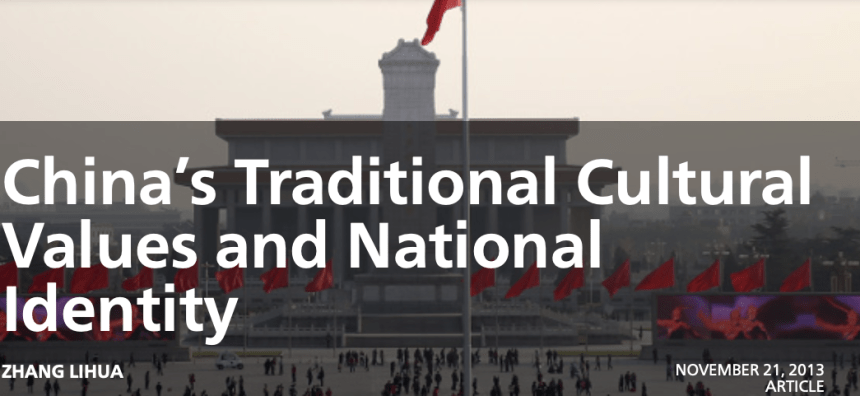
There is no desire here to elaborate on every Asian cultural system. Suffice it to say that, in the Asian context, the Chinese example given above shows one typical aspect of life. The common denominator is the fact that social actions in the Asian context are generally less of the goal-oriented type. They are more of the other three types of cultural value, of emotional and of traditional. The failure to comprehend this fact can lead to grave misgivings and misunderstandings between the people from the Asian cultures and heritage and those from the Western cultures. This paper attempts to illustrate such misgivings and misunderstandings in the form of known conflicting values. https://carnegieendowment.org/2013/11/21/china-s-traditional-cultural-values-and-national-identity-pub-53613
内在伟大和外在伟大都是中国哲学三种形式的基础——儒家、道家和新儒家。老子说,除非一个人知道并按照宇宙的内在规律生活,他称之为“不变”,否则一个人最终会陷入灾难。对孔子来说,最根本的就是修养自己的人性,按照这种发展的人性来规范我们的一切活动。由于内外兼备的重要性,中国人总是最重视为人着想。人的世界被认为是最重要的,事物的世界是次要的。强调人类的伟大自然会导致强调道德和精神生活。精神,而不是身体,成为人类更重要的方面。这种精神必须得到滋养和培养,才能根据自己的能力发展。
如果我们以韦伯的标准来衡量古代中国人的社会行为,那么,我们发现这些行为本质上是文化价值类型(Wertrational)的行为;情绪类型的(情感行动);和传统类型(Traditional Action)。这些行动与面向目标的类型(Zweckrational)相去甚远.
这里不想详细阐述每一个亚洲文化体系。可以说,在亚洲背景下,上面给出的中国例子显示了生活的一个典型方面。共同点是亚洲背景下的社会行为通常较少以目标为导向。它们更多是其他三种文化价值,情感价值和传统价值。未能理解这一事实可能会导致来自亚洲文化和传统的人们与来自西方文化的人们之间产生严重的疑虑和误解。本文试图以已知的相互冲突的价值观的形式来说明这种疑虑和吴解。 https://carnegieendowment.org/2013/11/21/china-s-traditional-cultural-values-and-national-identity-pub-53613
Asian cultural values rest in the belief in historicity. They emphasise on the rank and the station of a person in a society and on looking into the past as a guide for future conduct. The West has criticised these aspects as feudalistic such that they prevent true egalitarianism from taking place. It has been said by many in the West that in the present day of fast moving age of information technology that produces obsolescence in months rather than in years, can we afford to constantly look back into our past before we move forward into our future.
This paper advocates that it is wiser for us to take an Asian approach to life. Egalitarianism and the western style of democracy that advocates one man one vote system cannot be working for the benefit of the entire society when there are poverty and illiteracy amongst the population. Singapore and Malaysia are shining examples where the western democratic system has been tampered with the eastern influence under the name of ‘guided democracy’ and both countries have progressed to the envy of many westernised nations.
亚洲文化价值在于对历史性的信仰。他们强调一个人在社会中的等级和地位,并强调回顾过去作为未来行为的指南。西方批评这些方面是封建主义的,因此它们阻碍了真正的平等主义的发生。西方许多人曾说过,在当今信息技术快速发展的时代,信息技术在数月而不是数年内就会过时,我们是否能够在迈向未来之前不断回顾过去。
这篇论文主张,对我们来说,采取亚洲的生活方式是更明智的。当人口中存在贫困和文盲时,平等主义和主张一人一票制的西方民主风格无法为整个社会谋福利。新加坡和马来西亚是西方民主制度以“引导民主”为名被东方影响篡改的光辉例子,两国都发展到令许多西方国家羡慕的地步。
5. Societal Values:
Those of us who practiced the art and science of Property Valuation or Property Appraisal are familiar with the concept of Market Value in determining the commercial value of a property or fixed asset. The IVSC (the International Valuation Standards Committee) has defined the term Market Value as:
“The estimated amount for which a property should exchange on the date of valuation between a willing buyer and a willing seller in an arm’s length transaction after proper marketing wherein the parties had each acted knowledgeably, prudently, and without compulsion.”
A careful study of the definition will disclose that there can never be any property that has ever been transacted at a market as defined. The first requirement for ‘market value’ is that of a ‘willing buyer’ and ‘willing seller’. Most transactions occur with one party being unwilling to enter into a transaction or rather being pushed into acting by some external forces, most likely because of economic downturns or other personal mishaps. The next requirement for ‘market value’ is ‘an arm’s length transaction’. Most transactions may look as if it is totally unrelated but in actual practice there may well be some connections between the two transacting parties, however remotely. The last requirements of ‘market value’ are the hardest to comply. For the two parties to act ‘knowledgeably, prudently, and without compulsion’, full disclosure is required, especially of the vendor such that the purchaser can act with full knowledge of the property. In the structured bureaucratic world as described by Weber, genuine disclosures may not be in the interest of some controlling groups and thus property transactions are rarely transacted under this last requirement. More often than not, the purchasers are entering into transactions that they are totally unaware of the implications until after the sale and purchase agreements have been signed and sealed.
5. 社会价值: 我们这些从事财产估价或财产评估的艺术和科学的人都熟悉确定财产或固定资产商业价值的市场价值的概念。 IVSC(国际估值标准委员会)将市场价值定义为:“在适当的市场营销中,双方都在知情、谨慎和没有强迫的情况下采取了公平的交易方式,自愿买方和自愿卖方在公平交易中应在估价日期交换房产的估计金额。”
对定义的仔细研究会发现,永远不会有任何财产在定义的市场上进行过交易。 “市场价值”的第一个要求是“愿意买者”和“愿意卖者”。大多数交易发生在一方不愿进行交易或被某些外部力量推动采取行动的情况下,这很可能是由于经济不景气或其他个人不幸。 “市场价值”的下一个要求是“公平交易”。大多数交易看起来好像完全不相关,但在实际操作中,两个交易方之间很可能存在一些联系,无论多么遥远。 “市场价值”的最后一个要求是最难遵守的。为使两方“知情、谨慎和不强迫”地行事,需要充分披露,尤其是卖方,以便买方可以在完全了解财产的情况下采取行动。在韦伯描述的结构化官僚世界中,真实的披露可能不符合某些控制集团的利益,因此很少根据最后一条要求进行财产交易。通常情况下,购买者进行的交易是在买卖协议签署和盖章之前完全不知道其影响的。
Property Valuation as a profession becomes important only in the global setting and is influenced by the western concept of ‘highest and best use’ of land usage - the most efficient use of a plot of land commercially, with complete disregard both to those people who will be living on earth in the future and to the environment. Weber has argued that the westernised social setting that emphasises the essentials of goal-oriented and rationally related social actions that emphasise detached efficiency, especially for the benefits of the very few, can one day destroy a nation.
Our point is this: there is a gap that exists between the ‘market value’ of a property as defined and the ‘value’ of the same property for the common good to the society at large, that is to say, for the overall interest of the entire community. Perhaps, more explanation here is warranted. Take the value of the houses around a public park as an example. Without the presence of the public park, built at the public’s expense, the commercial values of those houses might be much lower than those of the present. If the ruling bureaucratic government is not an enlightened group in matters concerning town planning, environmental issues and the preservation of the present for the benefits of the future, there would not be any public park built. The houses around the park have therefore two sets of conflicting values – one the commercial value and the other the value from the wider perspective of the ‘benefits’ to society.
房地产估价作为一种职业,仅在全球范围内变得重要,并受到西方“最高和最佳利用”土地利用概念的影响——对一块土地进行最有效的商业利用,完全无视那些愿意未来生活在地球上和环境中。韦伯认为,强调目标导向和合理相关的社会行为,强调超然效率,特别是为了极少数人的利益的西方化社会环境,有朝一日会摧毁一个国家。
我们的观点是:在定义的财产的“市场价值”和同一财产对整个社会的共同利益,即整体利益的“价值”之间存在差距整个社区的。也许,这里有更多的解释是必要的。以公园周边房屋的价值为例。如果没有由公众出资建造的公园,这些房屋的商业价值可能会比现在低得多。如果执政的官僚政府在城市规划、环境问题和为了未来的利益而保护现在的问题上不是一个开明的群体,就不会有任何公园建成。因此,公园周围的房屋具有两套相互冲突的价值——一套是商业价值,另一套是从更广泛的社会“利益”角度来看的价值。
To put this concept in a nutshell, the two conflicting values would only meet as one under the following limiting conditions:
Condition #1: The general public is one that is well educated to such an extent that the man-in-the-street can wisely elect into power a group of dedicated and educated representatives who are able to view matters from a totally different and wider perspective than that of a commercial businessman.
Condition #2: The bureaucracy of government comprises of wisely elected people who cares for the interests of the communities at large.
Condition #3: The values are not distorted due to the presence of interested parties.
Condition #4: Social actions may have to be modified away from Weber’s Zweckrational type towards the Wertrational, or the Affective, or the Traditional types.
简而言之,这两个相互冲突的值只有在以下限制条件下才能满足:
条件#1:公众是受过良好教育的人,他们可以明智地选举一群敬业且受过良好教育的代表掌权,他们能够从完全不同和更广泛的角度看待问题比商业商人的视角。
条件#2:政府的官僚机构由明智选举产生的人组成,他们关心整个社区的利益。
条件#3:值不会因为相关方的存在而失真。
条件 #4:社会行为可能必须从韦伯的 Zweckrational 类型转变为 Wertrational、情感或传统类型。
What does all this boils down to in the context of Asian Heritage and Asian Culture? We need to take a look at the political and social fabrics of communities within the Asian context. Here we have the localised villages – the moo bans of Thailand or the kampongs of Malaysia or the ancestral villages of ancient China. The village elders make most of the decisions concerning the well-being of the villagers, usually in consultation with one another. The ‘common good’ of the community is decided by these people. They will send their representatives to the wider society within which they live and in their turn the committee of this wider society will decide the ‘common good’ of the society. In this form of setting, professional valuers as we know them in today’s society, would have to debate the valuation viewpoints with the elders and would need to modify their opinions on property values to incorporate the wishes of the community at large.
在亚洲遗产和亚洲文化的背景下,这一切归结为什么?我们需要研究亚洲背景下社区的政治和社会结构。在这里,我们有本地化的村庄——泰国的哞班、马来西亚的甘榜或中国古代的祖村。村里的长者做出大部分关于村民福祉的决定,通常是相互协商。社区的“共同利益”是由这些人决定的。他们将派代表到他们所生活的更广泛的社会,而这个更广泛的社会的委员会将决定社会的“共同利益”。在这种形式的环境下,我们在当今社会所认识的专业估价师,将不得不与长者辩论估价观点,并需要修改他们对财产价值的看法,以纳入整个社会的意愿。
6. For The Common Good:
Daly, Herman and Cobb, John Jr. in their book entitled “For the Common Good: Redirecting the Economy Toward Community, the Environment and a Sustainable Future,” published in 1989 by Beacon Press, Boston, commented that the main goal for us all is to deconstruct neoclassical economic theory and set forth a more holistic model that more fully accounts for the individual, the community, and the natural world.
They advocate the departure from radical individualism to the notion of a “person-in-community”. Their main argument concerns the need for realigning government and social structures toward smaller social and economic units. This is not at all dissimilar to the Asian context of the village community. They argue that it now becomes difficult, if not impossible, for governments to perform their essential non-market functions when economic power is centralised at the global level, while political power is decentralised to national and local levels. For the system to function in the interest of community, economic and political power must be in balance at any given system level. To Daly and Cobb, the emerging global society must develop democratically controlled institutions at all levels: international, national, and local. It also needs to create a decentralising context for economic activities that returns institutional control to people, roots economic interests in local soil, and reestablishes some sense of human community. All this points again to the need for us to backpedal a little to the Asian culture and values, where the family and the immediate community have the final say in most domestic activities. This is a move away from bureaucratic authority, away from secularism and back to family and religious traditions forming the key to inculcate social values in the young.
6. 为了共同利益:Daly, Herman 和 Cobb, John Jr. 在其 1989 年由波士顿 Beacon Press 出版的题为“为了共同利益:将经济转向社区、环境和可持续未来”的书中评论说,我们所有人的主要目标是解构新古典经济理论,建立一个更全面的模型,更全面地解释个人、社区和自然世界。
他们主张从激进的个人主义转向“社区中的人”的概念。他们的主要论点是需要重新调整政府和社会结构以适应更小的社会和经济单位。这与乡村社区的亚洲背景并没有什么不同。他们认为,当经济权力集中在全球层面,而政治权力分散到国家和地方层面时,政府现在即使不是不可能也很难履行其基本的非市场职能。为了使系统为社区利益而运作,经济和政治权力必须在任何给定的系统级别上保持平衡。对于戴利和科布来说,新兴的全球社会必须在各个层面发展民主控制的机构:国际、国家和地方。它还需要为经济活动创造一个去中心化的环境,将制度控制权归还给人们,将经济利益植根于当地土壤,并重建某种人类社区意识。所有这一切再次表明我们需要稍微退缩一下亚洲文化和价值观,在亚洲文化和价值观中,家庭和直接社区在大多数家庭活动中拥有最终决定权。这是远离官僚权威、远离世俗主义、回归家庭和宗教传统的举措,这是向年轻人灌输社会价值观的关键。
In order to achieve the goal of decentralisation of political power and the breaking up of the large bureaucratic authority that can be so harmful to the common good as explained by Weber, we need to start a program of the following four activities to be undertaken immediately to lead to an overall policy shift:
#1. There ought to be a significant university reform away from the stress of business studies as the prime target of a community. We need to produce more community-minded thinkers and community-minded doers, not sharp-witted commercial wizards out to make a quick dollar at every opportunity with complete disregard to ethics;
#2. We ought to go back to our roots and to nurture our community-building venues. In the case of urban centres like Bangkok, Singapore or Auckland, there ought to be programs in place to re-build a sense of belonging to localised communities.
#3. There ought to be a dedicated public awareness program to bring home the message that we should be acting socially to bridge the gap of conflicting values – both social values and commercial values. This entails the need to change our way of measuring economic success by devices other than the purely monetary values of the Gross National Product (GNP).
#4. We ought to convince the people in our communities to return to the older practices of life where religious traditions prevailed. Secularism, which is so much associated with the globalised trends of today, should be discouraged as contrary to the common good of society.
为了实现韦伯所解释的政治权力下放和瓦解可能对公共利益如此有害的庞大官僚机构的目标,我们需要立即启动以下四项活动的计划,以导致整体政策转变:
#1。应该进行重大的大学改革,以摆脱将商业研究作为社区主要目标的压力。我们需要培养更多具有社区意识的思想家和具有社区意识的实干家,而不是机智的商业奇才,一有机会就可以快速赚钱,完全不顾道德;
#2。我们应该回归本源,培育我们的社区建设场所。就曼谷、新加坡或奥克兰等城市中心而言,应该制定计划来重建对当地社区的归属感。
#3。应该有一个专门的公众意识计划来传达我们应该在社会上采取行动以弥合相互冲突的价值观(包括社会价值观和商业价值观)的差距的信息。这需要改变我们衡量经济成功的方式,而不是使用国民生产总值 (GNP) 的纯货币价值。
#4。我们应该说服我们社区的人们回归宗教传统盛行的古老生活习俗。与当今全球化趋势密切相关的世俗主义应该被劝阻,因为它违背了社会的共同利益。
7. Concluding Options:
We have traced the works of Max Weber to understand the reasons why present-day globalised setting, with its entourage of rationalisation, bureaucracy, authority, oligarchy, western-styled democracy and capitalism may not be for the common good of humankind.
We have briefly mentioned that, whilst it may be true that the ancient Asian cultures and beliefs, if totally re-adopted, cannot lead us to be an efficient, effective work and goal-oriental organisation, there are merits in some of these ancient ways of work attitude.
We have taken a look at the western definition of ‘market value’ in the case of property valuation and appraisal and we raised the argument that such a definition can only bring about a heightened tension between two conflicting values – that for the commercial world and that for the more enlightened ‘common good’ of the entire population.
7. 结论选项:
我们追溯了马克斯·韦伯的作品,以了解当今全球化环境及其随行人员的理性化、官僚主义、权威、寡头政治、西式民主和资本主义可能不利于人类共同利益的原因。

我们已经简要提到过,虽然古老的亚洲文化和信仰可能是真的,如果完全重新采用,不能使我们成为一个高效、有效的工作和以目标为导向的组织,但这些古老的方式中的一些是有优点的的工作态度。

我们在房地产估价和评估的案例中研究了西方对“市场价值”的定义,我们提出这样的定义只会导致两个相互冲突的价值之间的紧张关系加剧——商业世界的价值。为了全体人民的更开明的“共同利益”。

We have raised the issue of ‘conflicting values’ and we have proposed that a solution can possibly be found in the works of Daly and Cobb Jr. in their research. Many scholars have dwelt on the need for environmental assessments in property development and in town planning issues but such ideas have not been able to be translated in simply ordinary terms for the general public to comprehend.
There can only then be three concluding options:
One is to take no action at all in the belief that God who cares about us will have His solutions for humankind;
The second is to continue to take in the wisdom from the globalised western world and pursue a continued track of zweckrational social actions, where the organisations within our society are goal-oriented and success-motivated with the current GNP as the chief measure of economic success;
The third and last option is to decide now for a change to blend in the Asian heritage and culture with the better of the globalised setting and to give in to more social actions that are wertrational, affective and traditional.
The choice is ours to make.
我们提出了“价值观冲突”的问题,并提出在戴利和小科布的研究中可能会找到解决方案。很多学者都谈到了在房地产开发和城市规划问题上进行环境评估的必要性,但这些想法并不能简单地翻译成普通话让公众理解。
那时只能有三个结论性选择:
一是根本不采取任何行动,相信关心我们的上帝会对人类有他的解决方案;
二是继续汲取全球化西方世界的智慧,继续走理性的社会行动轨道,我们社会内部的组织以目标为导向,以成功为动力,以当前的国民生产总值作为经济成功的主要衡量标准;
第三个也是最后一个选择是现在决定做出改变,将亚洲传统和文化与更好的全球化环境融合在一起,并让步于更多理性、情感和传统的社会行动。
选择是我们自己做的。

Finally, we are recommending the property consultancy fraternity that the term ‘Market Value’ for a property should be re-phrase to include the consideration for the common good of humankind in the following draft format:
“Market Value is the best estimate of the value of a property as at the date of valuation after due consideration has been given to the following three key issues:
#1. Market Value is an estimate of value of a possible transaction of the property between a seller and an unrelated buyer, the two parties being totally unrelated in every sense of the word, that is to say, without any commercial interest in each other’s business;
#2. Market Value of a property should reflect the fact that the two parties to the possible transaction mentioned above are fully aware of all the data concerning the property, including those data known to the seller but not apparent to the buyer;
#3. Market Value of a property should additionally reflect the overall contribution of that property to the common good of the immediate surrounding community and to the society at large.”
最后,我们建议房地产咨询机构将房地产的“市场价值”一词重新措辞,以将人类共同利益的考虑纳入以下草案格式:
“市场价值是在适当考虑以下三个关键问题后,在估值日期对物业价值的最佳估计:
#1。市场价值是对卖方和无关买方之间可能的财产交易价值的估计,两方在任何意义上都是完全不相关的,也就是说,彼此的业务没有任何商业利益;

#2。物业的市场价值应反映上述可能交易的双方完全了解有关该物业的所有数据,包括卖方已知但买方不明显的数据;
#3。房产的市场价值还应反映该房产对周边社区和整个社会的公共利益的整体贡献。”
 English