
Thunder and Lightning 雷电
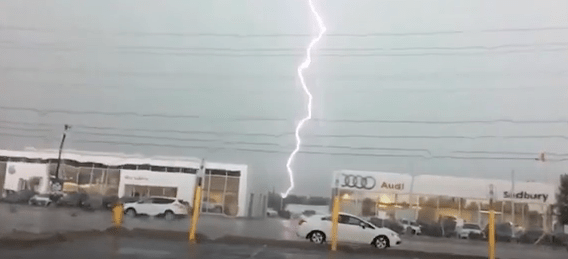
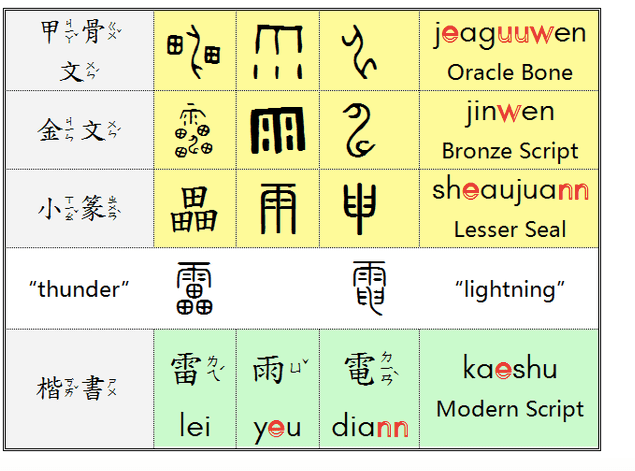
Light travels much faster than sound waves and therefore we see the lightning before we hear the thunder. However, in written Chinese, the word for thunder comes first before lightning. Why is this so? In ancient times in China the word 雷 léi used to represent both thunder and lightning. The Chinese character for electricity 電 diàn was in the Chinese vocabulary many years ago and nowadays this word refers to electricity. To represent lightning, the Chinese now prefers to use both characters 雷 léi 電 diàn as the two phenomena come together.
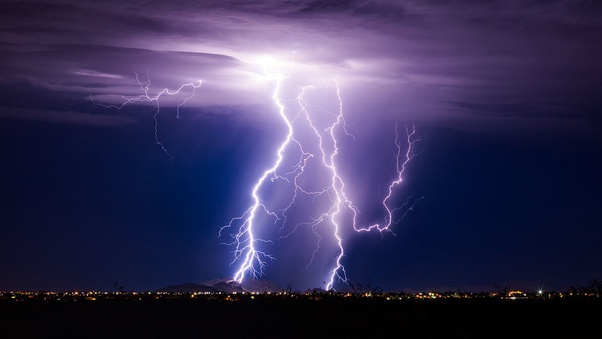
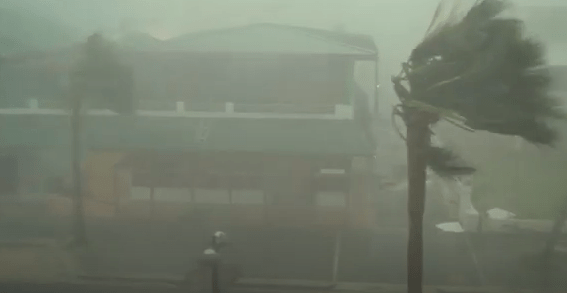
Last week a wild storm hit West Auckland. Many homes were flooded and lightning and thunder struck many times. Flooding was heaviest along the Kumeu main road but other affected areas were Henderson, Piha, Bethel’s Beach and the Waitakere. There was “absolute chaos” as Auckland Civil Defence team did the rescue mission to ensure the safety of residents. The event prompted the Councillor for Tamaki (East Auckland) Ms. Desley Simpson to post the following explanation of the topic on her facebook page.
“With all that thunder and lightning last night thought you might like to know ( or be reminded) why is thunder so loud and what makes lightening?

“Well thunder is the sound lightning makes. Not every cloud can make thunder, thunder clouds are very tall. Clouds are made of tiny water droplets. It’s so cold high up in the sky that ice crystals start to form inside the clouds. Then the ice crystals move to the top of the cloud and the water droplets stay near the bottom of the cloud. When they move past each other and rub against each other, they make static electricity. Sometimes, if you have socks on and you rub your feet on the carpet, it makes a tiny shock when you touch somebody else. That is static electricity. The static electricity plays around with the neutrons in the cloud ( ok I’m probably getting too complicated now) so maybe let’s just say lightening is an electric current within a thundercloud way up in the sky. Many small bits of ice (frozen raindrops) bump into each other as they move around in the air. All of those collisions create an electric charge.
“Why is thunder so loud? It is because the amount of electrical energy that flows from the cloud to the ground is so enormous: it is like a very big waterfall of electricity.”
I find this topic interestingly enough to do a research on google and to have the following simple explanation for our younger school children.
Lightning and Thunder Facts: Source # 1: https://youtu.be/zysdp6f2f20. Lightning hits the air to 50,000 degrees Fahrenheit, five times hotter than the sun. Lighting can strike in the same place twice. The Empire State Building, for example, is hit twenty-five times every year, on average.
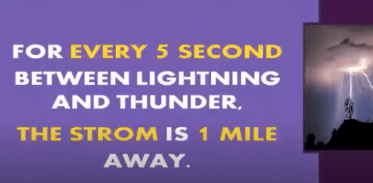
For every five second between lightning and thunder, the STORM is a mile away.
Lightning strikes kill more people globally than do tornadoes.
There cannot be thunder without lightning.
Storm distance can be determined by lightning and thunder.
In 90% of the lightning strikes, the victims survived.
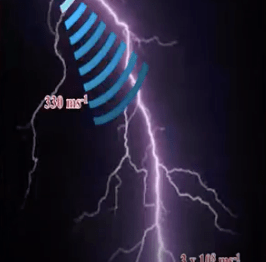
Lightning’s supersonic shock wave or “thunder” is caused by the rapid expansion and contraction of air molecules.
The sound of thunder and be heard up to twelve miles away.
Ice particles are the key components in the creation of lightning.
The fear of thunder is called Brontophobia. The fear of thunder storms is called Astraphobia.
People who survived the lightning strikes do suffer from a variety of symptoms, including memory loss, and dizziness.
How are thunderstorms formed?
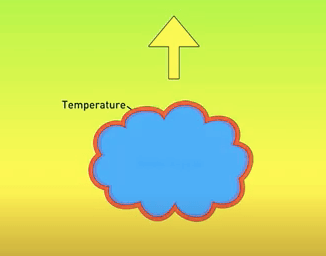
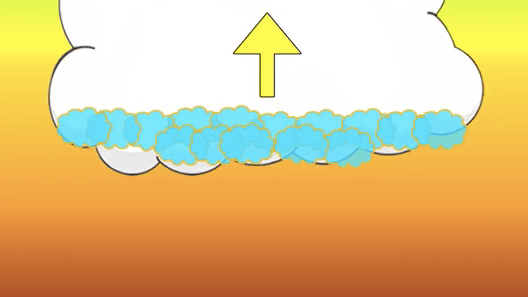
When a water vapour is warmer than the surrounding air, it rises. As it rises, it expands due to the lower air pressure and it cools due to that expansion until it reaches the same temperature as the air around it. If the temperature drops further the vapour will condense out of it and a cloud will be formed. This condensation begins a cycle that drives the growth of the cloud.
When this condition continues a updraft and a downdraft are formed bringing in the rain and eventually the lightning and the thunder. Click on this link for an understanding of this natural cycle. https://youtu.be/Z7c4bZwvkrs
What is lightning?
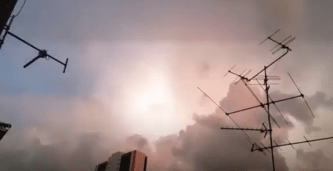
Lightning is a big charge of electricity. Electricity is made up of a negative charge and a positive charge, just like on a battery. The electricity moves from the negative towards the positive.
Negative. —————->>>>>>>>>> —————- Positive.
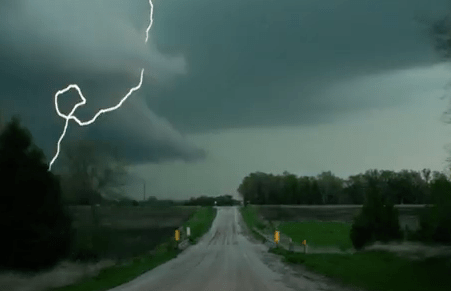
A cloud has a negative charge and the ground has a positive charge. If the charge difference between the two is big enough, a spark will jump from the negative to the positive. This is a lightning bolt; or a giant spark.
What is thunder?

Thunder is the sound made by lightning. It is either a sharp, loud crack or a low rumble. It is caused by the rapid expansion of air around the bolt of lightning.
How does a thunder cloud develop?
A thunderstorm always starts from a cumulus cloud which can be recognized by its cotton-like puffy shape. If the conditions are right, the cloud begins to grow upwards. When it starts to rain we call it a cumulonimbus cloud. If it rains heavily, blasts of air come out from the bottom of the cloud. Eventually this thunder cloud rains itself out.
Ingredients needed for a thunderstorm
We need 3 atmospheric ingredients for a thunderstorm:
Moisture: we need water in the atmosphere to form clouds and eventually, rain.
Unstable air: we need warm air to contrast to the air surrounding the clouds. This unstable air will cause the cloud to rise quickly.
Lift: this is provided by warm or cold fronts, like the sea breezes.
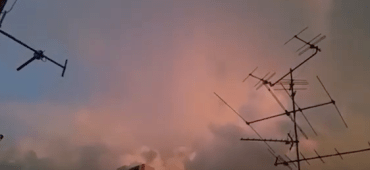
Where can lightning strike?
Lightning can strike almost anywhere.
It is a myth that lightning never strikes the same place twice.
In fact lightning can strike the same place more than once - often several times during the same storm.
What causes the sound of thunder?
Thunder is caused by the rapid expansion of the air surrounding the path of a lightning bolt.
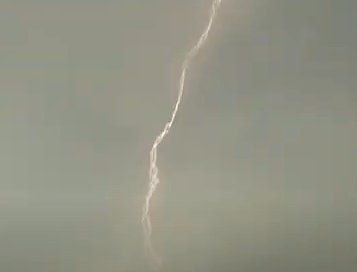
From the clouds to a nearby tree or roof, a lightning bolt takes only a few thousandths of a second to split through the air. The loud thunder that follows the lightning bolt is commonly said to come from the bolt itself. However, the grumbles and growls we hear in thunderstorms actually come from the rapid expansion of the air surrounding the lightning bolt.
As lightning connects to the ground from the clouds, a second stroke of lightning will return from the ground to the clouds, following the same channel as the first strike. The heat from the electricity of this return stroke raises the temperature of the surrounding air to around a very high degree. The rapid rise in temperature creates a rapid increase in the air pressure as well, rising to between ten and a hundred times the normal atmospheric pressure. Under such pressure, the heated air explodes outward from the channel, compressing the surrounding air. As the heated air expands, the pressure drops, the air cools, and it contracts. The result is a shock wave, with a loud, booming burst of noise sent in every direction.
More information can be found at https://www.loc.gov/everyday-mysteries/meteorology-climatology/item/what-causes-the-sound-of-thunder/
 English